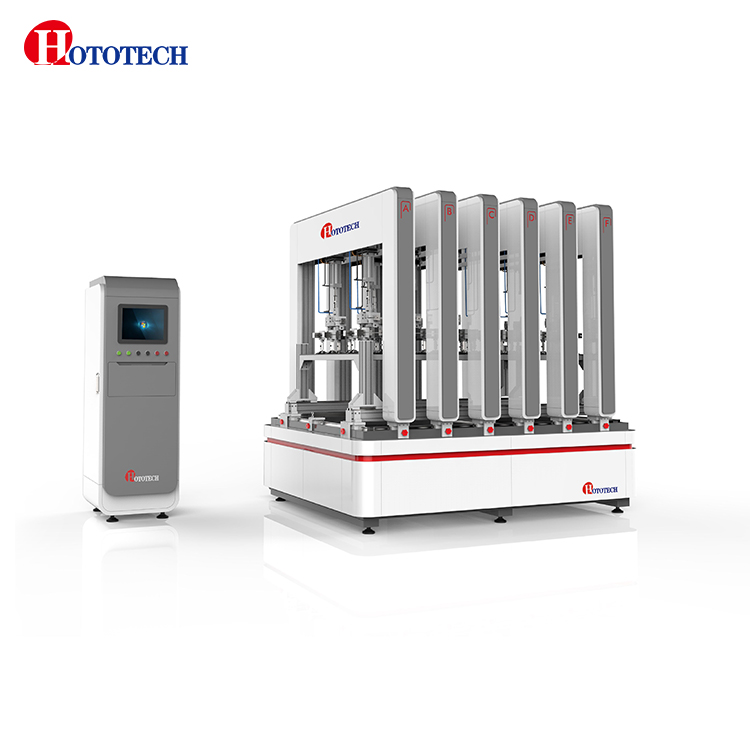
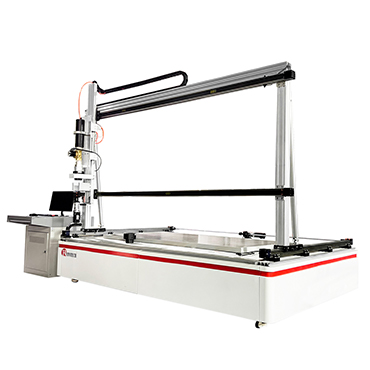
PV Module IV Tester: Complete Guide to Solar Panel I-V Curve Testing
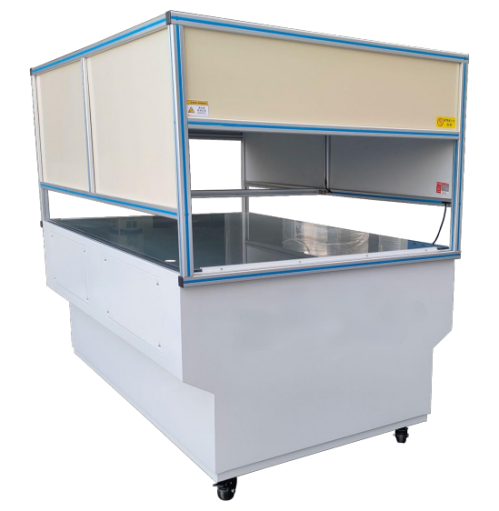
PV Module IV Tester: Complete Guide to Solar Panel I-V Curve Testing

PV Module IV Tester: Why It Is Essential for Solar Panel Quality Control
As the global solar industry continues to grow, ensuring the performance and reliability of photovoltaic (PV) modules has become more important than ever. A PV Module IV Tester is one of the most critical pieces of equipment used by solar panel manufacturers, laboratories, certification bodies, and research institutes.
Whether you are performing quality inspection during production or evaluating module performance after environmental testing, an I-V Curve Tester for Solar Panels provides accurate electrical performance data that helps guarantee product quality and compliance with international standards.
What Is a PV Module IV Tester?
A PV Module IV Tester, also known as a Solar Panel I-V Curve Tester, is a testing system designed to measure the current-voltage (I-V) characteristics of photovoltaic modules under simulated sunlight.
The tester rapidly records the relationship between voltage and current while calculating important electrical parameters, including:
- Maximum Power (Pmax)
- Open Circuit Voltage (Voc)
- Short Circuit Current (Isc)
- Voltage at Maximum Power (Vmp)
- Current at Maximum Power (Imp)
- Fill Factor (FF)
- Module Efficiency
- Power Conversion Efficiency
These parameters provide a complete evaluation of a solar panel's electrical performance.
Why Is I-V Curve Testing Important?
I-V curve testing is essential throughout the lifecycle of a photovoltaic module.
1. Manufacturing Quality Control
Manufacturers use a PV Module IV Tester to verify that every module meets the designed power output before shipment.
2. IEC Standard Compliance
The equipment is widely used for testing according to standards such as:
- IEC 61215
- IEC 61730
- IEC 60904 Series
These standards require accurate electrical performance measurements to certify photovoltaic modules.
3. Product Development
Engineers compare different cell structures, encapsulation materials, and manufacturing processes by analyzing I-V curves.
4. Reliability Testing
After environmental tests such as:
- Damp Heat Test
- Thermal Cycling Test
- UV Preconditioning
- Mechanical Load Test
- Hail Impact Test
the module is tested again using an IV tester to determine whether power degradation has occurred.
How Does a Solar Panel IV Tester Work?
The testing process is straightforward:
- Place the photovoltaic module inside the testing area.
- Illuminate the module using a Class AAA solar simulator.
- Sweep the electrical load from short circuit to open circuit.
- Collect hundreds of voltage and current data points.
- Generate an accurate I-V curve.
- Automatically calculate all electrical parameters.
Modern systems complete the entire measurement within only a few milliseconds, minimizing temperature-related measurement errors.
Key Features of a High-Performance PV Module IV Tester
When selecting a Solar Module IV Testing Machine, several features should be considered:
- High-speed data acquisition
- Class AAA solar simulator
- Excellent irradiance uniformity
- Stable spectral match
- Precise temperature monitoring
- Automatic barcode recognition
- MES/ERP integration
- Automatic report generation
- Traceable calibration
- Long-term measurement stability
These capabilities improve both testing accuracy and production efficiency.
Applications of PV Module IV Testers
A Photovoltaic Module IV Tester is widely used in:
- Solar panel manufacturing plants
- Photovoltaic research laboratories
- Third-party testing laboratories
- Certification organizations
- University research centers
- Incoming quality inspection
- Production line quality control
- Reliability laboratories
- R&D departments
Choosing the Right PV Module IV Tester
When purchasing an IV tester, consider the following factors:
- Maximum module size
- Maximum testing power
- Voltage and current range
- Measurement accuracy
- Testing speed
- Solar simulator classification
- Compliance with IEC standards
- Software functionality
- Data export capability
- After-sales technical support
Selecting the right system helps improve testing efficiency while ensuring reliable and repeatable measurement results.
Future Trends in PV Module Testing
As photovoltaic modules become larger and more efficient, IV testing systems continue to evolve.
Future trends include:
- AI-assisted defect analysis
- Automated production line integration
- Higher measurement accuracy
- Larger testing areas for next-generation modules
- Cloud-based data management
- Smart manufacturing compatibility
These innovations help manufacturers achieve higher productivity and consistent product quality.
Conclusion
A PV Module IV Tester is an indispensable tool for evaluating photovoltaic module performance. Accurate I-V curve measurement not only verifies electrical characteristics but also ensures compliance with international standards and supports continuous improvements in manufacturing quality.
Whether you are a solar panel manufacturer, testing laboratory, or research institution, investing in a high-quality Solar Panel IV Tester is essential for delivering reliable, high-performance photovoltaic products to the market.
PV Module Mechanical Load Test: How to Test Solar Panel Mechanical Strength
PV Module Breakage Test Machine: Ensuring Solar Panel Mechanical Reliability