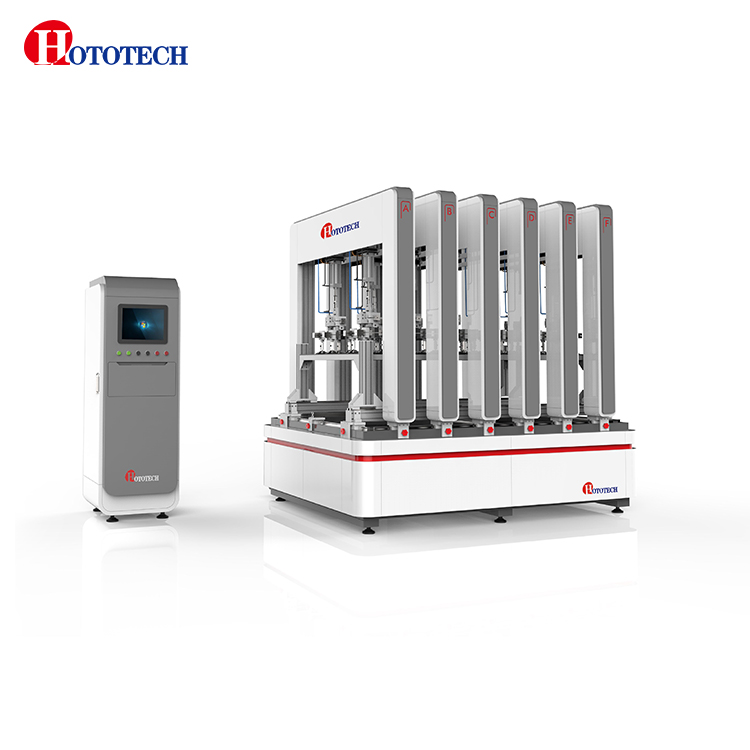
PV Module Hail Impact Tester for Solar Panel Testing

PV Module Hail Impact Tester: Solar Panel Hail Testing Guide

A PV module hail impact tester is specialized equipment designed to simulate hail impacts under controlled laboratory conditions. It helps solar panel manufacturers and testing laboratories evaluate module durability and verify performance against applicable testing requirements.
1. What Is a PV Module Hail Impact Tester?
A PV module hail impact tester, also known as a solar panel hail impact testing machine, is used to evaluate the resistance of photovoltaic modules to simulated hailstone impacts.
The equipment launches ice balls toward specified locations on a solar panel at controlled velocities. After testing, the module can be inspected for visible damage and evaluated using appropriate electrical testing methods.
Typical applications include:
-
Solar panel manufacturing quality control.
-
Photovoltaic module research and development.
-
Third-party testing and certification laboratories.
-
Solar module reliability and durability evaluation.
2. What Is the IEC 61215 Hail Test?
IEC 61215-2 MQT 17 identifies the hail test within the IEC 61215 series for terrestrial photovoltaic module design qualification and type approval.
The test evaluates a PV module's ability to withstand specified hail impacts under controlled conditions.
Key testing parameters may include:
-
Ice-ball diameter and condition.
-
Impact velocity.
-
Impact locations and number of impacts.
-
Module mounting conditions.
-
Post-test inspection and applicable evaluation criteria.
The exact requirements depend on the applicable edition of IEC 61215-2. Manufacturers should consult the relevant standard before establishing a test procedure.
3. How Does Solar Panel Hail Impact Testing Work?
A typical solar panel hail testing machine consists of an ice-ball launching system, launching barrels, a specimen mounting platform, and a control system. Depending on the configuration, it may also include velocity measurement and adjustable positioning mechanisms.
The testing process generally involves four steps:
Step 1: Install the PV module. Secure the solar panel according to the specified test conditions.
Step 2: Prepare the ice balls. Ensure that their dimensions and condition meet the requirements of the selected test procedure.
Step 3: Perform the impact test. Launch the ice balls at the specified velocity and target locations.
Step 4: Inspect the module. Check for glass cracks, visible damage, and other relevant changes according to the applicable evaluation procedure.
Accurate velocity control and repeatable impact positioning are important for obtaining reliable and comparable test results.
4. How to Choose Solar Panel Hail Testing Equipment
When selecting a PV module hail impact tester, manufacturers should consider the following factors:
-
Ice-ball diameter range: Confirm that the equipment supports the required ice-ball sizes.
-
Impact velocity: Verify that the launching system meets the intended test requirements.
-
Positioning system: Consider whether manual, semi-automatic, or motorized positioning is appropriate.
-
Module compatibility: Ensure that the platform accommodates the required PV module dimensions.
-
Safety protection: Evaluate projectile containment, emergency stopping, and operator protection.
-
Standard compliance: Confirm the equipment configuration against the applicable IEC 61215-2 test procedure.
Choosing suitable solar panel hail impact testing equipment helps laboratories conduct repeatable tests and supports photovoltaic module quality evaluation.
5. Frequently Asked Questions
What standard is used for solar panel hail testing?
IEC 61215-2 includes the hail test identified as MQT 17. The applicable edition and specific test requirements should be confirmed before testing.
Can hail impact testing detect solar cell microcracks?
Hail impact testing evaluates damage caused by impact, but some internal defects may not be visible. Electroluminescence (EL) testing can provide additional information about potential solar cell microcracks.
Does passing a hail test mean a solar panel is hailproof?
No. Passing the specified test demonstrates performance under the defined laboratory conditions, but it does not guarantee resistance to every real-world hailstorm.
What should I consider before purchasing a hail impact tester?
Important considerations include ice-ball diameter, impact velocity, positioning capability, module dimensions, safety features, and the applicable testing standard.
Conclusion
A PV module hail impact tester is essential equipment for evaluating solar panel resistance to controlled hail impacts. By simulating specified hail conditions, it helps photovoltaic manufacturers and testing laboratories assess module durability and support product quality assurance.
HOTOTECH provides photovoltaic testing equipment for various solar module evaluation applications. Contact our team to discuss your PV module hail impact testing requirements and find a suitable equipment configuration.
PV Module Wet Leakage Current Tester: Testing Principles, Applications and IEC Standards