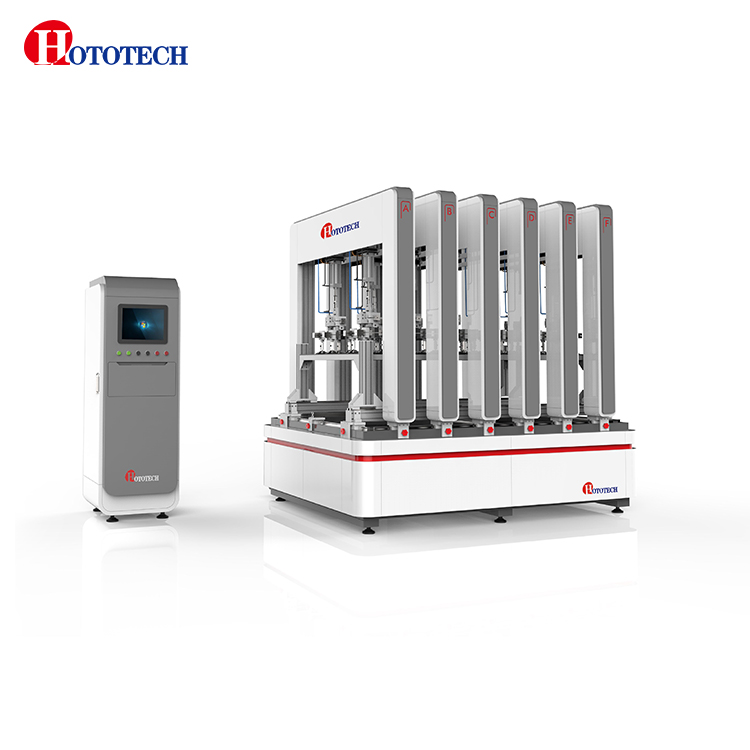
PV Module Breakage Test Machine: How to Evaluate Solar Panel Glass Strength and Breakage Resistance
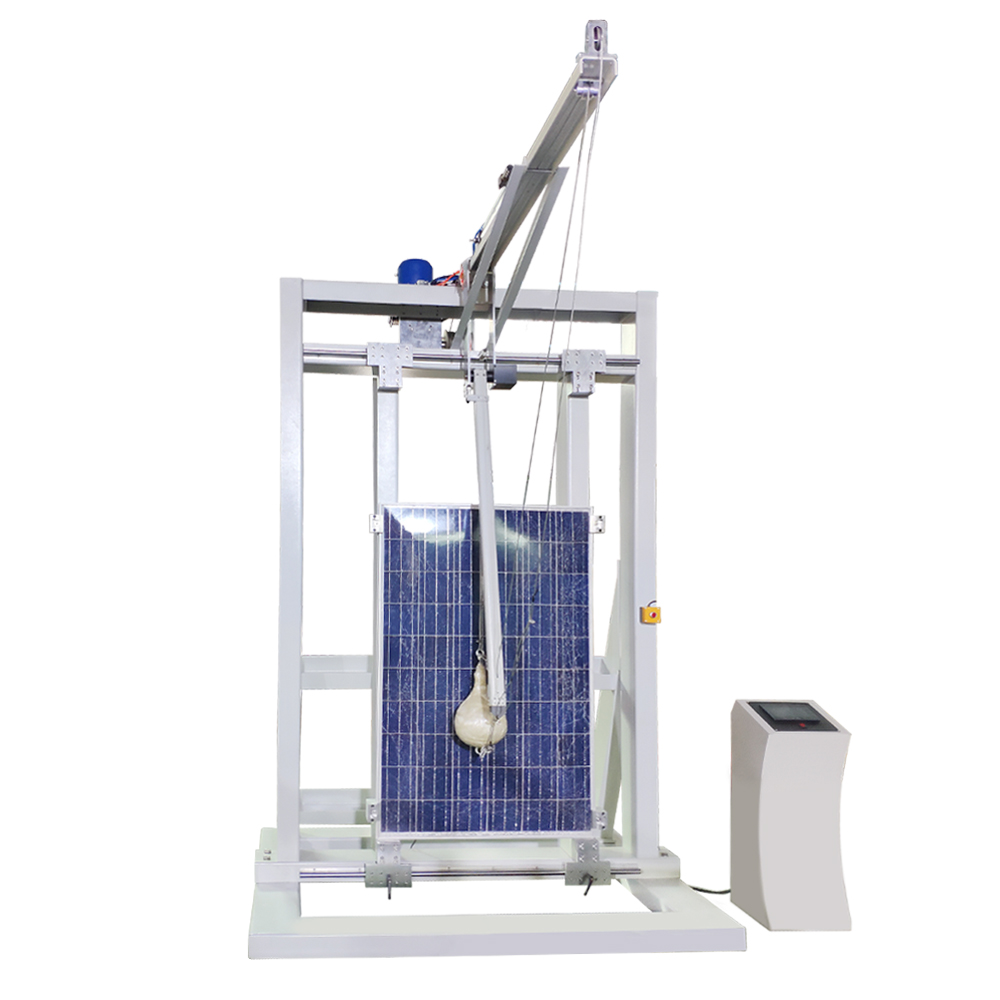
PV Module Breakage Test Machine: How to Evaluate Solar Panel Glass Strength and Breakage Resistance

1. Introduction to PV Module Breakage Testing
As the global solar energy industry continues to expand, the reliability and durability of photovoltaic (PV) modules have become increasingly important. Solar panels are designed for long-term outdoor operation and must withstand various environmental conditions, including wind pressure, snow loads, temperature fluctuations, hail impact, and other external mechanical stresses.
Among the different components of a solar panel, glass plays a critical role in protecting solar cells and maintaining the structural integrity of the module. However, glass can crack or break when subjected to excessive mechanical stress or localized impact.
A PV Module Breakage Test Machine is designed to evaluate the breakage resistance and mechanical strength of photovoltaic modules or their glass components under specified test conditions. By applying controlled mechanical forces or impact loads, this testing equipment helps manufacturers and testing laboratories investigate glass failure behavior, identify potential weaknesses, and improve product reliability.
In this article, we will explain the purpose of solar panel breakage testing, its working principles, major influencing factors, and the importance of selecting suitable PV module testing equipment.
2. Why Is Solar Panel Glass Breakage Testing Important?
Solar panel glass is an essential protective component. It provides mechanical protection for solar cells while allowing sunlight to pass through to generate electricity.
However, cracks and breakage can affect the performance, safety, and service life of photovoltaic modules.
Here are several reasons why solar panel glass breakage testing is important.
2.1 Evaluate Glass Mechanical Strength
Solar panel glass may experience mechanical stress during manufacturing, transportation, installation, and outdoor operation. Breakage testing helps evaluate how much mechanical stress the glass or module can withstand before failure occurs.
2.2 Identify Potential Structural Weaknesses
Different glass thicknesses, material compositions, tempering processes, and module structures can result in different mechanical properties.
A solar panel glass breakage test can help manufacturers compare different material designs and identify potential weak points.
2.3 Improve Product Quality and Reliability
By conducting repeatable mechanical tests, manufacturers can obtain useful data for product development, quality control, and manufacturing process improvement.
2.4 Support Product Development and Quality Assessment
For PV module manufacturers, research institutions, and independent testing laboratories, mechanical breakage testing provides valuable information for evaluating new glass materials, module structures, and protective designs.
3. How Does a PV Module Breakage Test Machine Work?
A PV Module Breakage Test Machine generally applies a controlled mechanical load or impact force to a test specimen to evaluate its resistance to breakage.
The specific testing method depends on the test objective, specimen structure, and customer requirements.
A typical testing process includes the following steps:
Step 1: Specimen Preparation
Prepare the photovoltaic module or glass specimen according to the required dimensions and testing conditions. Record relevant information such as glass thickness, material type, and specimen dimensions.
Step 2: Specimen Installation
Place the specimen on the designated testing fixture. Ensure that the support structure and positioning meet the requirements of the selected test method.
Step 3: Apply the Test Load
Apply a controlled mechanical force or impact load through the testing mechanism. The loading speed, force, impact energy, and loading position can be configured according to the specified testing procedure.
Step 4: Observe the Breakage Process
Monitor the specimen during testing and record the occurrence of cracks, fractures, or complete breakage.
Step 5: Analyze the Test Results
Record the maximum load, failure behavior, breakage location, and other relevant test data. These results can help engineers assess the mechanical performance of the tested specimen.
4. What Factors Affect PV Module Glass Breakage Resistance?
The breakage resistance of photovoltaic glass is influenced by several factors.
4.1 Glass Thickness
Glass thickness is an important factor affecting its mechanical behavior. Different thicknesses may exhibit different load-bearing capacities and fracture characteristics under the same test conditions.
4.2 Glass Material and Manufacturing Process
The glass composition, tempering process, surface quality, and manufacturing defects can all influence its mechanical strength.
4.3 Support Conditions
The way a PV module or glass specimen is supported during testing can significantly affect the stress distribution and final failure behavior.
4.4 Loading Position and Force
The position where the mechanical force is applied, together with the magnitude and direction of the load, can influence crack initiation and propagation.
4.5 Environmental Conditions
Temperature and other environmental factors may affect the mechanical behavior of glass and the overall performance of photovoltaic modules.
Therefore, standardized specimen preparation, controlled loading conditions, and repeatable testing procedures are essential for obtaining meaningful test results.
5. PV Module Breakage Testing and IEC 61215
IEC 61215 is an important international standard series for the design qualification and type approval of terrestrial photovoltaic modules.
IEC 61215-2 specifies test procedures used to evaluate the performance and reliability of PV modules under various environmental and mechanical stresses.
Relevant mechanical testing procedures include:
-
Static Mechanical Load Test (MQT 16): Evaluates the ability of photovoltaic modules to withstand specified mechanical loading conditions.
-
Hail Test (MQT 17): Evaluates the module's resistance to hail impact.
-
Cyclic (Dynamic) Mechanical Load Test (MQT 20): Evaluates module performance under repeated mechanical loading.
These tests address different reliability aspects of photovoltaic modules.
It is important to understand that a PV Module Breakage Test Machine is not automatically equivalent to an IEC 61215 testing system. A dedicated glass breakage test may use a different loading method, fixture, and evaluation procedure.
The applicable standard and test parameters should always be confirmed according to the specific testing objective.
6. How to Choose the Right PV Module Breakage Test Machine?
Selecting suitable photovoltaic glass breakage testing equipment requires careful consideration of the following factors.
6.1 Test Specimen Dimensions
Confirm the maximum specimen dimensions and whether the equipment can accommodate different PV module sizes or individual glass samples.
6.2 Testing Method
Determine whether the test requires static loading, concentrated loading, mechanical impact, or another specific loading method.
6.3 Force and Measurement Range
The equipment should provide an appropriate loading range and measurement accuracy for the intended application.
6.4 Fixture Design
A suitable fixture is essential for ensuring stable specimen positioning and consistent testing conditions.
6.5 Data Acquisition and Software
An effective testing system should provide reliable data acquisition and allow operators to record and analyze important parameters, such as applied force and failure behavior.
6.6 Customization Requirements
For specialized research or non-standard testing applications, customized fixtures, loading mechanisms, control systems, and specimen dimensions may be necessary.
7. Applications of PV Module Breakage Testing Equipment
PV module breakage testing equipment can be used in various applications, including:
-
Photovoltaic module manufacturing and quality control
-
Solar glass material research and development
-
PV module structural reliability evaluation
-
New module design verification
-
Third-party testing and inspection laboratories
-
University and research institution laboratories
By providing controlled and repeatable testing conditions, this equipment helps engineers better understand the mechanical behavior of photovoltaic modules and their glass components.
8. Conclusion
Glass breakage resistance is an important consideration in photovoltaic module design and quality assessment. Proper mechanical testing helps manufacturers evaluate material performance, identify structural weaknesses, and improve the reliability of solar panels.
A suitable PV Module Breakage Test Machine should be selected according to the specimen dimensions, loading method, measurement requirements, and applicable testing procedures.
For manufacturers and laboratories looking for reliable photovoltaic testing solutions, choosing professional and customizable testing equipment is an important step toward improving product quality and testing efficiency.
Looking for a customized PV Module Breakage Test Machine?
HOTOTECH specializes in the development and manufacturing of photovoltaic testing equipment. Contact our technical team to discuss your specimen dimensions, testing methods, and specific requirements. We can provide customized testing solutions for your PV module testing applications.
PV Module Hail Impact Tester for Solar Panel Testing