Solar Module IV Tester: Working Principle, Applications and Key Testing Parameters
1. What Is a Solar Module IV Tester?
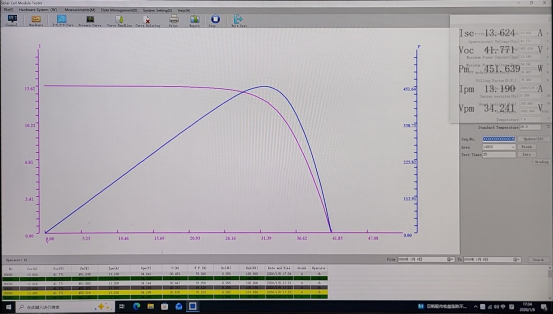
It evaluates the relationship between current (I) and voltage (V) under specific testing conditions and generates an I-V curve to analyze the electrical characteristics of solar panels.
A professional solar panel IV tester can measure the following key parameters:
-
Voc (Open-Circuit Voltage): Maximum voltage when the module is not connected to a load.
-
Isc (Short-Circuit Current): Current generated when the module terminals are short-circuited.
-
Pmax (Maximum Power): Maximum electrical power output.
-
Vmp (Voltage at Maximum Power): Voltage at the maximum power point.
-
Imp (Current at Maximum Power): Current at the maximum power point.
-
FF (Fill Factor): An indicator of the electrical performance of a photovoltaic module.
2. How Does a Solar IV Tester Work?
The working principle of a Solar Module IV Tester is based on measuring the current-voltage characteristics of photovoltaic modules under illumination.
During testing, the instrument connects to the positive and negative terminals of the solar module and sweeps the voltage or current across the operating range. It records the corresponding electrical values and generates I-V and P-V curves.
The general testing process includes:
-
Connect the PV module to the IV tester.
-
Set the testing parameters and environmental conditions.
-
Perform I-V curve measurement.
-
Generate I-V and P-V characteristic curves.
-
Analyze electrical parameters and generate test reports.
These results help manufacturers and testing laboratories evaluate the electrical performance and consistency of photovoltaic modules.
3. Why Is I-V Curve Testing Important?
Solar panel I-V curve testing plays an important role in photovoltaic manufacturing and quality inspection.
Production Quality Control
Manufacturers use Solar Module IV Testers to verify the electrical output of finished solar panels, classify modules by power rating, and identify products that do not meet specifications.
Electrical Performance Evaluation
I-V curve analysis helps identify abnormal electrical characteristics, including potential series resistance, shunt resistance, and cell mismatch issues.
Research and Development
Research institutions use photovoltaic IV testers to study solar cell technologies, evaluate module performance, and compare different photovoltaic materials.
Performance Verification
Testing laboratories use I-V curve measurements to verify the electrical characteristics of PV modules according to relevant international standards.
4. Standard Test Conditions (STC) for Solar Module Testing
Standard Test Conditions (STC) provide a common reference for evaluating photovoltaic module performance.
The three main STC parameters are:
-
Irradiance: 1000 W/m²
-
Cell Temperature: 25°C
-
Solar Spectrum: AM1.5
Two important international standards related to photovoltaic I-V testing are:
-
IEC 60904-1: Measurement of current-voltage characteristics of photovoltaic devices.
-
IEC 60891: Procedures for temperature and irradiance corrections to measured I-V characteristics.
Following these standards helps ensure reliable and comparable PV module test results.
5. How to Choose the Right Solar Module IV Tester?
When selecting a Solar Module IV Tester, buyers should consider several important factors:
-
Measurement Range: Ensure the voltage and current ranges meet the electrical specifications of the tested PV modules.
-
Measurement Accuracy: Consider voltage, current, and power measurement accuracy.
-
Testing Environment: Determine whether the equipment is intended for indoor laboratory testing or outdoor field measurements.
-
Software Functions: Check whether the system supports automatic parameter calculations, I-V curve analysis, data storage, and report generation.
-
Customization: Consider module dimensions, testing requirements, and integration with existing production lines.
Choosing the right photovoltaic IV tester helps improve testing efficiency and electrical performance evaluation.
6. Conclusion
A Solar Module IV Tester is an essential instrument for photovoltaic electrical performance testing. By measuring I-V curves and analyzing key electrical parameters, manufacturers and testing laboratories can improve quality control and verify solar module performance.
HOTOTECH has been specializing in testing equipment manufacturing since 2009, providing professional photovoltaic testing equipment and customized testing solutions for global customers.
Contact HOTOTECH to discuss your Solar Module IV Testing requirements and find the right testing solution for your application.
PV Module Breakage Test Machine: How to Evaluate Solar Panel Glass Strength and Breakage Resistance