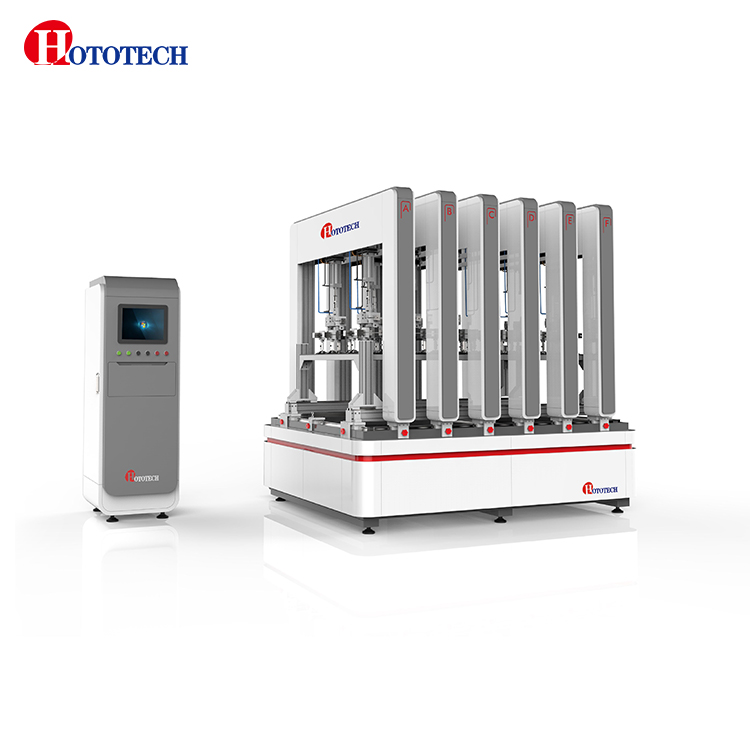
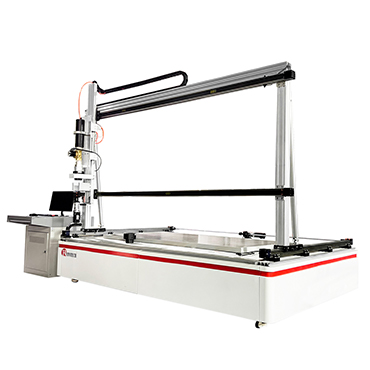
PV Module Breakage Test Machine: Testing the Mechanical Strength of Solar Panels

PV Module Breakage Test Machine: Testing the Mechanical Strength of Solar Panels

Introduction
Photovoltaic (PV) modules are designed for long-term outdoor operation, but solar panels are continuously exposed to mechanical stresses from wind, snow, transportation, installation, and other environmental conditions. Excessive mechanical stress can cause glass breakage, cell cracks, frame deformation, electrical performance degradation, or even complete module failure.
A PV Module Breakage Test Machine, also known as a Solar Panel Breakage Test Machine or PV Module Breakage Tester, is used to evaluate the mechanical strength and failure behavior of photovoltaic modules under controlled loading conditions.
For PV manufacturers, quality control laboratories, and research institutions, breakage testing can help identify the mechanical limits of a solar module and improve module design and reliability.
What Is a PV Module Breakage Test?
A PV module breakage test is a destructive mechanical test designed to determine how a photovoltaic module behaves when subjected to increasing or controlled mechanical loads.
Unlike routine mechanical load qualification tests, a breakage test can be used to investigate the point at which the module structure or its components begin to fail.
Depending on the test objective, possible failure modes include:
- PV glass breakage
- Solar cell cracking
- Interconnect ribbon failure
- Frame deformation
- Laminate damage
- Delamination or structural failure
The test results can provide useful information for optimizing the mechanical design, materials, frame structure, and mounting method of a photovoltaic module.
Why Is Solar Panel Breakage Testing Important?
Solar panels can experience significant mechanical loads throughout their service life. Wind pressure, snow accumulation, installation forces, transportation vibration, and other external stresses may affect the structural integrity of the module.
Research on PV module mechanical loading has shown that mechanical stress can lead to high stresses around the module frame and potentially cause glass fracture.
Mechanical breakage testing helps manufacturers:
- Evaluate the structural strength of PV modules
- Identify weak points in module construction
- Study glass and cell failure behavior
- Optimize aluminum frame designs
- Compare different module materials
- Improve product reliability
- Reduce the risk of mechanical failure during field operation
PV Module Breakage Test and IEC 61215
IEC 61215 is one of the key international standards for terrestrial photovoltaic module design qualification and type approval. The current IEC 61215 series includes requirements and test procedures for different PV module technologies.
IEC 61215-2:2021 specifies the test procedures used to evaluate terrestrial PV modules. The standard includes the mechanical static load test MQT 16 and the cyclic dynamic mechanical load test MQT 20.
The mechanical load tests are intended to evaluate the ability of PV modules to withstand mechanical stresses encountered during installation and outdoor operation.
It is important to distinguish between a PV module mechanical load test and a destructive breakage test. A breakage test may be developed as a research, development, or structural-strength evaluation method, while IEC 61215 defines specific qualification procedures and acceptance requirements.
Dynamic Mechanical Load Testing of PV Modules
The IEC 61215 series also incorporates dynamic mechanical load testing based on IEC TS 62782.
IEC TS 62782 describes a cyclic mechanical load test in which the PV module is supported at its designed support points while a uniform load is applied alternately in positive and negative directions.
The test can be used to evaluate whether components such as solar cells, interconnect ribbons, electrical bonds, and edge seals are susceptible to damage or failure caused by repeated mechanical stress.
This makes mechanical testing particularly important for modern high-power PV modules, where cell size, module dimensions, glass configuration, and interconnection technologies can affect mechanical reliability.
How Does a PV Module Breakage Test Machine Work?
A typical PV Module Breakage Test Machine consists of a rigid test frame, module support system, loading mechanism, safety protection structure, and measurement system.
The general testing process includes:
- The PV module is securely installed on the test fixture.
- The required loading position and support conditions are configured.
- Mechanical force or load is applied to the module.
- The load is gradually increased or controlled according to the test procedure.
- The module is monitored for glass cracks, cell damage, deformation, or other failure modes.
- The maximum load and failure condition are recorded.
- The test results are analyzed to evaluate the mechanical strength of the PV module.
For destructive testing, a protective enclosure or shielding system is particularly important because the test may cause sudden glass or module failure.
Applications of PV Module Breakage Test Equipment
PV module breakage testing is commonly used in:
- Solar panel manufacturing
- PV module research and development
- Photovoltaic material testing
- Quality control laboratories
- Third-party testing laboratories
- University and research institutes
- New module structure development
- PV module mechanical reliability evaluation
The equipment can be customized according to the module dimensions, loading method, test force, support configuration, and customer-specific testing requirements.
Conclusion
Mechanical reliability is an important part of photovoltaic module quality. A PV Module Breakage Test Machine provides a controlled method for evaluating the mechanical strength and failure behavior of solar panels.
Combined with mechanical load testing, dynamic mechanical load testing, and other PV reliability tests, breakage testing can help manufacturers understand potential failure mechanisms and improve the long-term durability of photovoltaic modules.
For laboratories and PV manufacturers looking for a Solar Panel Breakage Test Machine or PV Module Breakage Tester, the test configuration should be selected according to the module design, intended application, and applicable testing standard.
Photovoltaic Module Mechanical Load Test: Why It Matters for Solar Panel Reliability
PV Module UV Environmental Test Chamber: Why UV Testing Matters for Solar Panels