PV Module Hail Impact Testing Machine: Why Is It Essential for Solar Panel Reliability Testing?
PV Module Hail Impact Testing Machine: Why Is It Essential for Solar Panel Reliability Testing?

To simulate the impact of natural hailstones on photovoltaic modules, manufacturers and testing laboratories rely on a PV Module Hail Impact Testing Machine. This equipment plays a vital role in product development, quality assurance, and international certification.
In this article, we'll explore how a PV module hail impact testing machine works, the international standards it complies with, its applications, and what to consider when selecting the right equipment.
What Is a PV Module Hail Impact Test?
Solar panels are continuously exposed to outdoor environments, where they may encounter extreme weather such as heavy rain, snow, strong winds, and hailstorms.
High-speed hailstones can cause significant damage, including:
- Cracked tempered glass
- Microcracks in solar cells
- Delamination of encapsulation materials
- Power degradation
- Hot spot formation
- Reduced service life
To ensure long-term reliability, international standards require photovoltaic modules to pass a Hail Impact Test, which evaluates their ability to resist mechanical impact without compromising electrical performance or safety.
What Is a PV Module Hail Impact Testing Machine?
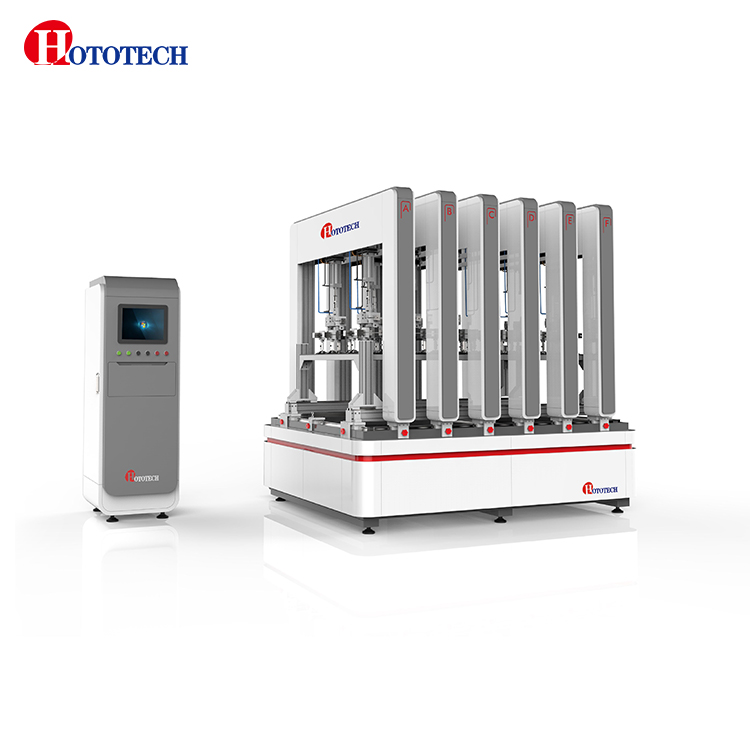
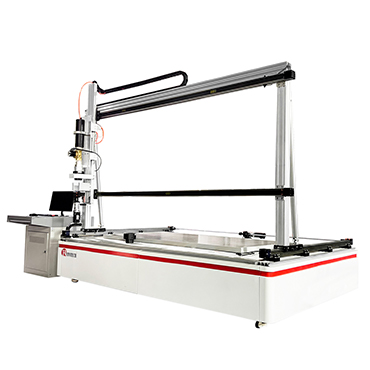
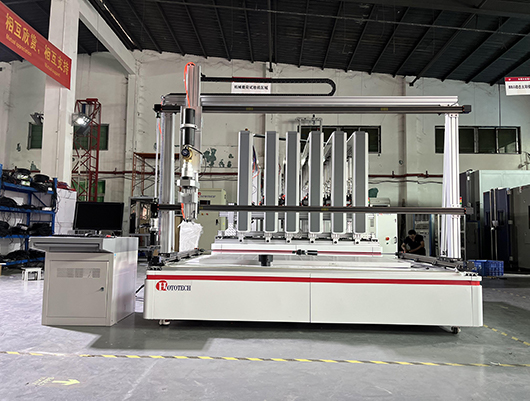
A PV Module Hail Impact Testing Machine, also known as a Solar Panel Hail Tester, is specialized testing equipment designed to simulate real hail impacts by launching artificial ice balls at high speed toward photovoltaic modules.
Its primary functions include:
- Simulating natural hail impact conditions
- Evaluating glass impact resistance
- Verifying module structural integrity
- Assessing mechanical durability
- Measuring performance changes after impact
Today, hail impact testing has become a standard requirement for PV manufacturers, certification laboratories, research institutes, and quality inspection organizations worldwide.
How Does a PV Module Hail Impact Testing Machine Work?
The testing process closely replicates real-world hail events.
Step 1: Ice Ball Preparation
Artificial ice balls are manufactured according to international standards with specified diameters and weights.
Common ice ball sizes include:
- 25 mm
- 35 mm
- 45 mm
- 55 mm
Different standards specify different hailstone sizes depending on the required test severity.
Step 2: Parameter Setup
The operator sets:
- Launch pressure
- Impact velocity
- Shooting angle
- Target impact position
These parameters are adjusted to meet the applicable testing standard.
Step 3: Ice Ball Launch
Using a pneumatic launching system, the machine accelerates the ice ball toward the solar module at a precisely controlled velocity, accurately simulating a natural hailstorm.
Step 4: Visual Inspection
After impact, technicians inspect the module for visible damage, such as:
- Glass breakage
- Frame deformation
- Backsheet damage
Step 5: Electroluminescence (EL) Inspection
An EL tester is then used to detect hidden defects, including:
- Cell microcracks
- Broken busbars
- Invisible structural damage
This step is essential because some internal defects cannot be identified through visual inspection alone.
Step 6: Electrical Performance Test
Finally, the module undergoes an I-V performance test to evaluate:
- Maximum power output (Pmax)
- Open-circuit voltage (Voc)
- Short-circuit current (Isc)
This confirms whether the module maintains its electrical performance after the hail impact.
International Standards for PV Hail Impact Testing
Several international standards define the requirements for hail impact testing.
IEC 61215
IEC 61215 is the most widely recognized reliability standard for crystalline silicon photovoltaic modules.
The standard specifies:
- Ice ball dimensions
- Ice ball mass
- Launch velocity
- Impact locations
- Number of impacts
Compliance with IEC 61215 is essential for manufacturers entering global markets.
IEC TS 63397
With the increasing adoption of large-format and high-power solar modules, IEC TS 63397 introduces enhanced hail impact testing requirements, including:
- Larger hailstones
- Higher impact velocities
- Increased impact energy
These requirements better represent extreme weather conditions affecting modern PV installations.
UL 61730
For products entering the North American market, UL 61730 also includes mechanical durability requirements, including hail resistance testing.
Key Features of a Modern PV Module Hail Impact Testing Machine
Advanced hail impact testers typically offer:
- Pneumatic launching system
- Adjustable launch velocity
- High-precision velocity measurement
- PLC-based intelligent control
- Touchscreen operation
- Automatic data recording
- Multiple ice ball size compatibility
- High repeatability and accuracy
- Compliance with IEC and UL testing standards
Some high-end systems also feature automatic positioning to improve testing efficiency and consistency.
Applications of PV Module Hail Impact Testing Machines
These machines are widely used by:
- Solar panel manufacturers
- PV module R&D centers
- Third-party testing laboratories
- Certification organizations
- Universities and research institutes
- Quality inspection agencies
As international certification requirements become increasingly stringent, hail impact testing has become an indispensable part of photovoltaic product validation.
How to Choose the Right PV Module Hail Impact Testing Machine
When selecting testing equipment, consider the following factors:
1. Compliance with International Standards
Ensure the machine complies with standards such as:
- IEC 61215
- IEC TS 63397
- UL 61730
This guarantees that test results are accepted by certification bodies worldwide.
2. Accurate Velocity Control
Precise launch velocity directly affects test reliability.
Look for systems equipped with real-time velocity monitoring and closed-loop control.
3. Multiple Ice Ball Sizes
A versatile testing machine should support various hailstone diameters to accommodate different testing requirements.
4. High Automation
Features such as automatic pressure adjustment, automatic velocity measurement, and automatic data recording improve efficiency while minimizing human error.
5. Technical Support and After-Sales Service
Choose a manufacturer with extensive experience in photovoltaic testing equipment to ensure professional installation, calibration, training, and long-term technical support.
Why Is Hail Impact Testing Becoming More Important?
Extreme weather events have become more frequent in recent years, increasing the risk of hail damage to solar power plants.
At the same time, modern photovoltaic modules are becoming larger and thinner, making them more susceptible to mechanical stress.
Conducting hail impact tests enables manufacturers to:
- Improve product reliability
- Reduce warranty claims
- Meet international certification requirements
- Enhance customer confidence
- Strengthen brand competitiveness
For utility-scale solar farms, commercial rooftop systems, and residential installations, reliable hail resistance has become a key purchasing consideration.
Conclusion
A PV Module Hail Impact Testing Machine is an essential piece of equipment for evaluating the mechanical durability and long-term reliability of photovoltaic modules. By accurately simulating natural hailstorms, manufacturers can identify potential weaknesses before products enter the market, optimize module design, and ensure compliance with international standards such as IEC 61215, IEC TS 63397, and UL 61730.
As the photovoltaic industry continues to pursue higher efficiency and greater durability, hail impact testing will remain a critical component of product development, quality control, and global certification.
Photovoltaic Module Mechanical Load Test Machine: Why Mechanical Load Testing Is Essential for Solar Panel Reliability
Photovoltaic Module Hail Impact Tester: Everything You Need to Know About IEC 61215 Hail Testing