
All You Need to Know About DOT Standard Impact Tester: Definition, Applications & Advantages
author: Heather Hu
2025-12-02
All You Need to Know About DOT Standard Impact Tester: Definition, Applications & Advantages

In the fields of packaging, transportation, and material manufacturing, ensuring product safety during circulation has always been a core concern for enterprises and regulatory authorities. Among the numerous testing equipment, the DOT standard impact tester stands out as a key tool that adheres to strict regulatory requirements and safeguards product integrity. This blog will take you deep into the world of DOT standard impact testers, clarifying their core definitions, exploring practical application scenarios, and highlighting their unique advantages in meeting industry testing needs.
1. What Is a DOT Standard Impact Tester?
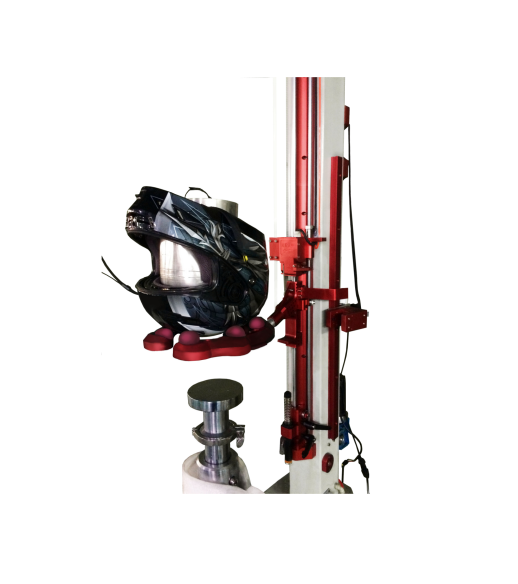
First, let’s clarify the core concept of this equipment. The DOT standard impact tester is a specialized testing instrument designed to evaluate the impact resistance of materials, components, or finished products in accordance with the standards formulated by the U.S. Department of Transportation (DOT). Unlike ordinary impact testers, it strictly abides by DOT’s rigorous technical specifications, covering test conditions, impact energy, sample preparation, and result evaluation.
The core principle of the equipment is to simulate the impact forces that products may encounter during transportation—such as collisions, falls, or extrusion—and measure key indicators such as the maximum impact force the sample can withstand, deformation degree, and damage threshold. Its test results not only reflect the physical properties of the tested object but also directly determine whether the product meets the safety access conditions for transportation in the U.S. and even global markets.
2. Key Application Scenarios of DOT Standard Impact Tester
The DOT standard impact tester has a wide range of applications, and its testing scenarios are closely linked to the transportation safety needs of various industries. Below are the most representative application fields:
2.1 Packaging Industry: Safeguarding the "First Line of Defense" for Goods
In the packaging industry, corrugated cartons, plastic crates, and wooden packaging are the main carriers of goods. The DOT standard impact tester is used to test the impact resistance of these packaging materials. For example, when electronic products, fragile ceramics, or precision components are transported by road or air, packaging may be impacted by sudden braking or turbulence. The tester simulates these scenarios to verify whether the packaging can effectively buffer the impact and avoid product damage. For enterprises exporting to the U.S., passing DOT impact tests is a mandatory requirement for their packaging products to enter the U.S. market.
2.2 Automotive and Parts Industry: Ensuring Vehicle and Passenger Safety
Automotive components such as bumpers, door panels, and plastic interior parts must have excellent impact resistance to reduce injury risks to passengers in collisions. The DOT standard impact tester is widely used in the testing of these components. It can simulate the impact force of vehicles in low-speed collisions and test the deformation recovery ability and fracture resistance of components. In addition, for automotive fuel tanks, exhaust pipes, and other safety-related parts, the tester’s test results directly affect whether the parts meet DOT’s automotive safety standards, which is an important link in the automotive production quality control process.
2.3 Chemical and Hazardous Materials Industry: Preventing Leakage Risks
The transportation of chemical raw materials, pesticides, and other hazardous materials has extremely high safety requirements. Once the packaging (such as steel drums, plastic barrels) is damaged due to impact, it may cause leakage, leading to environmental pollution or safety accidents. The DOT standard impact tester is used to test the impact resistance of hazardous material packaging. It strictly follows DOT’s hazardous material transportation regulations, simulates the extreme impact conditions that packaging may encounter during transportation, and ensures that the packaging can remain intact even under harsh conditions, thus preventing leakage risks.
3. Core Advantages: Why Choose DOT Standard Impact Tester?
Compared with non-standard or general-purpose impact testers, the DOT standard impact tester has obvious advantages, which are mainly reflected in the following aspects:
3.1 Compliance with Regulatory Requirements, Avoiding Market Risks
The most prominent advantage of this tester is its strict compliance with DOT standards. For enterprises that need to export products to the U.S. or engage in cross-border transportation, the test results of the DOT standard impact tester are recognized by U.S. regulatory authorities. Using this equipment can help enterprises avoid the risk of product being detained or returned due to non-compliance with standards, saving time and cost for market access.
3.2 High Test Accuracy and Reliable Results
DOT standard impact testers are manufactured in strict accordance with DOT’s technical specifications, with high-precision force sensors and advanced data acquisition systems. They can accurately measure impact force, impact time, and sample deformation data, and the test results have good repeatability and stability. This avoids the problem of inconsistent test results caused by non-standard equipment, providing reliable data support for enterprises’ product research and development and quality control.
3.3 Strong Scalability, Adapting to Diverse Testing Needs
Different industries and products have different impact test requirements. The DOT standard impact tester can be equipped with different fixtures and impact heads to adapt to the testing of samples of different shapes, sizes, and materials—from small packaging boxes to large automotive components. In addition, it can adjust impact energy and impact speed according to different DOT standard versions, meeting the changing testing needs of enterprises.
4. Conclusion
The DOT standard impact tester is not only a simple testing instrument but also a "safety gatekeeper" for product transportation and a "passport" for enterprises to enter the global market. Its clear compliance, wide application scenarios, and high reliability make it an indispensable tool in industries such as packaging, automotive, and chemical engineering. With the continuous improvement of global transportation safety standards, the importance of DOT standard impact testers will become more prominent.
Do you have any questions about the specific operation methods of the DOT standard impact tester or the application details in a certain industry? Feel free to leave a message and communicate with us.
The Next Level of Safety: Understanding the ECE R22.06 Standard Impact Tester
Understanding the Critical Role of NOCSAE Headforms in Sports Safety
Related Article
The EN 1078 helmet impact test is an important safety test for bicycle helmets, skateboard helmets and roller skate helmets. The standard EN 1078:2012+A1:2012 specifies requirements and test methods for helmet construction, shock absorption, retention systems, field of vision and marking.
EN 1078 Helmet Impact Test: Bicycle Helmet Shock Absorption Testing

Bicycle helmet compliance testing is essential for verifying helmet safety and impact protection. Learn how EN 1078, CPSC 16 CFR Part 1203, and ASTM F1447 evaluate bicycle helmet performance and why a reliable Bicycle Helmet Impact Tester is important for compliance testing.
Why Bicycle Helmet Compliance Testing Is Important

Every time a cyclist or skater puts on a helmet, they are trusting a lightweight shell to save their life. In the global market, especially in Europe, the EN 1078 standard is the definitive legal benchmark for bicycle helmets, skateboards, and roller skate headgear. Here is an inside look at how this advanced testing equipment puts helmets through their paces to meet EN 1078 certification.
Behind the Safety Shield: How a Helmet Impact Tester Ensures EN 1078 Compliance

ECE R22.06 is the latest and most stringent European safety standard for motorcycle and two-wheeler helmets. Reliable helmet test equipment is essential for manufacturers, labs, and certification bodies to verify compliance. HOTOTECH provides the ECE R22.06 helmet testing systems covering impact absorption, penetration resistance, retention system performance, and environmental conditioning.
ECE R22.06 Helmet Test Equipment: Principles & Standards