
ECE 22.05 vs 22.06: The Evolution of Motorcycle Helmet Safety Standards
author: Heather Hu
2025-11-07
ECE 22.05 vs 22.06: The Evolution of Motorcycle Helmet Safety Standards

For motorcyclists, a helmet is more than gear—it’s a life-saving necessity that must keep up with real-world riding risks. For over two decades, the ECE 22.05 standard has been the global benchmark for helmet safety, governing sales in nearly 50 countries. In 2023, the long-awaited ECE 22.06 update arrived, building on its predecessor with cutting-edge testing and stricter requirements to address modern crash dynamics. This blog breaks down their key differences, core purposes, and what riders need to know.
What Are ECE 22.05 and 22.06?
Both standards are regulations from the Economic Commission for Europe (ECE) that define safety criteria for motorcycle and scooter helmets. To be legally sold in ECE-participating nations, helmets must pass rigorous laboratory tests and display a certification sticker with details like approval country code, helmet type, and standard version.
Core Purpose of ECE Helmet Standards
- Ensure helmets provide minimum protection against impacts, penetration, and retention failure during crashes.
- Create transparency for riders, eliminating untested "tin bowl" helmets that offer false security.
- Adapt to technological advancements in helmet design (e.g., modular chin bars, integrated intercoms) and crash research.
Key Timeline Overview
- ECE 22.05: Introduced in the 2000s, it served as the gold standard for 20+ years, with its final updates in 2020 before replacement.
- ECE 22.06: Approved in 2020, fully effective in 2023, and allows a 36-month transition period for selling remaining ECE 22.05 helmets.
Critical Differences Between ECE 22.05 and 22.06
The new standard isn’t just a minor tweak—it’s a safety revolution driven by better understanding of brain injuries and real crash scenarios. Here’s how they compare:
Impact Testing: From Basic to Real-World Simulation
Impact testing is the backbone of helmet safety, and ECE 22.06 transforms this process:
ECE 22.05 Impact Requirements
- Tested at 6 fixed impact points on the helmet shell, focusing on central areas.
- Limited velocity range, primarily testing at moderate speeds without accounting for low or high-speed extremes.
- No evaluation of rotational forces— a major gap, as rotational acceleration is a leading cause of brain trauma.
ECE 22.06 Impact Innovations
- Expanded to 18 impact points, covering sides, chin, and rear areas previously untested.
- Wider velocity spectrum: Tests at 6 m/s (low-speed), 7.5 m/s (moderate), and 8.2 m/s (high-speed) to reflect diverse crash scenarios.
- New rotational acceleration test using angled impacts (45 degrees) to measure protection against brain injuries from twisting forces.
Retention System: Stronger Hold for Crash Survival
The retention system (chin straps and fasteners) keeps the helmet on during impacts—ECE 22.06 makes it more reliable:
ECE 22.05 Retention Testing
- Focused on forward-direction pull tests to simulate frontal crashes.
- Basic strength requirements, with minimal evaluation of reverse or side forces.
ECE 22.06 Retention Upgrades
- Dual-direction testing: Evaluates retention in both forward and reverse directions, mimicking more crash types.
- Stricter durability standards to prevent strap stretching or breakage under high energy impacts.
Accessory and Component Safety
Modern helmets include visors, modular chin bars, and intercoms—ECE 22.06 now tests these critical components:
ECE 22.05 Limitations
- Visors only tested for scratch resistance and visibility, with no penetration protection.
- Modular helmets and integrated accessories (e.g., Bluetooth kits) lacked specific safety criteria.
ECE 22.06 Component Requirements
- High-speed particle impact test for visors: Shots steel balls at visors to ensure resistance against road debris.
- Mandatory testing of modular helmets in both open and closed chin bar positions.
- All factory-approved accessories (intercoms, sun visors) must be included in safety testing.
Structural Rigidity and Durability
ECE 22.06 adds post-impact checks to ensure helmets maintain integrity when it matters most:
- ECE 22.05: Tested rigidity with 630 Newtons of pressure but no post-impact deformation limits.
- ECE 22.06: New post-impact rigidity test—damaged helmets must not deform more than 50 mm, ensuring residual protection.
What Does This Mean for Riders?
Is ECE 22.05 Still Safe?
Yes—ECE 22.05 helmets remain legally valid and provide adequate protection. The transition period allows riders to continue using their existing helmets indefinitely. However, they lack the advanced safeguards of 22.06 for rotational injuries and debris penetration.
Why Choose ECE 22.06?
- Real-world relevance: Tests reflect how crashes actually happen, not just controlled laboratory scenarios.
- Comprehensive protection: Covers more impact zones, accessory safety, and rotational forces.
- Future-proofing: As 22.05 phases out, 22.06 will become the global standard for new helmet models.
Final Verdict
ECE 22.05 served riders well for two decades, establishing baseline safety that saved countless lives. ECE 22.06 takes this legacy further, leveraging crash research and technology to address unmet risks. Whether you’re a daily commuter or adventure rider, the new standard offers next-level protection tailored to modern roads.
When shopping for a new helmet, look for the ECE 22.06 sticker—your brain will thank you. And if you’re holding onto an ECE 22.05 helmet, rest easy knowing it’s still safe, but consider upgrading when the time comes for maximum peace of mind.
ECE 22.06 vs DOT: Unraveling the Key Differences for Safer Rides
ECE 22.06 Explained: The Critical Role of Oblique Impact Testing
Related Article
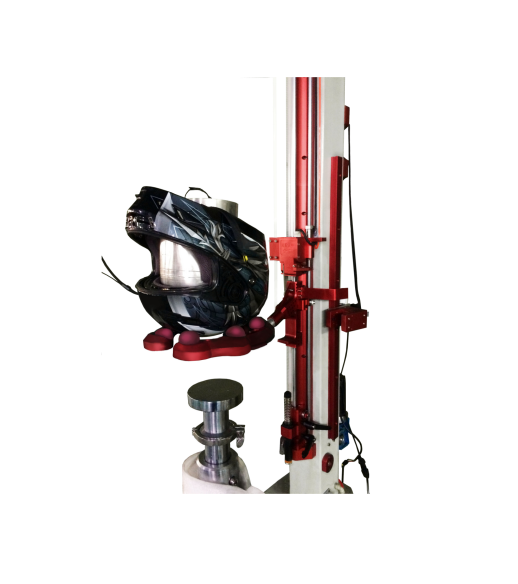
The EN 1078 helmet impact test is an important safety test for bicycle helmets, skateboard helmets and roller skate helmets. The standard EN 1078:2012+A1:2012 specifies requirements and test methods for helmet construction, shock absorption, retention systems, field of vision and marking.
EN 1078 Helmet Impact Test: Bicycle Helmet Shock Absorption Testing

Bicycle helmet compliance testing is essential for verifying helmet safety and impact protection. Learn how EN 1078, CPSC 16 CFR Part 1203, and ASTM F1447 evaluate bicycle helmet performance and why a reliable Bicycle Helmet Impact Tester is important for compliance testing.
Why Bicycle Helmet Compliance Testing Is Important

Every time a cyclist or skater puts on a helmet, they are trusting a lightweight shell to save their life. In the global market, especially in Europe, the EN 1078 standard is the definitive legal benchmark for bicycle helmets, skateboards, and roller skate headgear. Here is an inside look at how this advanced testing equipment puts helmets through their paces to meet EN 1078 certification.
Behind the Safety Shield: How a Helmet Impact Tester Ensures EN 1078 Compliance

ECE R22.06 is the latest and most stringent European safety standard for motorcycle and two-wheeler helmets. Reliable helmet test equipment is essential for manufacturers, labs, and certification bodies to verify compliance. HOTOTECH provides the ECE R22.06 helmet testing systems covering impact absorption, penetration resistance, retention system performance, and environmental conditioning.
ECE R22.06 Helmet Test Equipment: Principles & Standards