
Ensuring Helmet Compliance: The Role of EN960 Headform
author: Heather Hu
2025-10-28

Ensuring Helmet Compliance: The Role of EN960 Headform
The Significance of Helmet Compliance
Helmet compliance is paramount for both the safety of the user and the regulation of the market. In the realm of safety, helmets are designed to absorb and distribute the force of an impact during an accident. According to research, in motorcycle and bicycle accidents, a high percentage of fatalities are attributed to head injuries, and wearing a compliant helmet can significantly reduce the risk of severe head trauma. For instance, numerous studies have shown that wearing a proper helmet can decrease the likelihood of death by up to 40% in a motorcycle crash. This is because a well - designed helmet, which meets safety standards, has features like a strong outer shell and an effective shock - absorbing liner. The outer shell is usually made of tough materials such as polycarbonate or fiberglass, which can withstand the initial impact, while the liner, often made of expanded polystyrene or other shock - absorbing foams, cushions the head from the transmitted forces.
From a market perspective, helmet compliance ensures that only safe and reliable products are available to consumers. It helps to prevent the sale of substandard helmets that may not offer adequate protection. When there are clear compliance requirements, manufacturers are incentivized to produce high - quality helmets. This not only protects consumers from purchasing ineffective safety gear but also promotes healthy competition among manufacturers, as they strive to meet and exceed the set standards. In a market with non - compliant helmets, consumers may unknowingly purchase helmets that provide a false sense of security, leading to increased risks in case of an accident.
Current Standards and Regulations
There are several well - known helmet standards and regulations around the world. In the United States, the Department of Transportation (DOT) has established the DOT standard. Helmets that meet this standard must pass a series of tests, including impact resistance tests, penetration tests, and retention system strength tests. The DOT standard ensures that helmets sold in the US market can withstand a certain level of impact and are securely fastened to the head during an accident.
In the European Union, the ECE (Economic Commission for Europe) regulation R22.05 is widely recognized. This regulation covers aspects such as impact absorption, retention system strength, and field of vision requirements. Helmets that comply with ECE R22.05 must meet strict criteria in each of these areas. For example, the impact absorption test involves dropping a helmet - covered headform from a specified height onto an anvil, and the helmet must effectively reduce the impact force on the headform.
Another important standard is the Snell Memorial Foundation's standards, which are highly regarded in the motorcycle and motorsports communities. Snell standards are known for their rigorous testing procedures, often going beyond what is required by other standards. They test helmets for different types of impacts, including those that are more likely to occur in high - speed crashes or specific motorsport - related accidents.
This is where the EN960 headforms come into play. EN960 headforms are an essential tool in the testing of helmets to ensure compliance with European standards. These headforms are designed to accurately replicate the shape and dimensions of the human head. When testing helmets for impact resistance, retention system strength, or other safety - related features, the use of EN960 headforms provides a standardized and reliable method. By using a headform that closely mimics the human head, manufacturers and testing facilities can better assess how a helmet will perform in real - world accident scenarios, thus contributing to the overall goal of helmet compliance.
Introduction to EN960 Headforms
What are EN960 Headforms
EN960 headforms are specifically designed physical models that are used in the testing of protective helmets. These headforms are developed in accordance with the European standard EN960, which details the dimensional and constructional requirements for such test devices. They are engineered to closely mimic the shape and size of the human head, serving as a reliable substitute during helmet testing procedures. By using EN960 headforms, manufacturers and testing laboratories can simulate real - world conditions more accurately when evaluating the performance of helmets. For example, when a helmet is placed on an EN960 headform and subjected to impact forces, it provides a more realistic representation of how the helmet would protect a human head in an actual accident scenario. This helps in ensuring that helmets meet the necessary safety standards and can effectively safeguard the wearer's head.
Key Features of EN960 Headforms
EN960 headforms are characterized by high dimensional accuracy, strictly following the precise specifications defined by the European standard. These headforms are designed to closely replicate the dimensions of different head shapes, taking into account various factors such as head circumference, head length and width, and specific anatomical features. For example, the dimensions of the headform may be accurate to the millimeter to ensure that it can accurately reflect the true size of the human head during helmet testing. This precise dimensional replication is crucial for evaluating the fit and comfort of helmets. If a helmet does not fit properly on an EN960 headform, it is unlikely to provide optimal protection to the wearer in actual use.
The headforms are typically made of materials with specific material properties. These materials need to possess sufficient strength and rigidity to withstand the various forces exerted during helmet testing, such as impact forces and pressure. At the same time, they also need to have a certain degree of abrasion resistance to ensure that the shape and size remain stable during multiple test uses. Some EN960 headforms may be made of sturdy plastics or composite materials. These materials can not only meet the above - mentioned strength and durability requirements but also have a relatively low weight, which is convenient for operation during the testing process. In addition, the surface properties of the material are also important. It needs to simulate the surface of the human scalp to better evaluate the friction and contact between the helmet and the head.
The Role of EN960 Headforms in Ensuring Helmet Compliance
Impact Testing
In impact testing, EN960 headforms play a crucial role. The process involves simulating real - world impact scenarios that a helmet - wearer might encounter. For example, in a motorcycle accident, the head can experience a sudden and powerful impact. To replicate this, a helmet is placed on an EN960 headform, and then a weighted object is dropped onto the helmet from a specific height, or the headform with the helmet is made to impact a rigid surface.
During the impact, sensors attached to the headform measure the acceleration forces acting on the headform. These forces are directly related to the impact forces that would be experienced by a human head in a similar accident. By analyzing the data collected from these sensors, such as the peak acceleration and the duration of the impact, engineers can evaluate how well the helmet absorbs and dissipates the impact energy. A good - performing helmet should be able to reduce the acceleration forces transmitted to the headform to a level that minimizes the risk of head injury. For instance, if a helmet is designed to meet a certain standard, the acceleration measured on the headform during impact testing should not exceed a predefined limit. If the measured acceleration is within the acceptable range, it indicates that the helmet has the potential to protect the wearer's head effectively in a real - life impact situation.
Penetration Resistance Testing
For penetration resistance testing, EN960 headforms are also essential. In this type of test, the goal is to determine whether a helmet can prevent sharp objects from penetrating and reaching the head. A sharp object, such as a metal spike or a pointed tool, is propelled towards the helmet - covered EN960 headform at a specific velocity.
The test assesses the ability of the helmet's shell and inner layers to withstand the force of the penetrating object. If the object fails to penetrate the helmet and reach the headform, it means that the helmet has passed the penetration resistance test. However, if the object pierces through the helmet and makes contact with the headform, it indicates a failure of the helmet in this aspect. The results of these tests help manufacturers identify areas for improvement in helmet design. For example, if a particular helmet design consistently fails penetration resistance tests, manufacturers may need to reinforce the shell material, add additional protective layers, or modify the construction of the helmet to enhance its penetration - resistant capabilities.
Other Testing Applications
EN960 headforms are also used in other important helmet tests. In stability testing, the headform is used to evaluate how well a helmet stays in place on the head during various movements. This is crucial because a helmet that shifts or dislodges during an accident may not provide adequate protection. The headform is subjected to simulated head movements, such as sudden turns, tilts, or shakes, while wearing the helmet. Sensors can be used to measure the movement of the helmet relative to the headform, and any excessive movement can be identified.
EN960 headforms are also used for wearing comfort simulation. Although comfort is a subjective concept, it can be evaluated through some objective measurements. For example, pressure sensors are placed on the headform, and then the helmet is worn on the headform. When different pressure distributions are applied to the headform to simulate the natural pressure points of the head, the sensors can measure the pressure distribution between the helmet and the headform. This helps to determine whether the helmet exerts a uniform pressure across key areas such as the forehead, temples, and back of the head, or if there are local pressure peaks that could cause discomfort. In addition, the similarity in shape and size between the headform and the human head allows for an evaluation of whether the design of the helmet's inner padding and suspension system can provide a good fit and comfort, thus encouraging the wearer to wear the helmet for extended periods.
Real - World Examples and Case Studies
Success Stories of Using EN960 Headforms
One notable success story is the case of a well - known motorcycle helmet manufacturer. Before using EN960 headforms in their testing processes, they faced challenges in accurately assessing the performance of their helmets. Their helmets were not consistently meeting the required safety standards, which led to negative reviews from consumers and regulatory concerns.
However, after integrating EN960 headforms into their testing protocol, they were able to make significant improvements. During impact testing with the EN960 headform, they discovered that the helmet's design was not effectively distributing the impact forces across the head. By analyzing the data collected from the sensors on the headform, they redesigned the inner shell structure of the helmet. This new design was able to better absorb and distribute the impact energy, reducing the peak acceleration forces measured on the headform by 20%. As a result, their helmets not only met the European safety standards but also received high ratings from independent safety testing organizations. This led to increased consumer trust, and the brand's market share in the motorcycle helmet segment grew by 15% within a year.
Another example is from the cycling industry. A leading cycling helmet brand used EN960 headforms to improve the comfort and stability of their helmets. Through wearing comfort simulation tests on the headforms, they found that the existing padding material was causing pressure points on the head. They replaced the padding with a more ergonomic and pressure - distributing material. In addition, stability testing on the EN960 headforms showed that the helmet's retention system was not secure enough during sudden head movements. They redesigned the retention system to be more adjustable and secure. After these improvements, the brand's cycling helmets became known for their excellent fit, comfort, and safety. They received positive reviews from professional cyclists and amateur riders alike, and their sales increased steadily over the following seasons.
Consequences of Ignoring EN960 Headforms in Testing
There have been several cases where manufacturers ignored the use of EN960 headforms in testing, with disastrous consequences. In one instance, a small - scale helmet manufacturer in Europe decided to cut costs by skipping the use of EN960 headforms in their testing process. They relied on their own in - house testing methods, which did not accurately replicate real - world conditions.
When their helmets were put on the market, they seemed to be a popular choice due to their low price. However, during a series of accidents involving motorcycle riders wearing these helmets, it became clear that the helmets were not providing adequate protection. In one particular accident, a rider crashed at a moderate speed. The helmet, which had not been properly tested using an EN960 headform, failed to absorb the impact effectively. The rider suffered severe head injuries, including a skull fracture and brain contusion.
Following this incident, regulatory authorities investigated the manufacturer. It was found that the helmets did not meet the European safety standards, and the manufacturer was forced to recall all the helmets from the market. The company faced significant financial losses, not only from the recall but also from legal liabilities and damage to its reputation. As a result, the company went out of business within a year, highlighting the importance of using proper testing tools like EN960 headforms to ensure helmet compliance and, ultimately, the safety of users.
Conclusion
Recap of the Importance of EN960 Headforms
Throughout this discussion, it has become evident that EN960 headforms are indispensable in the realm of helmet compliance. These headforms act as a gold - standard tool for accurately assessing the safety and performance of helmets. By closely mimicking the shape and dimensions of the human head, they enable manufacturers and testing facilities to conduct a wide range of tests that are crucial for ensuring helmet safety. In impact testing, they provide a reliable means of measuring the effectiveness of helmets in absorbing and dissipating impact energy, which is directly related to reducing the risk of head injury in real - world accidents. In penetration resistance testing, they help to determine whether a helmet can prevent sharp objects from reaching the head. Additionally, their use in stability and comfort testing ensures that helmets not only protect but also fit well and are comfortable to wear, which is essential for encouraging regular use. Overall, EN960 headforms play a fundamental role in upholding the integrity of helmet safety standards and protecting the end - users.
Future Outlook
Looking ahead, the role of EN960 headforms is likely to expand and evolve. As technology continues to advance, there will be an increasing demand for more sophisticated and accurate testing methods. EN960 headforms may incorporate new materials and manufacturing techniques to further enhance their similarity to the human head in terms of both physical properties and biomechanical response. For example, future headforms could be made of advanced composite materials that more closely mimic the impact - absorbing characteristics of the human skull and scalp.
Moreover, with the growing focus on reducing the risk of rotational injuries in helmet - related accidents, EN960 headforms may be adapted to better measure rotational forces during impact testing. This could lead to the development of new helmet designs that are specifically optimized to protect against rotational injuries. Additionally, as the global market for helmets continues to grow, especially in emerging economies where safety standards are becoming more stringent, the use of EN960 headforms will be crucial in ensuring that helmets meet international safety requirements. This will not only help to protect the safety of millions of users worldwide but also promote the growth of a healthy and competitive helmet industry that prioritizes quality and safety above all else.
ECE 22.06 Explained: The Critical Role of Oblique Impact Testing
How Safe Is Your Helmet? Meet Its Laboratory Judges
Related Article
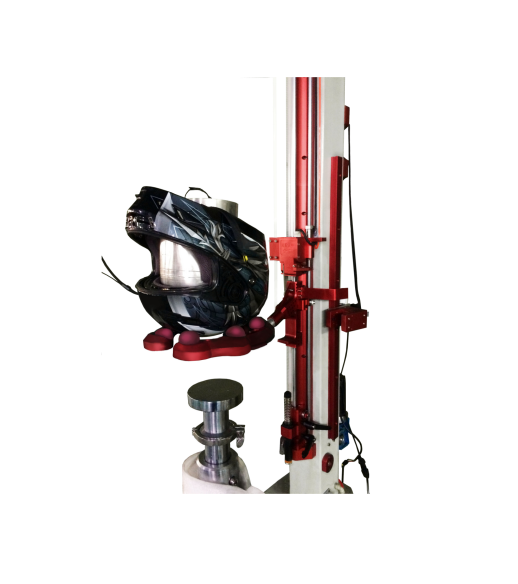
The EN 1078 helmet impact test is an important safety test for bicycle helmets, skateboard helmets and roller skate helmets. The standard EN 1078:2012+A1:2012 specifies requirements and test methods for helmet construction, shock absorption, retention systems, field of vision and marking.
EN 1078 Helmet Impact Test: Bicycle Helmet Shock Absorption Testing

Bicycle helmet compliance testing is essential for verifying helmet safety and impact protection. Learn how EN 1078, CPSC 16 CFR Part 1203, and ASTM F1447 evaluate bicycle helmet performance and why a reliable Bicycle Helmet Impact Tester is important for compliance testing.
Why Bicycle Helmet Compliance Testing Is Important

Every time a cyclist or skater puts on a helmet, they are trusting a lightweight shell to save their life. In the global market, especially in Europe, the EN 1078 standard is the definitive legal benchmark for bicycle helmets, skateboards, and roller skate headgear. Here is an inside look at how this advanced testing equipment puts helmets through their paces to meet EN 1078 certification.
Behind the Safety Shield: How a Helmet Impact Tester Ensures EN 1078 Compliance

ECE R22.06 is the latest and most stringent European safety standard for motorcycle and two-wheeler helmets. Reliable helmet test equipment is essential for manufacturers, labs, and certification bodies to verify compliance. HOTOTECH provides the ECE R22.06 helmet testing systems covering impact absorption, penetration resistance, retention system performance, and environmental conditioning.
ECE R22.06 Helmet Test Equipment: Principles & Standards