
How Safe Is Your Helmet? Meet Its Laboratory Judges
author: Heather Hu
2025-10-16
1. Introduction
1.1 The significance of helmets
Helmets are more than just headgear; they are lifesavers in various aspects of our lives. In daily cycling, whether it's a casual ride around the neighborhood or a more serious commute, a helmet serves as the first line of defense for the rider's head. For industrial workers, such as those in construction or mining, helmets protect against falling objects and potential head - on collisions, ensuring their safety in high - risk work environments. In sports like motorcycle racing, skiing, or horseback riding, helmets are essential for athletes to minimize the impact of potential falls or crashes.
The quality of a helmet is directly linked to its safety performance. A well - made helmet with high - quality materials and proper design can effectively absorb and disperse the force of an impact, reducing the risk of serious head injuries. On the contrary, a low - quality helmet may fail to provide adequate protection, leaving the user vulnerable in case of an accident.
1.2 Raise the topic of helmet testing equipment
Have you ever wondered how we determine whether a helmet is truly safe? This is where helmet testing equipment comes into play. The safety of a helmet cannot be judged by its appearance alone. Rigorous testing using specialized equipment is essential to ensure that helmets meet the required safety standards. Let's take a closer look at the role of these laboratory "judges" in determining the safety of helmets.
2. The Role of Helmet Testing Equipment
Hongtu Instrument Co., Ltd. has been engaged in the research, development, production, and sales of helmet testing equipment for over 17 years. Their extensive experience has made them a leading player in the field, and their equipment is crucial for ensuring helmet safety.
2.1 Impact testing
Impact testing equipment is designed to simulate real - world collision scenarios that a helmet might encounter. For example, it can simulate a cyclist falling off a bike and hitting the ground, or a motorcyclist crashing into an obstacle. Drop tests are a common type of impact test. The helmet is dropped from a specific height onto a hard surface, such as an anvil. During this process, sensors inside the helmet and on the impact surface measure the force of the impact. The key is to see how well the helmet can absorb and disperse this force. A high - quality helmet should be able to reduce the force transmitted to the head significantly. For instance, a well - designed motorcycle helmet can absorb up to 80% of the impact force, according to industry - standard tests.
Another type of impact test is the pendulum test. In this test, a weighted pendulum is swung to strike the helmet. This simulates side - on impacts that are common in many accidents. By analyzing the data collected from these impact tests, manufacturers can determine if the helmet's design and materials are suitable for protecting the wearer's head in various collision situations.
2.2 Penetration resistance testing
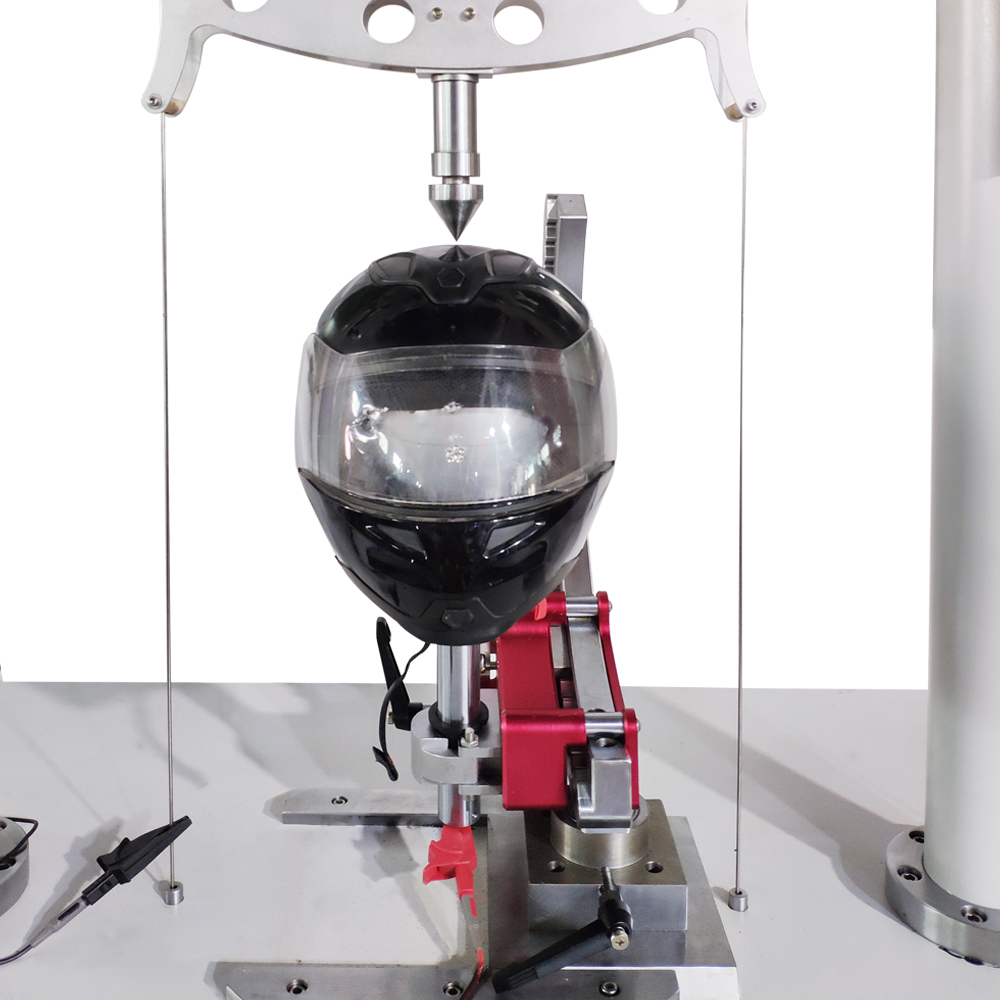
Penetration resistance testing equipment is used to check a helmet's ability to withstand sharp objects. In real - life situations, a cyclist might accidentally hit a sharp rock or a construction worker could be struck by a nail. To test this, a sharpened object, usually a steel cone, is dropped onto the helmet from a certain height. The weight and the shape of the cone are standardized according to safety standards. For example, in motorcycle helmet testing, a 3 - kilogram steel cone with a specific tip radius is often used.
If the helmet fails this test and the cone penetrates the helmet shell, it means that the helmet would not provide adequate protection in a real - world scenario where the head is at risk of being pierced by a sharp object. This type of testing is especially important for helmets used in high - risk industries like construction, where falling tools or debris with sharp edges are common hazards.
2.3 Flame resistance testing
Flame resistance testing equipment is essential for helmets used in environments where there is a risk of fire, such as in firefighting or some industrial settings. The equipment simulates a fire scenario by exposing the helmet to a controlled flame for a specific period. For example, a Bunsen burner might be used to direct a flame at the helmet for 15 seconds, as per some industry standards.
During the test, the helmet's material is examined to see how it reacts to the heat and flame. A good - quality flame - resistant helmet should not catch fire easily, and if it does ignite, it should self - extinguish quickly. Some helmets are made of special materials like fiberglass or aramid fibers, which have excellent flame - resistant properties. These materials can withstand high temperatures without melting or burning through, thus protecting the wearer's head in case of a fire.
2.4 Other performance tests
In addition to the above - mentioned tests, there are other aspects of a helmet's performance that need to be evaluated. Stability testing ensures that the helmet stays in place on the head during an impact. Specialized equipment is used to apply forces to the helmet in different directions to check its stability. A stable helmet is one that does not shift or rotate significantly during impact, as this could reduce its protective effectiveness.
Comfort testing might involve using head - shaped models and sensors to measure factors such as pressure distribution inside the helmet. A comfortable helmet is more likely to be worn correctly and consistently. If a helmet is too tight in some areas or too loose overall, it can cause discomfort and may even lead to the wearer not using it properly. There are also tests for ventilation performance, which is important for helmets used in activities that cause sweating, like cycling or motorcycling in hot weather. Good ventilation can keep the wearer's head cool and prevent fogging of any attached visors, enhancing both comfort and visibility.
3. Hongtu Instrument Co., Ltd.: A Pioneer in Helmet Testing Equipment
3.1 Company overview
Established in 2009, Hongtu Instrument Co., Ltd. has been at the forefront of the helmet testing equipment industry for over 17 years. During these years, the company has dedicated itself to the research, development, production, and sales of a wide range of helmet testing equipment. Their long - standing presence in the market has made them a well - known and trusted name among manufacturers, testing institutions, and other stakeholders in the helmet - related industries.
3.2 Product features and advantages
Hongtu's helmet testing equipment is equipped with state - of - the - art technologies. High - precision sensors are integrated into their impact testing machines. These sensors can accurately measure the impact force with an error margin of less than 1%, providing extremely reliable data for evaluating a helmet's shock - absorption capabilities. For example, in their drop - test equipment, the sensors can precisely record the force exerted on the helmet at the moment of impact, allowing manufacturers to make precise adjustments to the helmet's design if needed.
The automation control system in their equipment is another highlight. It enables seamless operation of the testing process. Once the test parameters are set, such as the height of the drop in an impact test or the time of flame exposure in a flame - resistance test, the system can automatically execute the test. This not only improves the efficiency of the testing process but also reduces human error. In a busy testing laboratory, the automated equipment can complete a series of tests much faster than manual operation, allowing for a higher throughput of helmet samples. The reliability of the equipment is also enhanced by the use of high - quality materials in its construction. The frames of their testing machines are made of durable alloy materials that can withstand the repeated stresses of testing over a long period.
3.3 Industry influence and contributions
Hongtu Instrument Co., Ltd. has had a profound influence on the helmet testing equipment industry. The company has actively participated in the revision of industry standards. For instance, they have contributed their expertise to the revision of standards like the national standard for motorcycle and electric bicycle helmets in China. Their input has helped to make these standards more scientific and practical, ensuring that helmets produced under these standards are of high - quality and can provide better protection.
Moreover, Hongtu has supplied its high - quality testing equipment to numerous helmet manufacturers and testing institutions around the world. Some of the world - renowned helmet brands rely on Hongtu's equipment to conduct regular quality checks on their products. By providing reliable testing equipment, Hongtu has promoted the overall improvement of helmet quality in the industry, playing a significant role in making helmets safer for end - users in various fields, from daily cycling to high - risk industrial operations.
4. The Importance of Helmet Testing Equipment
4.1 Ensure user safety
The most crucial role of helmet testing equipment is to ensure the safety of users. Through a series of strict tests, only helmets that meet the safety standards can enter the market. For example, in a motorcycle accident, a well - tested helmet can significantly reduce the risk of head injury. According to statistics, in motorcycle accidents where riders were wearing helmets that passed rigorous testing, the risk of severe head injury was reduced by up to 70%. This is because the testing equipment can accurately evaluate the helmet's ability to absorb impact energy, resist penetration, and maintain stability. By ensuring that helmets on the market are of high - quality, testing equipment effectively protects the lives and health of countless users in various fields, whether it's daily commuting on a bicycle or engaging in high - speed motorcycle racing.
4.2 Meet regulatory requirements
In different countries and regions, there are strict regulations regarding helmet safety standards. For instance, in the European Union, helmets must meet the ECE (Economic Commission for Europe) standards. These standards cover aspects such as impact resistance, penetration resistance, and the strength of the helmet's retention system. In the United States, the Department of Transportation (DOT) has its own set of standards for motorcycle helmets. Helmet testing equipment is the key tool to ensure that helmet products meet these regulatory requirements. Manufacturers need to use this equipment to conduct tests on their products during the production process. Only when the test results show that the helmets comply with the relevant standards can they be legally sold in the market. This not only helps to maintain market order but also ensures that consumers can purchase helmets that can provide reliable protection.
4.3 Promote industry development
Helmet testing equipment plays a vital role in promoting the development of the entire helmet industry. The existence of this equipment forces helmet - producing enterprises to continuously improve their production technologies and processes. For example, when a manufacturer's helmet fails the penetration resistance test, they need to research and develop new materials or improve the existing material - processing methods. This may involve using stronger and more impact - resistant materials, such as high - strength plastics or advanced composite materials. In the process of continuous improvement, the overall quality of helmets in the industry is enhanced. Moreover, as testing technology advances, new testing methods and more stringent standards emerge. This encourages helmet manufacturers to invest more in research and development, which in turn promotes technological innovation in the helmet industry, leading to the production of safer and more comfortable helmets for consumers.
5. Conclusion
5.1 Summary of key points
In summary, helmet testing equipment plays an irreplaceable role in ensuring the safety of helmets. Through impact testing, penetration resistance testing, flame - resistance testing, and other performance tests, it can comprehensively evaluate the safety performance of helmets. Hongtu Instrument Co., Ltd., with its 17 - year - long experience in researching, developing, producing, and selling helmet testing equipment, has made outstanding contributions to the industry. Their state - of - the - art equipment with high - precision sensors, automation control systems, and high - quality construction materials has provided reliable tools for helmet manufacturers and testing institutions. By ensuring that helmets meet safety standards, the equipment has safeguarded the lives and health of countless users in various fields, from daily commuting to high - risk industrial and sports activities. It has also helped helmet - producing enterprises meet regulatory requirements and promoted the continuous development and technological innovation of the helmet industry.
5.2 Outlook for the future
Looking ahead, the helmet testing equipment industry is expected to continue to grow and innovate. As technology advances, we can anticipate the development of more advanced testing methods and equipment. For example, the integration of artificial intelligence and big data in helmet testing equipment may enable more accurate and comprehensive analysis of test results. This could lead to the development of even safer helmets with better - optimized designs and materials. Moreover, with the increasing global awareness of safety, the demand for high - quality helmet testing equipment will likely rise. It is crucial for companies like Hongtu Instrument Co., Ltd. to keep investing in research and development, continuously improve their products, and contribute to making helmets more reliable and safer for users around the world. Only through continuous innovation and progress can we ensure that helmets, as essential safety equipment, can effectively protect the wearers in all kinds of situations.
Ensuring Helmet Compliance: The Role of EN960 Headform
Alpine vs. Freestyle, Kids vs. Adults: Are You Using the Right Ski Helmet?
Related Article
The EN 1078 helmet impact test is an important safety test for bicycle helmets, skateboard helmets and roller skate helmets. The standard EN 1078:2012+A1:2012 specifies requirements and test methods for helmet construction, shock absorption, retention systems, field of vision and marking.
EN 1078 Helmet Impact Test: Bicycle Helmet Shock Absorption Testing

Bicycle helmet compliance testing is essential for verifying helmet safety and impact protection. Learn how EN 1078, CPSC 16 CFR Part 1203, and ASTM F1447 evaluate bicycle helmet performance and why a reliable Bicycle Helmet Impact Tester is important for compliance testing.
Why Bicycle Helmet Compliance Testing Is Important

Every time a cyclist or skater puts on a helmet, they are trusting a lightweight shell to save their life. In the global market, especially in Europe, the EN 1078 standard is the definitive legal benchmark for bicycle helmets, skateboards, and roller skate headgear. Here is an inside look at how this advanced testing equipment puts helmets through their paces to meet EN 1078 certification.
Behind the Safety Shield: How a Helmet Impact Tester Ensures EN 1078 Compliance

ECE R22.06 is the latest and most stringent European safety standard for motorcycle and two-wheeler helmets. Reliable helmet test equipment is essential for manufacturers, labs, and certification bodies to verify compliance. HOTOTECH provides the ECE R22.06 helmet testing systems covering impact absorption, penetration resistance, retention system performance, and environmental conditioning.
ECE R22.06 Helmet Test Equipment: Principles & Standards