
What's the Cost of a Failed Helmet Test? Avoid These Common Testing Mistakes
author: Heather Hu
2025-09-30
What's the Cost of a Failed Helmet Test? Avoid These Common Testing Mistakes
When it comes to head protection, helmets are non - negotiable safety gear. Whether for cyclists navigating busy city streets, construction workers on high - rise sites, motorcyclists cruising highways, or athletes competing in contact sports, a well - functioning helmet is the first line of defense against life - threatening head injuries. Its core purpose is to absorb impact energy, reduce the force transmitted to the brain, and minimize the risk of concussions, skull fractures, and other severe trauma. However, none of these life - saving benefits can be guaranteed if a helmet fails its safety tests. In this blog, we’ll break down the staggering costs of a failed helmet test and reveal the most common testing mistakes you must avoid to ensure your helmets meet the highest safety standards—with insights from HOTOTECH, a leader in manufacturing helmet testing equipment with 16 years of expertise, dedicated to delivering precise helmet quality testing data.

The Hidden and Not - So - Hidden Costs of a Failed Helmet Test
A failed helmet test isn’t just a minor setback—it can have far - reaching financial, legal, and reputational consequences that cripple a brand. Let’s break down the key costs:
1. Financial Losses: From Recalls to Wasted Production
The most immediate cost of a failed helmet test is financial. If a batch of helmets fails testing after production, you’re faced with two costly choices: recall the products or scrap the entire lot. Recalls alone can cost millions—think about the expenses of notifying customers, arranging returns, repairing or replacing helmets, and covering shipping fees. For example, in 2023, a major sports equipment brand recalled 50,000 cycling helmets after failed impact tests, resulting in a $2.3 million loss in production costs and customer refunds. Even if you catch the failure before full production, the money spent on raw materials, labor, and prototype development for the faulty design is still wasted. This is where reliable testing equipment matters—HOTOTECH’s 16 years of crafting helmet testing tools means their devices can detect flaws early, helping brands avoid such devastating financial hits by providing accurate data on prototype and pre - production performance.
2. Legal Risks: Lawsuits and Regulatory Penalties
Helmets are subject to strict regulatory standards worldwide, such as the CPSC (Consumer Product Safety Commission) in the U.S., CE marking in the EU, and AS/NZS in Australia. A failed test means your product doesn’t meet these standards—and selling non - compliant helmets can lead to heavy fines. Worse, if a consumer is injured because your helmet failed to protect them (a direct result of a failed test), you could face costly lawsuits. In 2022, a motorcyclist sued a helmet manufacturer after suffering a traumatic brain injury; the lawsuit revealed the helmet had failed impact tests during internal checks, leading to a $5 million settlement. To stay compliant and avoid legal trouble, brands need testing equipment that aligns with global standards. HOTOTECH’s helmet testing devices are engineered to meet these strict regulations, delivering the precise data needed to prove compliance and reduce legal risks.
3. Brand Reputation: Losing Customer Trust Forever
In the age of social media and online reviews, a failed helmet test can destroy your brand’s reputation overnight. Customers buy helmets because they trust your brand to keep them safe—if news breaks that your products failed safety tests, that trust vanishes. Negative reviews, social media backlash, and media coverage of the failure can lead to a sharp drop in sales. Even if you fix the issue later, regaining customer trust is a long and expensive process. For small brands, this reputational damage can be irreversible. Consistently reliable testing, powered by equipment like HOTOTECH’s (which provides consistent, accurate data to ensure helmets pass every time), is key to maintaining that trust and protecting your brand’s image.
Common Helmet Testing Mistakes (and How to Avoid Them)
Now that you understand the costs of a failed test, let’s look at the most common mistakes that lead to failures—and how to fix them, with support from HOTOTECH’s expertise.
1. Skipping Pre - Production Prototype Testing
Mistake: Many brands rush to full production without thoroughly testing prototypes. They assume the design will meet standards, only to discover flaws (like weak impact absorption or poor strap durability) after mass - producing thousands of helmets.
Solution: Always test prototypes before production. Conduct pre - production tests for key safety metrics: impact resistance, penetration resistance, strap strength, and fit. Use certified testing labs—and reliable equipment—to ensure results are accurate. HOTOTECH, with 16 years in the industry, offers prototype testing equipment that simulates real - world impacts (as required by CPSC, CE, and other standards) and delivers precise data on impact force, helping you catch flaws early. For example, their impact testers can drop prototypes from standardized heights onto different surfaces, providing clear, actionable data to refine designs before production.
2. Ignoring Environmental Factors in Testing
Mistake: Helmets are used in a variety of environments—hot, cold, wet, and humid—but many tests only simulate room - temperature conditions. This is a critical error: extreme temperatures can weaken helmet materials (e.g., foam can become brittle in cold weather or soft in heat), leading to failed tests when the helmet is used in real - world conditions.
Solution: Include environmental testing in your process. Test helmets under extreme temperatures (-20°C to 50°C), high humidity (90% RH), and after exposure to water. HOTOTECH’s environmental testing chambers are designed specifically for helmets, allowing brands to replicate these harsh conditions and measure how materials hold up. For example, their chambers can condition helmets to CE EN 1078 standards (cold, hot, wet) and work seamlessly with their impact testers to provide post - conditioning performance data—ensuring your helmets pass tests even in extreme environments.
3. Using Low - Quality or Non - Compliant Materials
Mistake: Cutting costs by using cheap or non - compliant materials (e.g., low - density foam, weak plastic shells, or substandard straps) is a recipe for test failure. These materials can’t withstand impact or wear, leading to poor performance in safety tests.
Solution: Source materials from trusted suppliers that meet regulatory standards. For example, use EPS (Expanded Polystyrene) foam that’s certified for impact absorption, and straps made from high - tensile strength nylon. To verify material quality, test samples with equipment that delivers precise data—like HOTOTECH’s material testing tools. Their devices can measure the impact absorption of foam, the tensile strength of straps, and the durability of plastic shells, providing objective data to confirm that materials meet standards. With 16 years of experience, HOTOTECH knows exactly what data brands need to validate material quality, helping you avoid the risk of using subpar materials.
4. Inconsistent Testing Procedures
Mistake: Inconsistency in testing (e.g., varying drop heights, different test surfaces, or uncalibrated equipment) leads to unreliable results. A helmet might pass a test one day and fail the next because the process isn’t standardized.
Solution: Follow standardized testing procedures set by regulatory bodies (CPSC, CE, AS/NZS). Calibrate testing equipment regularly—and use tools designed for consistency. HOTOTECH’s helmet testing equipment is built for repeatability: their impact testers have fixed drop heights and standardized surfaces, and their force gauges are pre - calibrated to ensure accuracy. Additionally, their software records every test parameter (height, force, temperature) and generates detailed reports, eliminating human error and ensuring consistent results. With HOTOTECH’s equipment, you can trust that every test is conducted the same way, every time.
5. Overlooking Fit and Retention Testing
Mistake: Many brands focus only on impact resistance and forget about fit and retention—but a helmet that doesn’t fit properly or stays on during an accident is useless. Failed fit tests (e.g., the helmet slips off during a simulated crash) are a common reason for overall test failure.
Solution: Include fit and retention testing in your process. Test helmets on different head shapes and sizes (using standardized head forms) to ensure a secure fit. HOTOTECH’s fit and retention testers are designed to simulate real - world forces: for example, their devices can pull helmets with a force of 30 lbf (as required by CPSC) and measure how well the helmet stays in place. They also offer head forms in multiple sizes to test fit across diverse user groups, providing precise data on strap tension, buckle strength, and overall retention—ensuring your helmets don’t fail due to poor fit.
Conclusion: Invest in Proper Testing (and the Right Equipment) to Avoid Catastrophic Costs
A failed helmet test isn’t just a financial burden—it’s a risk to lives, a threat to your legal standing, and a death sentence for your brand’s reputation. The good news is that most failures are avoidable by avoiding the common mistakes we’ve outlined: testing prototypes, simulating real - world environments, using quality materials, following standardized procedures, and prioritizing fit. And to do all this effectively, you need reliable testing equipment—equipment built by experts like HOTOTECH.
With 16 years of experience manufacturing helmet testing devices, HOTOTECH understands the unique challenges of helmet safety testing. Their equipment delivers the precise, consistent data you need to catch flaws early, stay compliant with global standards, and build helmets that keep customers safe. Remember, the cost of proper testing (and quality equipment) is a small investment compared to the cost of a recall, lawsuit, or lost customer trust.
So, don’t cut corners on helmet testing—or on the equipment that makes it possible.
Alpine vs. Freestyle, Kids vs. Adults: Are You Using the Right Ski Helmet?
Are Helmets Supposed to Break on Impact? The Science Behind Helmet Safety
Related Article
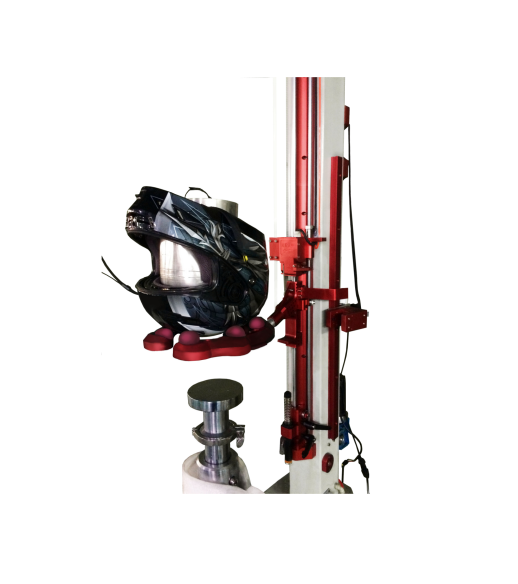
The EN 1078 helmet impact test is an important safety test for bicycle helmets, skateboard helmets and roller skate helmets. The standard EN 1078:2012+A1:2012 specifies requirements and test methods for helmet construction, shock absorption, retention systems, field of vision and marking.
EN 1078 Helmet Impact Test: Bicycle Helmet Shock Absorption Testing

Bicycle helmet compliance testing is essential for verifying helmet safety and impact protection. Learn how EN 1078, CPSC 16 CFR Part 1203, and ASTM F1447 evaluate bicycle helmet performance and why a reliable Bicycle Helmet Impact Tester is important for compliance testing.
Why Bicycle Helmet Compliance Testing Is Important

Every time a cyclist or skater puts on a helmet, they are trusting a lightweight shell to save their life. In the global market, especially in Europe, the EN 1078 standard is the definitive legal benchmark for bicycle helmets, skateboards, and roller skate headgear. Here is an inside look at how this advanced testing equipment puts helmets through their paces to meet EN 1078 certification.
Behind the Safety Shield: How a Helmet Impact Tester Ensures EN 1078 Compliance

ECE R22.06 is the latest and most stringent European safety standard for motorcycle and two-wheeler helmets. Reliable helmet test equipment is essential for manufacturers, labs, and certification bodies to verify compliance. HOTOTECH provides the ECE R22.06 helmet testing systems covering impact absorption, penetration resistance, retention system performance, and environmental conditioning.
ECE R22.06 Helmet Test Equipment: Principles & Standards