
Are Helmets Supposed to Break on Impact? The Science Behind Helmet Safety
author: Heather Hu
2025-09-29
Are Helmets Supposed to Break on Impact? The Science Behind Helmet Safety

If you’ve ever wondered why a helmet might crack or shatter during a crash, you’re not alone. Many people assume a “strong” helmet should stay intact—but the truth is, helmet breakage on impact is often intentional. In this blog, we’ll break down the science behind helmet design, explain why breaking can mean better protection, and help you understand how to choose a helmet that keeps you safe.
The Core Purpose of a Helmet: Absorbing Impact Energy
First, let’s clarify the real job of a helmet. A helmet isn’t just a hard shell to “block” hits—it’s a energy-absorbing system designed to:
- Slow down the force of an impact before it reaches your head.
- Spread that force across a wider area to reduce pressure on any single spot.
- Prevent or minimize traumatic brain injuries (TBIs), concussions, and skull fractures.
Without this energy absorption, even a “tough” helmet would act like a rigid shield—transferring nearly all the crash force directly to your skull and brain. That’s why the ability to deform or break is a critical part of its purpose.
Why Helmets Are Designed to Break on Impact
Helmet breakage isn’t a flaw—it’s a safety feature. Here’s the science behind it:
The Two Layers of a Helmet: Shell and Liner
Every protective helmet (whether for biking, skiing, construction, or motorcycling) has two key layers, each with a specific role:
- Outer Shell: Usually made of hard plastic (like polycarbonate) or fiberglass. Its job is to resist scratches, deflect small debris, and crack in a controlled way during a hard impact.
- Inner Liner: Typically made of expanded polystyrene (EPS)—the same material in packaging foam. This layer is designed to compress and crush on impact.
When you hit your head, the outer shell first takes the brunt of the force, then cracks to slow down the impact. The inner liner then crushes, acting like a “cushion” that extends the time it takes for your head to stop moving. This extra time drastically reduces the force transferred to your brain—something a rigid, unbreakable helmet could never do.
What Happens If a Helmet Doesn’t Break?
A helmet that stays completely intact after a hard impact is a red flag. It means the helmet didn’t absorb the impact energy—it just transferred it to your head. This increases your risk of:
- Concussions (mild TBIs caused by brain movement inside the skull).
- Skull fractures (when the skull can’t withstand the force of the impact).
- Severe TBIs (which can lead to long-term disability or worse).
In short: A helmet that doesn’t break on impact has failed at its most important job.
Myths vs. Facts About Helmet Breakage
Let’s debunk some common misconceptions about helmet safety:
|
Myth
|
Fact
|
|
“A cracked helmet is useless.”
|
A cracked helmet has already absorbed impact energy—so it is useless for future crashes. But the crack means it worked during the first one!
|
|
“Thicker helmets are safer.”
|
Safety depends on design (shell + liner), not just thickness. A poorly designed thick helmet may not absorb energy as well as a well-engineered thinner one.
|
|
“Helmets last forever.”
|
Helmets have a lifespan (usually 3–5 years). Even if they never crash, the inner liner degrades over time (from sun, sweat, and wear) and loses its ability to absorb energy.
|
How to Choose a Safe Helmet (Beyond Breakage)
Now that you know breakage is a good sign, here’s how to pick a helmet that will protect you when it matters:
1. Look for Certification Labels
Always choose a helmet that’s been tested and certified by a trusted organization. These labels mean the helmet meets strict safety standards—standards that rely on precise testing to ensure the helmet’s shell and liner perform as intended (i.e., break or compress in a controlled way).
Companies like HOTOTECH, which is dedicated to the R&D and production of helmet testing equipment, play a vital role in upholding these standards. HOTOTECH’s testing devices help manufacturers verify that their helmets can absorb impact energy effectively, crack in a controlled manner, and meet global certification requirements. This ensures that every certified helmet on the market has undergone rigorous testing to protect users.
Common certification labels to look for include:
- CPSC (Consumer Product Safety Commission): Mandatory for bike, skate, and snow helmets in the U.S.
- CE (Conformité Européenne): Required for helmets sold in the EU.
- ASTM International: Common for sports and industrial helmets (e.g., ASTM F1447 for bike helmets).
Never buy a helmet without a certification label—it may not offer any real protection.
2. Prioritize a Proper Fit
A helmet can only work if it fits correctly. Here’s how to check:
- It sits level on your head (not too far forward or back).
- The straps form a “V” under your ears, and you can’t fit more than two fingers between the strap and your chin.
- It doesn’t move around when you shake your head.
A loose helmet may slide off during a crash, while a tight one can cause discomfort (and make you less likely to wear it).
3. Replace Helmets After a Crash (Even Minor Ones!)
If your helmet cracks, crushes, or even just feels “off” after a crash—replace it immediately. The inner liner can only absorb impact energy once; after that, it’s no longer able to protect you.
Even if the damage looks minor (e.g., a small crack in the shell), the liner may be crushed internally. Don’t take the risk—get a new helmet.
Final Thoughts: Breakage = Protection
To answer the question: Yes, helmets are supposed to break on impact—but only in a controlled way that absorbs energy and protects your head. A cracked or crushed helmet isn’t a sign of poor quality; it’s proof that the helmet did its job.
Behind every safe, certified helmet is a network of testing and quality control—including efforts from companies like HOTOTECH, which ensures that helmet manufacturers have the tools to create products that meet the highest safety standards. The next time you put on a helmet, remember: Its “weakness” (the ability to break) is its greatest strength. And by choosing a certified, well-fitting helmet and replacing it after crashes, you’re giving your head the best possible protection.
Stay safe out there!
What's the Cost of a Failed Helmet Test? Avoid These Common Testing Mistakes
What is ANSI/ISEA Z89.1? A Complete Guide to Industrial Helmet Safety Standards
Related Article
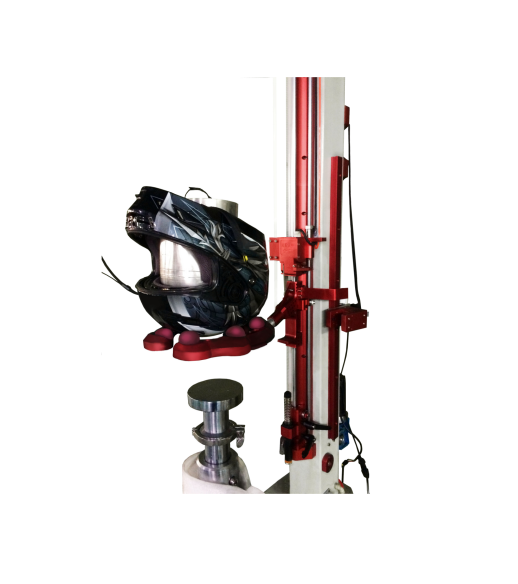
The EN 1078 helmet impact test is an important safety test for bicycle helmets, skateboard helmets and roller skate helmets. The standard EN 1078:2012+A1:2012 specifies requirements and test methods for helmet construction, shock absorption, retention systems, field of vision and marking.
EN 1078 Helmet Impact Test: Bicycle Helmet Shock Absorption Testing

Bicycle helmet compliance testing is essential for verifying helmet safety and impact protection. Learn how EN 1078, CPSC 16 CFR Part 1203, and ASTM F1447 evaluate bicycle helmet performance and why a reliable Bicycle Helmet Impact Tester is important for compliance testing.
Why Bicycle Helmet Compliance Testing Is Important

Every time a cyclist or skater puts on a helmet, they are trusting a lightweight shell to save their life. In the global market, especially in Europe, the EN 1078 standard is the definitive legal benchmark for bicycle helmets, skateboards, and roller skate headgear. Here is an inside look at how this advanced testing equipment puts helmets through their paces to meet EN 1078 certification.
Behind the Safety Shield: How a Helmet Impact Tester Ensures EN 1078 Compliance

ECE R22.06 is the latest and most stringent European safety standard for motorcycle and two-wheeler helmets. Reliable helmet test equipment is essential for manufacturers, labs, and certification bodies to verify compliance. HOTOTECH provides the ECE R22.06 helmet testing systems covering impact absorption, penetration resistance, retention system performance, and environmental conditioning.
ECE R22.06 Helmet Test Equipment: Principles & Standards