
Motorcycle vs. Construction Helmets: How Testing Standards Differ Across Industries
author: Heather
2025-05-13

Motorcycle vs. Construction Helmets: How Testing Standards Differ Across Industries

When it comes to personal protective equipment (PPE), helmets play a crucial role in safeguarding lives in various industries. Two commonly used types are motorcycle helmets and construction helmets. While both are designed to protect the head, their testing standards vary significantly due to the different nature of the risks they face. In this blog, we'll explore the key differences between these testing standards and understand why they are tailored to specific industries.
Understanding the Purpose of Motorcycle Helmets and Construction Helmets
Motorcycle Helmets
Motorcycle helmets are primarily used by motorcyclists to protect against high-speed impacts, debris, and wind. They are essential in reducing the risk of traumatic brain injuries (TBIs) during accidents, which often involve high velocities and violent falls. These helmets need to provide a high level of protection across a wide range of impact scenarios, including direct frontal impacts, side impacts, and rotational forces.
Construction Helmets
On the other hand, construction helmets, also known as hard hats, are used in construction sites, industrial workplaces, and similar environments. Their main purpose is to protect workers from falling objects, electrical hazards, and minor impacts. Construction helmets are designed to distribute the force of an impact over a larger area of the head and prevent penetration from sharp objects, such as tools or debris that may fall from above.
Key Differences in Testing Standards
Impact Resistance
Motorcycle Helmets
Motorcycle helmets undergo rigorous impact resistance testing. They are tested to withstand high-velocity impacts, simulating real-life motorcycle crashes. Testing methods often include dropping the helmet from specific heights onto various surfaces, such as an anvil or a steel plate, at different angles. The helmet must absorb the impact energy effectively to protect the wearer's head from excessive force. Additionally, rotational impact testing has become increasingly important as it mimics the complex movements that occur during a crash, helping to reduce the risk of rotational brain injuries.
Construction Helmets
For construction helmets, impact resistance testing focuses more on lower-velocity impacts from falling objects. The drop test for construction helmets typically involves dropping a specified weight, such as a steel ball or a blunt object, onto the helmet from a certain height. The helmet's ability to distribute the impact force and prevent it from reaching the head is crucial. Construction helmets are also tested for their penetration resistance, ensuring that sharp objects cannot pierce through the helmet and injure the wearer.
Retention System
Motorcycle Helmets
A reliable retention system is vital for motorcycle helmets. Since motorcyclists are exposed to high speeds and dynamic forces, the helmet must stay securely on the head during a crash. Motorcycle helmets usually feature chin straps with quick-release buckles that are tested for their strength and durability. The retention system should be able to withstand significant pulling forces without breaking or coming undone.
Construction Helmets
Construction helmets also have a retention system, but its requirements are different. The suspension system inside the construction helmet is designed to fit snugly on the wearer's head and keep the helmet in place. It is tested for comfort and stability during normal use and in the event of an impact. The focus is on ensuring that the helmet remains properly positioned on the head to provide maximum protection from falling objects.
Environmental Resistance
Motorcycle Helmets
Motorcycle helmets need to be resistant to various environmental factors, such as wind, rain, and UV radiation. They are often tested for aeroacoustics to reduce wind noise, which can be a distraction for motorcyclists. Additionally, the materials used in motorcycle helmets must be able to withstand long-term exposure to sunlight without degrading and losing their protective properties.
Construction Helmets
Construction helmets, on the other hand, are more focused on resisting environmental conditions typically found in construction sites, such as dust, moisture, and chemicals. They are tested for their ability to maintain their structural integrity and protective capabilities in these harsh environments. Some construction helmets are also designed to provide electrical insulation, protecting workers from electrical shocks in certain situations.
Conclusion
In conclusion, the differences in testing standards between motorcycle helmets and construction helmets are a reflection of the unique risks and requirements of each industry. Motorcycle helmets prioritize high-speed impact protection, reliable retention systems, and environmental resistance suitable for riding conditions. Construction helmets, on the other hand, focus on protecting against falling objects, penetration, and environmental hazards specific to construction sites. Understanding these differences helps manufacturers produce effective helmets and users make informed decisions when choosing the right protective gear for their needs. Whether you're a motorcyclist or a construction worker, wearing a helmet that meets the appropriate testing standards is essential for your safety.
How Does a Helmet Impact Test Machine Work? The Science Behind Simulating Collisions
7 Specialized Tests Every Smart Helmet Prototype Must Undergo
Related Article
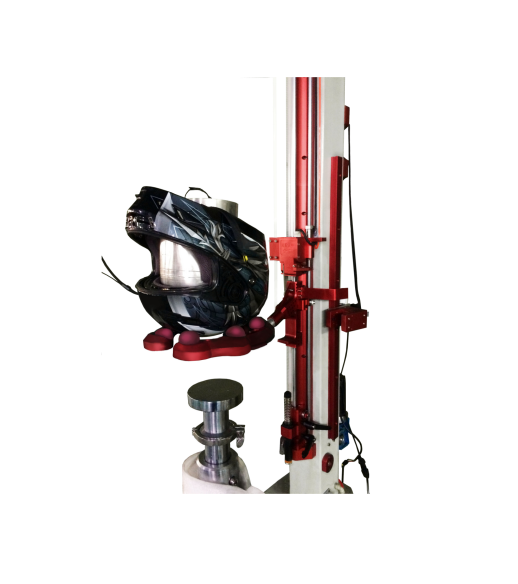
The EN 1078 helmet impact test is an important safety test for bicycle helmets, skateboard helmets and roller skate helmets. The standard EN 1078:2012+A1:2012 specifies requirements and test methods for helmet construction, shock absorption, retention systems, field of vision and marking.
EN 1078 Helmet Impact Test: Bicycle Helmet Shock Absorption Testing

Bicycle helmet compliance testing is essential for verifying helmet safety and impact protection. Learn how EN 1078, CPSC 16 CFR Part 1203, and ASTM F1447 evaluate bicycle helmet performance and why a reliable Bicycle Helmet Impact Tester is important for compliance testing.
Why Bicycle Helmet Compliance Testing Is Important

Every time a cyclist or skater puts on a helmet, they are trusting a lightweight shell to save their life. In the global market, especially in Europe, the EN 1078 standard is the definitive legal benchmark for bicycle helmets, skateboards, and roller skate headgear. Here is an inside look at how this advanced testing equipment puts helmets through their paces to meet EN 1078 certification.
Behind the Safety Shield: How a Helmet Impact Tester Ensures EN 1078 Compliance

ECE R22.06 is the latest and most stringent European safety standard for motorcycle and two-wheeler helmets. Reliable helmet test equipment is essential for manufacturers, labs, and certification bodies to verify compliance. HOTOTECH provides the ECE R22.06 helmet testing systems covering impact absorption, penetration resistance, retention system performance, and environmental conditioning.
ECE R22.06 Helmet Test Equipment: Principles & Standards