
7 Specialized Tests Every Smart Helmet Prototype Must Undergo
author: Heather Hu
2025-05-10

7 Specialized Tests Every Smart Helmet Prototype Must Undergo

In an era where technology seamlessly integrates with safety, smart helmets have emerged as a revolutionary piece of gear, bridging the gap between protection and innovation. Whether for motorcycle riders, construction workers, or cyclists, these intelligent helmets are designed to offer enhanced safety features, connectivity, and convenience. However, before a smart helmet prototype hits the market, it must undergo a series of rigorous specialized tests to ensure it meets the highest standards of safety, functionality, and durability.
1. Impact Resistance Test: The First Line of Defense
The impact resistance test is the cornerstone of evaluating a smart helmet's safety capabilities. During this test, the helmet prototype is subjected to various types of impacts, simulating real - world scenarios such as falls, collisions, and strikes. Different impactors with varying weights and velocities are dropped onto the helmet from specific heights to measure how effectively it can absorb and distribute the impact force. A well - designed smart helmet should be able to protect the wearer's head from severe injuries by reducing the peak acceleration transmitted to the skull. This test not only assesses the helmet's outer shell strength but also the effectiveness of its inner padding and shock - absorbing materials.
2. Penetration Resistance Test: Preventing Penetrative Injuries
Closely related to the impact resistance test, the penetration resistance test focuses on the helmet's ability to withstand sharp objects piercing through it. A pointed object, such as a metal spike, is dropped or projected onto the helmet at high speeds. The helmet must prevent the object from penetrating and reaching the wearer's head. This test is crucial, especially in industries like construction, where workers may be at risk of falling objects with sharp edges. A smart helmet that passes this test provides an additional layer of protection against penetrative injuries.
3. Retention System Test: Keeping the Helmet Secure
The retention system, typically a chin strap, is essential for keeping the helmet firmly in place during an impact or movement. In the retention system test, the helmet is subjected to forces that mimic sudden jerks, pulls, and rotations. The goal is to ensure that the chin strap and its fasteners can withstand these forces without breaking or releasing the helmet from the wearer's head. A reliable retention system is vital as an improperly secured helmet may fail to provide adequate protection during an accident.
4. Environmental Resistance Test: Adapting to Harsh Conditions
Smart helmets need to perform consistently in various environmental conditions. The environmental resistance test exposes the helmet prototype to extreme temperatures, humidity, UV radiation, and even water immersion. For example, in cold climates, the helmet's materials should not become brittle, and in hot and humid conditions, it should not lose its structural integrity. Additionally, if the helmet is designed for use in wet environments, it must be water - resistant to protect its internal electronic components, such as sensors and communication devices. This test ensures the helmet's durability and functionality across different climates and usage scenarios.
5. Electrical Safety Test: Protecting Against Electrical Hazards
Since smart helmets often incorporate electronic features like Bluetooth connectivity, built - in cameras, and sensors, electrical safety is of utmost importance. The electrical safety test checks for proper insulation, grounding, and protection against electrical shorts. It also ensures that the helmet's battery and charging system are safe and do not pose a risk of overheating, explosion, or electric shock to the user. Any malfunction in the electrical components could not only render the helmet's smart features useless but also endanger the wearer.
6. Acoustic Performance Test: Balancing Sound and Safety
For motorcycle and cycling smart helmets, the acoustic performance test is crucial. It evaluates how well the helmet can reduce wind noise while still allowing the wearer to hear important ambient sounds, such as traffic signals and approaching vehicles. Specialized equipment is used to measure the sound levels inside the helmet under different wind speeds and conditions. A good - performing smart helmet should provide a comfortable acoustic environment, enhancing the user's awareness and safety on the road.
7. Communication and Connectivity Test: Ensuring Seamless Functionality
The communication and connectivity test focuses on the smart features of the helmet. It checks the reliability of Bluetooth connections for hands - free calling, music streaming, and communication with other devices or riders. The test also evaluates the performance of built - in GPS systems, sensors, and any other wireless communication modules. For example, the helmet's sensors should be able to accurately detect impacts and send out emergency signals if necessary. A seamless communication and connectivity system can significantly enhance the user experience and safety.
In conclusion, these seven specialized tests are indispensable for every smart helmet prototype. They ensure that the final product not only offers top - notch safety but also provides reliable functionality and durability. By undergoing these comprehensive tests, smart helmets can truly live up to their promise of being a game - changer in the world of protective gear, safeguarding the lives of users while offering the benefits of modern technology.
Motorcycle vs. Construction Helmets: How Testing Standards Differ Across Industries
Must-Read for Helmet Manufacturers: How to Avoid Penetration Test Failures
Related Article
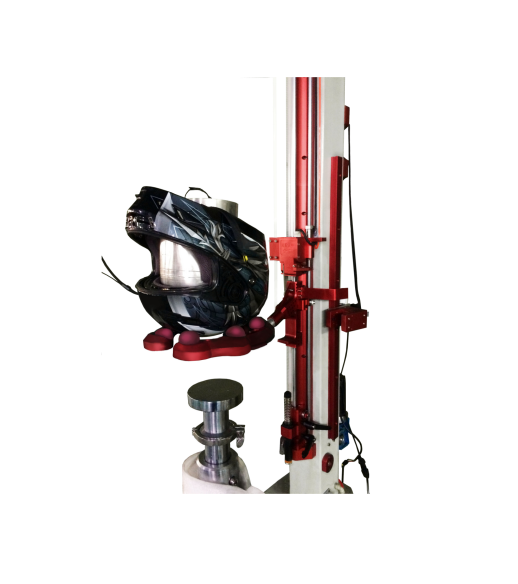
The EN 1078 helmet impact test is an important safety test for bicycle helmets, skateboard helmets and roller skate helmets. The standard EN 1078:2012+A1:2012 specifies requirements and test methods for helmet construction, shock absorption, retention systems, field of vision and marking.
EN 1078 Helmet Impact Test: Bicycle Helmet Shock Absorption Testing

Bicycle helmet compliance testing is essential for verifying helmet safety and impact protection. Learn how EN 1078, CPSC 16 CFR Part 1203, and ASTM F1447 evaluate bicycle helmet performance and why a reliable Bicycle Helmet Impact Tester is important for compliance testing.
Why Bicycle Helmet Compliance Testing Is Important

Every time a cyclist or skater puts on a helmet, they are trusting a lightweight shell to save their life. In the global market, especially in Europe, the EN 1078 standard is the definitive legal benchmark for bicycle helmets, skateboards, and roller skate headgear. Here is an inside look at how this advanced testing equipment puts helmets through their paces to meet EN 1078 certification.
Behind the Safety Shield: How a Helmet Impact Tester Ensures EN 1078 Compliance

ECE R22.06 is the latest and most stringent European safety standard for motorcycle and two-wheeler helmets. Reliable helmet test equipment is essential for manufacturers, labs, and certification bodies to verify compliance. HOTOTECH provides the ECE R22.06 helmet testing systems covering impact absorption, penetration resistance, retention system performance, and environmental conditioning.
ECE R22.06 Helmet Test Equipment: Principles & Standards