Why ECE R22.06 Standard Matters for Helmet Safety Testing
Why ECE R22.06 Standard Matters for Helmet Safety Testing

With the continuous improvement of global road safety regulations, ECE R22.06 (UN ECE Regulation No.22 Revision 06) has become one of the most important international certification standards for motorcycle helmets. It introduces significantly stricter testing requirements and more realistic impact simulations, ensuring higher levels of rider protection in real-world accidents.
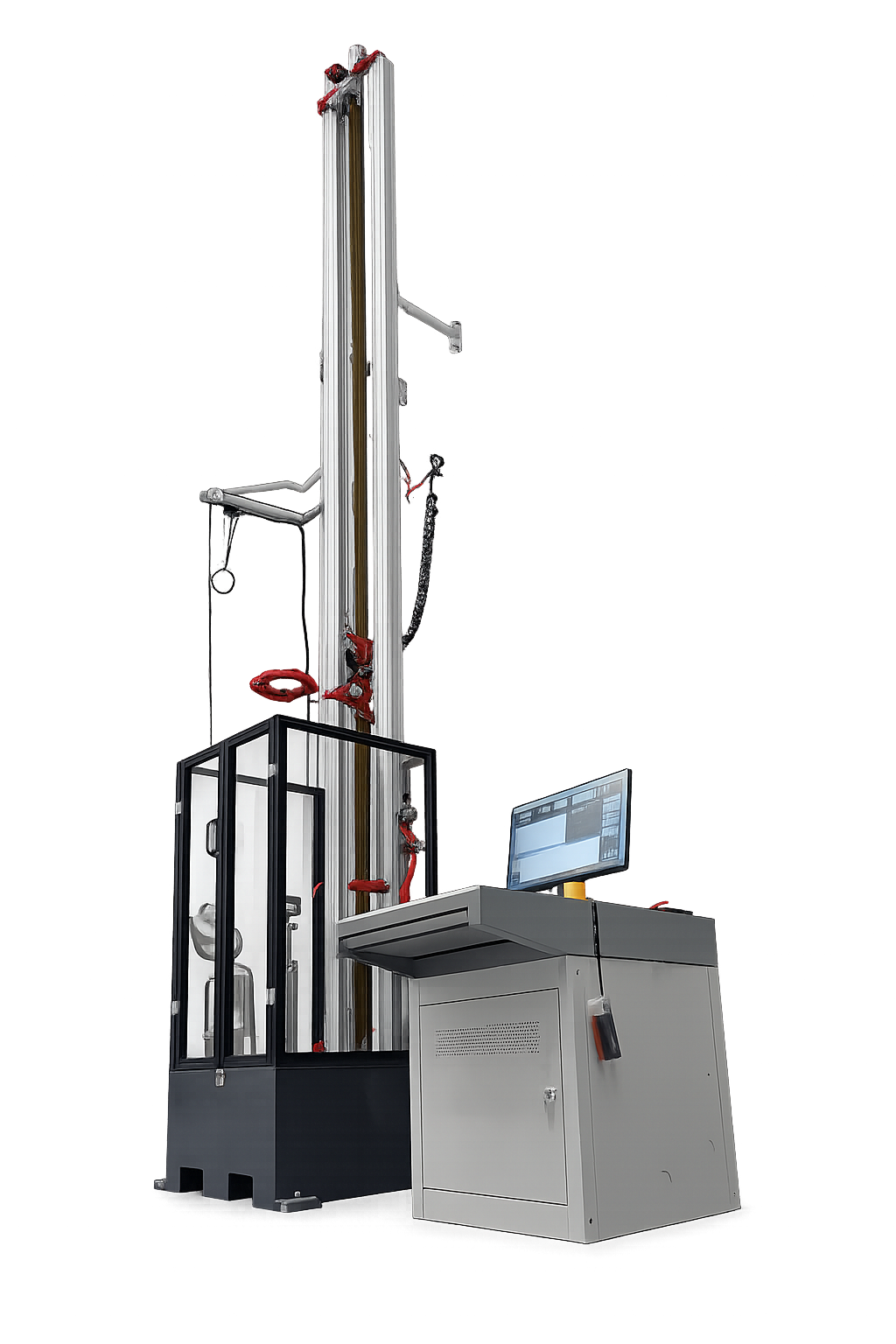
For helmet manufacturers and testing laboratories, compliance with ECE R22.06 is not possible without advanced Helmet Impact Testing Machines, which are essential for verifying helmet performance under complex impact conditions.
1. What is ECE R22.06 and Why It Is Important
ECE R22.06 is the latest helmet safety regulation issued by the United Nations Economic Commission for Europe (UNECE), replacing the previous ECE R22.05 standard.
Compared with its predecessor, ECE R22.06 introduces major improvements:
Realistic Impact Scenarios
- Testing is performed at multiple impact points across the helmet surface
- No longer limited to fixed test locations
- Better simulation of real-world accident conditions
Introduction of Rotational Impact Testing
In real accidents, head injuries are often caused not only by linear impact but also by rotational forces.
ECE R22.06 introduces rotational acceleration measurement to evaluate brain injury risks more accurately.
Multiple Impact Energy Levels
Helmets must pass impact tests under different energy conditions, including low, medium, and high-speed impacts.
Enhanced Testing for Accessories
Visors, communication systems, and integrated components must also meet safety requirements.
👉 This means helmets are no longer tested only for impact resistance, but for comprehensive real-accident protection performance.
2. Impact of ECE R22.06 on the Helmet Industry
The implementation of ECE R22.06 significantly raises the technical threshold for helmet manufacturers:
Improved Helmet Structure Design
- Multi-density EPS liners are now widely required
- Stronger and more flexible shell materials
- Reduced rotational injury through sliding layer designs
Higher Consistency Requirements
Production must ensure batch-to-batch consistency, not just sample compliance.
Increased Demand for Advanced Testing Equipment
Traditional single-impact systems are no longer sufficient. Manufacturers now require:
- Multi-direction helmet impact testing machines
- Rotational impact testing systems
- High-precision data acquisition systems
3. The Role of Helmet Impact Testing Machines in ECE R22.06
The Helmet Impact Testing Machine is the core equipment used to verify compliance with ECE R22.06.
It simulates real accident conditions by precisely controlling:
- Impact velocity
- Impact energy
- Impact angle
- Impact position
Key Safety Parameters Measured
The system evaluates critical helmet performance indicators, including:
- Headform acceleration (G-force)
- Impact energy absorption
- Head Injury Criterion (HIC)
- Rotational acceleration
These parameters directly determine whether a helmet meets ECE R22.06 safety requirements.
Multi-Standard Compatibility
Modern helmet impact testers can support multiple international standards, such as:
- ECE R22.06
- ECE R22.05
- DOT
- Snell
- GB Standards
This allows manufacturers to expand into global markets more efficiently.
4. Why ECE R22.06 Makes Testing Equipment More Critical
The updated standard significantly increases testing complexity:
More Testing Positions
From fixed-point impact testing to full-surface random impact coverage.
More Data Dimensions
From simple acceleration values to combined analysis of:
- Linear acceleration
- Rotational acceleration
- HIC values
Higher Accuracy Requirements
Equipment must ensure:
- High repeatability
- Low measurement error
- Stable performance under high-energy impacts
👉 As a result, high-performance Helmet Impact Testing Machines have become essential for certification success.
5. Conclusion: ECE R22.06 Drives a New Era of Helmet Safety
ECE R22.06 represents a major evolution in helmet safety standards, focusing on:
- More realistic crash simulations
- Advanced brain injury evaluation methods
- Higher product safety requirements
- More comprehensive testing systems
Within this framework, the Helmet Impact Testing Machine plays a critical role, directly determining whether a helmet can pass international certification and enter global markets.
Understanding the EN 397 Safety Helmet Impact Testing Machine: A Complete Guide
PV Modules UV Preconditioning Test Chamber