ECE R22.06 Certified: How Modern Test Equipment Validates Maximum Safety for Motorcycle Helmets

ECE R22.06 Certified: How Modern Test Equipment Validates Maximum Safety for Motorcycle Helmets

Replacing the older R22.05 iteration, ECE R22.06 represents the most rigorous, comprehensive, and technologically demanding motorcycle helmet standard globally. For manufacturers looking to penetrate the European and international markets, compliance is no longer just a legal hurdle—it is a benchmark of premium engineering.
However, certifying motorcycle helmets under ECE R22.06 requires more than just premium materials; it demands highly sophisticated, precise, and reliable test equipment.
The Paradigm Shift: Key Testing Requirements of ECE R22.06
ECE R22.06 significantly raises the bar for impact mitigation, structural integrity, and peripheral safety accessories. To successfully clear certification, a helmet must pass a battery of advanced physical trials, requiring manufacturers to upgrade their laboratory infrastructure.
1. Rotational Acceleration Impact Testing (The New Frontier)
The most profound update in ECE R22.06 is the mandatory Rotational Acceleration Test. Real-world motorcycle accidents rarely involve perfectly perpendicular, linear impacts. Instead, oblique impacts cause the brain to rotate violently inside the skull, leading to severe Traumatic Brain Injuries (TBI).
-
The Test: Helmets are dropped onto an inclined anvil at an angle of 45 degrees.
-
The Equipment Demand: This requires advanced Rotational Impact Testers equipped with specialized magnesium headforms and triaxial accelerometers coupled with angular rate sensors to accurately measure rotational kinetics (BRIC - Brain Injury Criterion).
2. Extended Linear Impact Velocities and Extra Impact Points
While R22.05 tested impact at fixed points and a uniform speed, ECE R22.06 introduces both higher and lower speed thresholds (up to 8.2 m/s) to ensure the helmet performs optimally in both high-energy crashes and low-speed tumbles. Furthermore, testing laboratories can now randomly select extra impact points across the helmet shell.
-
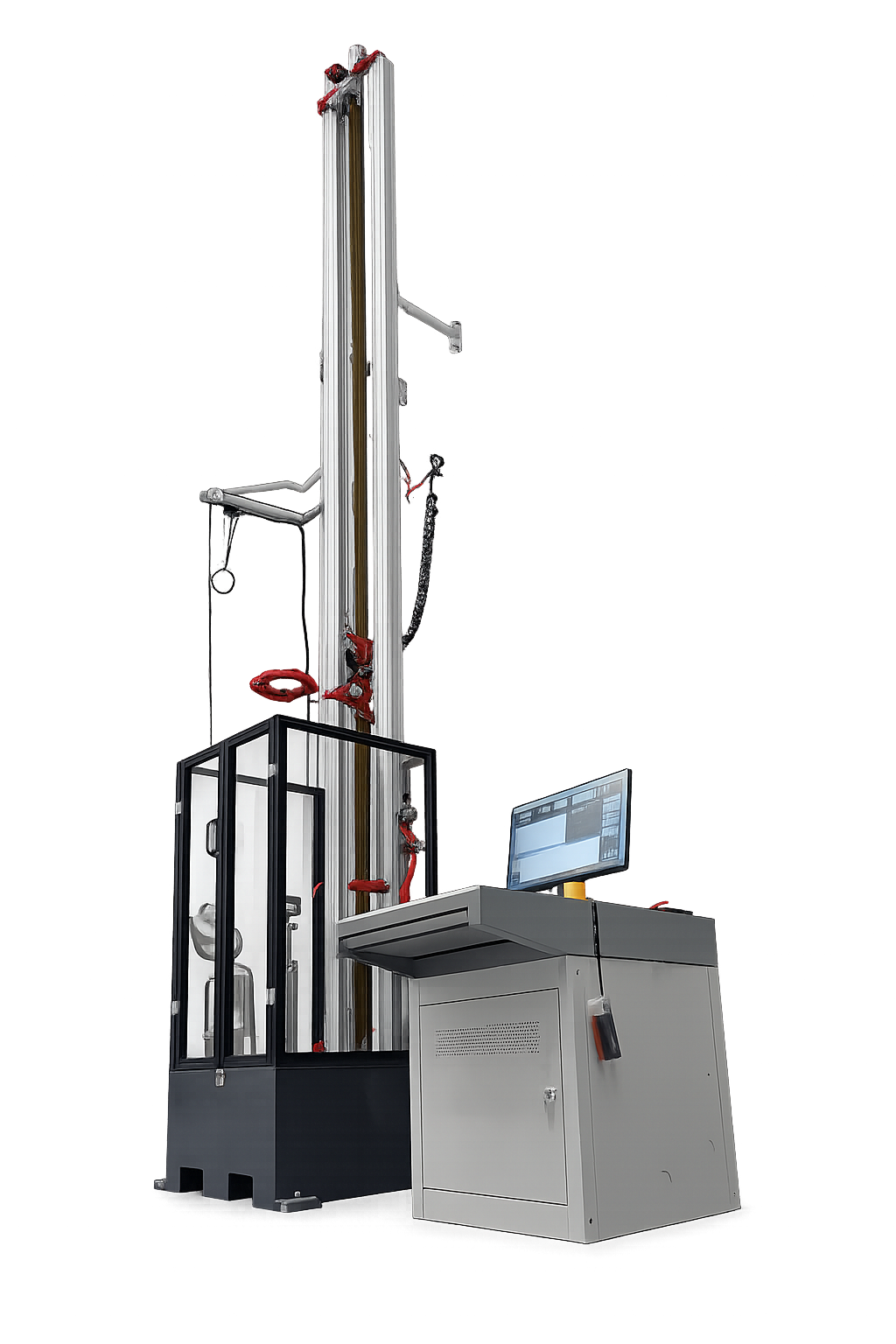
The Equipment Demand: Manufacturers require highly versatile Helmet Drop Testers with flexible, multi-angle guided wire systems and robust photoelectric velocity sensors to guarantee repeatability across infinite impact coordinates.
3. Visor Safety and High-Speed Particle Penetration
Under ECE R22.06, visors must undergo a ballistics-style test to ensure they do not shatter or detach when struck by loose gravel or debris at highway speeds.
-
The Test: A steel ball is shot at the visor at a velocity of 60 m/s (approximately 216 km/h).
-
The Equipment Demand: This necessitates a high-precision Visor High-Speed Particle Impact Tester equipped with compressed air propulsion and electronic speed calibration gates.
4. Retention System Rigidity and Roll-Off Tests
A helmet is only useful if it stays securely on the rider's head during a chaotic crash sequence. ECE R22.06 tightens the criteria for retention strap displacement and dynamic roll-off.
-
The Equipment Demand: Specialized Retention System Testers apply precise dynamic drop loads to the chin strap, measuring micro-millimetric elongation to prevent structural detachment.
The Manufacturer’s Challenge: Minimizing R&D Failure Rates
Developing a new line of compliant motorcycle helmets is an expensive venture. Relying solely on third-party certification bodies (like TUV or UTAC) for iterative testing creates massive bottlenecks, soaring costs, and delayed time-to-market.
To remain competitive, forward-thinking manufacturers are building in-house pre-compliance testing laboratories. By simulating exact ECE R22.06 conditions during the prototyping phase, engineering teams can fine-tune EPS densities, shell composites, and visor mechanics before official submission.
Future-Proof Your Laboratory with Advanced Helmet Test Equipment
Achieving the precision required by ECE R22.06 is impossible with outdated machinery. To capture the global market, your production line needs the support of world-class testing infrastructure.
We design, manufacture, and commission a comprehensive portfolio of helmet test equipment tailored precisely to ECE R22.06, DOT, and ISO standards. Our machinery provides:
-
High-Aviation Grade Sensoring: Ultra-precise triaxial sensors ensuring flawless data capturing for linear and rotational acceleration.
-
Automated Software Integration: Proprietary data analysis software that instantly calculates HIC (Head Injury Criterion) and rotational brain trauma indices.
-
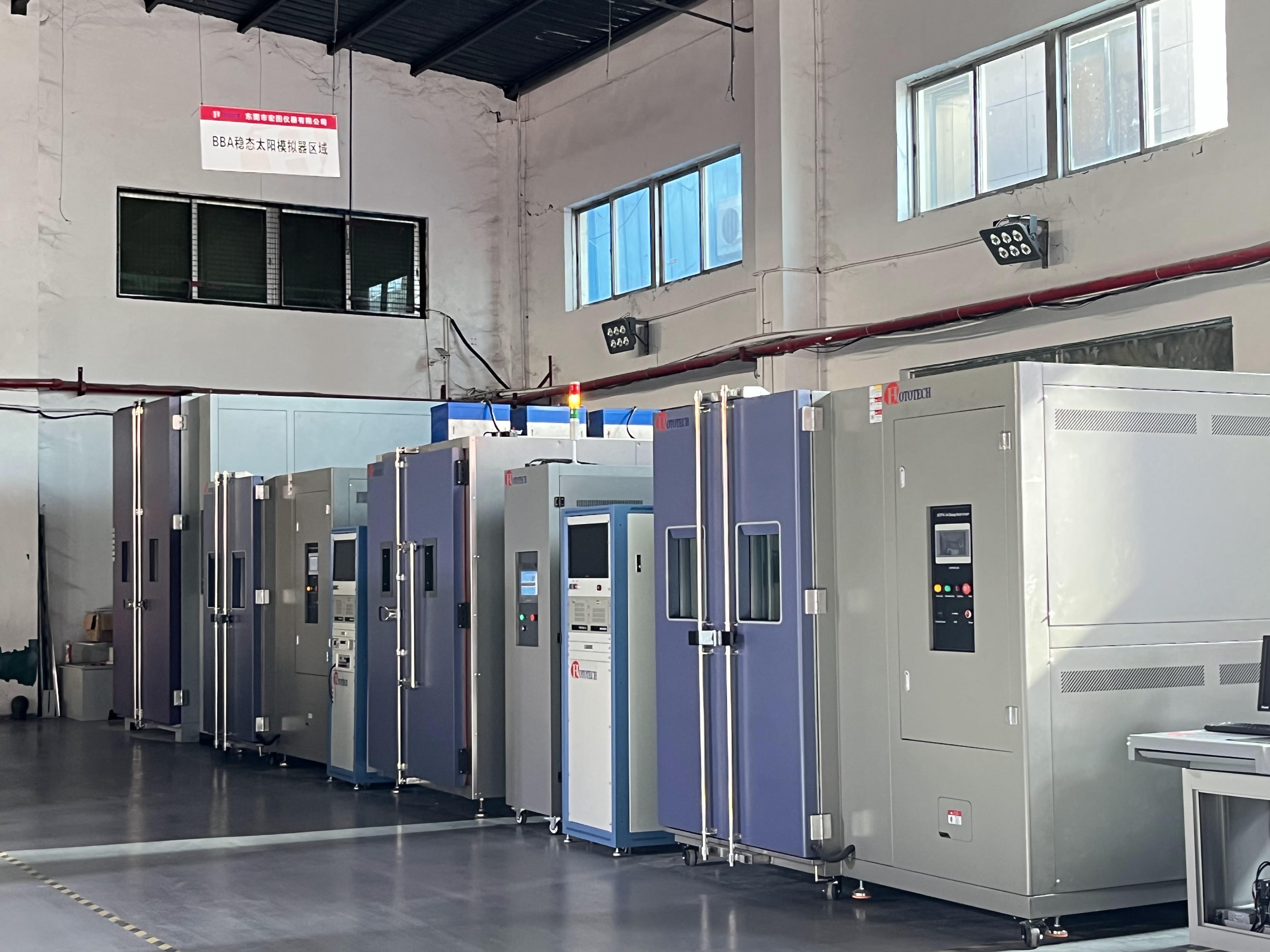
Turnkey Lab Solutions: From guided drop towers and high-speed particle cannons to conditioning chambers (hot, cold, UV, and solvent moisture conditioning), we provide everything needed to build a certified testing facility from scratch.
Get a Consultation Today
Are you upgrading your factory to meet the ECE R22.06 standard? Contact our technical sales team today to receive a detailed catalog of our motorcycle helmet testing machinery and discover how we can help accelerate your certification timeline.
Understanding EN 397: The Shield of Industrial Safety and How to Ensure Compliance
EN 12492:2025 – Why Your Next Helmet Impact Tester Must Handle Front, Rear & Side Strikes