How an IV Tester Reveals the True Power of Solar Cells

How an IV Tester Reveals the True Power of Solar Cells
A solar panel may look perfectly fine on the outside, but its internal electrical performance determines whether it will generate power for 5 years or 25 years. This is where the IV tester becomes indispensable. As a core piece of test equipment in photovoltaic manufacturing, the IV tester measures exactly how well a solar cell or module converts sunlight into electricity. Below, we explain how this essential test equipment works and why it matters for every solar panel that leaves your factory.

What Is an IV Tester?
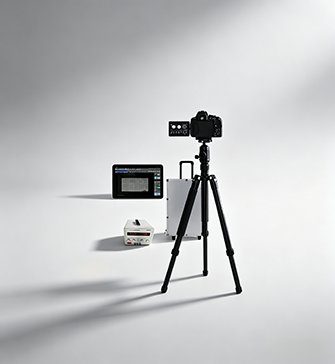
An IV tester is a specialized test equipment that measures the current voltage (I V) characteristics of a solar cell or solar panel. By subjecting the device to a controlled flash of light and varying the electrical load, the tester produces a complete current voltage curve. From this curve, critical performance parameters are calculated, including maximum power, efficiency, fill factor, series resistance, and shunt resistance.
Key Point: Without an IV tester, you cannot know if a solar panel truly meets its rated power output.
The Core Principle – How IV Testing Works
The process of testing a solar cell with an IV tester follows a logical sequence. Understanding each step helps you appreciate why this test equipment is non negotiable for quality control.
Step 1 – Simulating Sunlight with a Solar Simulator
The IV tester includes a solar simulator that produces a brief, intense flash of light. This light closely matches the standard AM1.5 solar spectrum. The simulator illuminates the solar panel or solar cell uniformly across its entire surface.
The light flash typically lasts only milliseconds. This short duration prevents the solar cell from heating up, which would otherwise skew the measurement results.
Step 2 – Sweeping the Electrical Load
While the solar cell is illuminated, the IV tester automatically sweeps the electrical load from short circuit to open circuit conditions. At each load point, the tester measures two values:
-
Current flowing out of the solar cell
-
Voltage across the solar cell
This sweep happens in a fraction of a second. The result is a set of hundreds of current voltage data points.
Step 3 – Plotting the IV Curve
The test equipment plots these data points to form a classic IV curve. The curve has a distinctive shape that tells experts everything about the solar panel health.
Key points on the curve include:
-
Short Circuit Current (Isc) – The current when voltage is zero
-
Open Circuit Voltage (Voc) – The voltage when current is zero
-
Maximum Power Point (Pmax) – The point where the product of current and voltage is highest
Step 4 – Calculating Critical Performance Parameters
From the IV curve, the test equipment automatically calculates the following parameters for each solar cell or solar panel:
Maximum Power (Pmax) – The highest power output under standard test conditions. This is the wattage you advertise to customers.
Efficiency – The percentage of sunlight converted into electricity. Higher efficiency means more power from the same surface area.
Fill Factor (FF) – A measure of the solar cell quality. It represents how "square" the IV curve is. A high fill factor indicates low internal losses.
Series Resistance (Rs) – Internal resistance that reduces power output. High series resistance often points to poor contacts or thin fingers.
Shunt Resistance (Rsh) – Resistance that bypasses the solar cell junction. Low shunt resistance indicates leakage paths or edge defects.
Step 5 – Comparing to Rated Values
The final step is comparison. The test equipment compares the measured values to the rated specifications printed on the solar panel label. If the measured maximum power falls below the rated value, the solar cell or module fails inspection and is rejected or downgraded.
What Defects Can an IV Tester Detect?
Unlike EL testers that show images of cracks, the IV tester detects electrical performance defects. Here are the most common issues identified by this test equipment:
Power Mismatch – The solar panel produces less wattage than labeled. This is the most common reason for customer complaints and warranty claims.
High Series Resistance – The IV curve shows an abnormal slope near the open circuit voltage. This often indicates broken fingers, poor solder joints, or inadequate busbar connections in the solar cell.
Low Shunt Resistance – The IV curve shows an abnormal slope near the short circuit current. This points to edge isolation defects, micro cracks, or contamination within the solar cell.
Low Fill Factor – The IV curve appears "rounded" rather than square. This indicates general poor quality of the solar cell or mismatched cell strings within the solar panel.
Low Open Circuit Voltage – The Voc is below specification. This suggests shunting defects or material problems in the solar cell junction.
Low Short Circuit Current – The Isc is below specification. This can result from reflection losses, poor anti reflective coating, or inactive cell areas.
Why IV Testing Is Essential for Solar Panel Manufacturing
Without IV testing, your solar panels are essentially untested. Here is why integrating this test equipment into your production line protects your business:
1. Guarantees Power Output to Customers
Every solar panel you sell comes with a power rating, for example 550W. The IV tester is the only test equipment that verifies this rating. Shipping underperforming panels leads to lawsuits, returns, and brand damage.
2. Sorts Solar Cells by Performance
Before assembling solar panels, manufacturers test individual solar cells with an IV tester. Cells are sorted into bins by power output. Matching cells of similar performance within one solar panel prevents current mismatch losses.
3. Detects Process Problems Early
If you see a sudden drop in fill factor or rise in series resistance across many solar panels, your test equipment will alert you. This allows you to trace the problem back to a specific production step, such as soldering, lamination, or tabbing.
4. Meets International Standards
Buyers, banks, and utilities require IV test data to comply with standards like IEC 61215 and IEC 61730. Without proper test equipment, your solar panels cannot access Tier 1 markets or project financing.
IV Tester vs. Other Solar Test Equipment
Many people confuse IV testers with EL testers or thermal imagers. Here is a quick comparison:
IV Tester – Measures power output, efficiency, series resistance, and shunt resistance. Best for solar cell and solar panel performance grading. Cannot locate defects spatially.
EL Tester – Produces images of the solar cell showing dark areas where current does not flow. Excellent for finding micro cracks, broken fingers, and soldering issues. Does not measure power output.
Thermal Imager – Finds hotspots under sunlight operation. Useful for PID detection and field inspection. Not suitable for factory grading.
Verdict: For performance certification and power rating, the IV tester is irreplaceable. For defect localization, use an EL tester alongside it.
How to Choose the Right IV Tester for Your Factory
When selecting IV test equipment for solar panel or solar cell production, consider these five factors:
Class of Solar Simulator
Solar simulators are rated Class AAA for spectral match, uniformity, and stability. For accurate solar cell measurement, always choose a Class AAA simulator. Lower classes produce incorrect power readings.
Measurement Speed
High volume production requires fast testing. Modern IV testers measure a solar panel in under 2 seconds, including light flash and data processing. Slower test equipment creates production bottlenecks.
Cell and Panel Size Compatibility
Ensure the test equipment can handle your largest solar panel size, including half cell, shingled, and large format modules up to 2300×1300mm. For solar cell testing, check that the tester accommodates M0, M2, M4, M6, M10, and G12 wafer sizes.
Temperature Control
IV measurement is temperature sensitive. The test equipment should include a temperature sensor and compensation algorithm to correct measured power to standard 25°C conditions. Without this, your readings will vary with factory temperature changes.
Data Integration and Traceability
The best IV testers connect to your manufacturing execution system (MES). Every solar panel receives a unique serial number, and all IV data is stored for traceability. This helps you track performance trends and respond to customer complaints with test records.
Common Misconceptions About IV Testing
Misconception 1 – A Flash Test Is Enough
Some small manufacturers skip IV testing and use only a simple flash test that measures just open circuit voltage and short circuit current. This is dangerous. Two different solar cells can have identical Voc and Isc but completely different maximum power. The IV curve is the only way to find true Pmax.
Misconception 2 – IV Testing Damages Solar Cells
Modern IV testers use very short light pulses, typically 10 to 100 milliseconds. The energy delivered to the solar cell is minimal, and temperature rise is below 2°C. IV testing is completely non destructive.
Misconception 3 – One Tester Is Enough for Both Cells and Panels
While some IV testers can handle both solar cells and solar panels, dedicated test equipment for each stage gives better accuracy. Cell testers use smaller light sources and faster electronics. Panel testers require larger uniform illumination areas.
Real World Application – How IV Testing Saves Money
Consider this scenario. A solar panel manufacturer produces 10,000 panels per day. Without IV testing, 5% of panels might underperform by 5 watts. That is 500 underperforming panels daily. Over one month, that equals 15,000 bad panels. If each panel sells for 100,themonthlylossfromundetecteddefectsis100,themonthlylossfromundetecteddefectsis1.5 million.
Now add warranty claims, shipping costs for replacements, and brand damage. The numbers become staggering. A quality IV tester pays for itself in weeks, not years.
Final Thoughts – IV Testing Is Non Negotiable for Quality Solar Panels
Whether you manufacture solar cells or assemble solar panels, the IV tester is the most important test equipment on your floor. It tells you the truth about power output, efficiency, and internal losses. No other machine can replace it.
By investing in a high quality IV tester, you ensure that every solar cell and every solar panel meets its promised specifications. In the solar business, trust is built on performance data. Give your customers the data they deserve.
EL Testing Equipment: Why Electroluminescence Testing Matters in Solar Cell Manufacturing
How an EL Tester Detects Hidden Defects in Solar Cells