How an EL Tester Detects Hidden Defects in Solar Cells

How an EL Tester Detects Hidden Defects in Solar Cells
In the solar industry, what you see is not always what you get. A solar panel may look perfect to the naked eye, but invisible micro-cracks, finger interruptions, and junction defects can reduce its lifespan by up to 30%. This is where Electroluminescence (EL) testing becomes essential. As a core piece of test equipment in PV manufacturing, the EL tester acts like an X-ray machine—revealing hidden defects before they reach your customers.
Below, we break down exactly how this powerful test equipment detects defects in solar cells.

What Is an EL Tester?
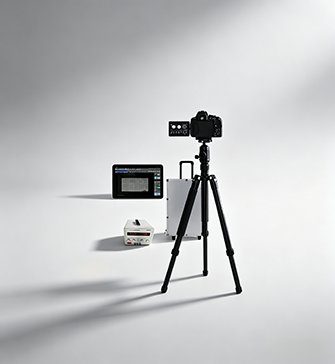
An EL tester is a specialized test equipment used to inspect the internal quality of solar panels and solar cells. It uses the electroluminescence principle: when a solar cell is forward-biased with electricity, it emits near-infrared light. Any defect that disrupts current flow shows up as a dark area on the high-resolution image captured by the tester.
Key Point: EL testing is non-destructive, fast, and highly reliable—making it the industry standard for quality control.
Step by Step: How the EL Tester Identifies Defects
The process can be broken down into five logical steps. Understanding these will help you appreciate why every serious manufacturer relies on this test equipment.
Step 1: Electrical Excitation of the Solar Panel
The solar panel is connected to a power supply within the EL tester. The equipment applies a forward-bias voltage (typically between 0.5V and 1.5V per solar cell). This forces current to flow through all cells in the module.
-
Purpose: Activate every solar cell uniformly.
-
Result: Good cells glow; defective cells remain dark.
Step 2: Near-Infrared Emission
Once current passes through a defect-free solar cell, electrons recombine and release energy as photons. For silicon-based cells, this emission falls in the near-infrared range (900–1200 nm). A healthy cell glows brightly across its entire surface.
If a solar cell has a micro-crack, solder bond failure, or broken finger, the current bypasses those areas—creating a cold, dark region.
Step 3: High-Sensitivity Camera Capture
An EL tester uses a highly sensitive near-infrared CCD camera housed in a light-tight enclosure. The camera captures the glow emitted by the solar panel while blocking ambient light.
-
Dark-room condition: Essential for signal clarity.
-
Integration time: Adjustable from milliseconds to several seconds, depending on test equipment settings and panel size.
Step 4: Image Processing and Defect Classification
The captured image is then processed by proprietary software. Algorithms automatically highlight anomalies and classify them into known defect types.
Common defects detected by EL test equipment include:
-
Micro-cracks – Appear as dark lines or dendritic patterns. Caused by mechanical stress during handling.
-
Broken fingers – Show up as black stripes perpendicular to the fingers. Caused by poor screen printing or corrosion.
-
Edge isolation defects – Appear as bright spots at cell edges. Caused by insufficient laser edge isolation.
-
Potential Induced Degradation (PID) – Show as large dark patches around the frame. Caused by voltage stress combined with humidity.
-
Soldering issues – One or more completely dark cells. Caused by ribbon detachment or cold solder joints.
Step 5: Automated Pass/Fail Decision
Based on predefined thresholds (e.g., maximum allowed dark area percentage), the test equipment assigns a pass, fail, or rework status to each solar panel. This data is logged for traceability, enabling manufacturers to track defect trends back to specific production lines.
Why EL Testing Is Essential for High-Quality Solar Panels
Without EL testing, your solar panels might pass flash tests but fail after 500 thermal cycles. Here is why integrating this test equipment into your production line protects your brand:
-
Prevents field failures – Micro-cracks grow over time under wind and snow loads.
-
Reduces warranty claims – Ship only fully functional solar cells and modules.
-
Improves production yield – Detect broken fingers or printing issues early in cell sorting.
-
Meets buyer standards – Tier-1 investors and utilities require EL images for every panel.
Pro tip: Some high-end test equipment now offers high-speed EL for inline inspection at 20+ megawatts per day.
EL Tester vs. Other Solar Test Equipment
Many people confuse EL testers with IV curve tracers or thermal imagers. Here is how they differ:
-
IV Tester – Measures power output (Watts), but cannot locate defects spatially.
-
Thermal Imager – Finds resistive hotspots under sunlight – effective for PID but misses micro-cracks.
-
EL Tester – Finds electrical defects with spatial accuracy down to 50 microns. Best for solar cell and module inspection before lamination.
Verdict: For pre-lamination inspection, EL test equipment has no substitute.
How to Choose the Right EL Test Equipment for Your Factory
When selecting an EL tester for your solar panel production line, consider these five factors:
Camera Resolution
Higher resolution (e.g., 12 MP to 25 MP) captures finer cracks. For solar cell inspection, you need at least 3 pixels per millimeter.
Throughput Speed
Inline systems test a solar panel in under 20 seconds. Offline benchtop units are slower but more versatile for R&D.
Software Intelligence
Look for AI-based defect classification that reduces operator dependency and speeds up decision-making.
Panel Size Compatibility
Ensure the test equipment can handle half-cells, shingled, or large-format 2300×1300 mm modules.
Power Supply Quality
A stable, low-ripple DC power supply prevents ghost patterns that mimic real defects.
Final Thoughts – EL Testing Protects Your Solar Investment
Whether you are a solar panel manufacturer, an independent quality auditor, or an installer, understanding how EL test equipment works helps you specify the right tools and interpret results correctly. A dark area on an EL image is never a false friend – it is a clear warning to stop and fix the process.
By investing in high-quality EL test equipment, you ensure that every solar cell in every module meets the highest standard of reliability. And in the solar business, reliability directly translates to customer trust and repeat orders.
How an IV Tester Reveals the True Power of Solar Cells