PV Module Hail Impact Test: How Does a Hail Impact Test Machine Work?
PV Module Hail Impact Test: How Does a Hail Impact Test Machine Work?
Hailstorms are one of the major environmental risks that can affect the reliability and long-term performance of photovoltaic (PV) modules. Large hailstones can crack the front glass, damage solar cells, create microcracks, and eventually reduce the power output of a solar panel.
To evaluate the hail resistance of photovoltaic modules, manufacturers and testing laboratories use a PV module hail impact test machine to simulate real hail impacts under controlled laboratory conditions.
The most widely referenced international test method is IEC 61215-2 MQT 17 Hail Test, which is designed to verify whether a photovoltaic module can withstand the impact of hail.
In this article, we will explain what a solar panel hail impact test is, how the test works, what equipment is required, and why hail impact testing is important for PV module manufacturers.
What Is a PV Module Hail Impact Test?
A PV module hail impact test is a laboratory test used to evaluate the ability of a solar panel or photovoltaic module to withstand impacts from artificial ice balls that simulate hailstones.
During the test, spherical ice balls with a specified diameter and temperature are launched toward the surface of a photovoltaic module at a controlled velocity.
The purpose is not simply to determine whether the glass breaks. A hail impact can also cause hidden damage such as:
-
Solar cell microcracks
-
Cell fractures
-
Glass cracks
-
Interconnection damage
-
Electrical performance degradation
-
Insulation or safety problems
Some damage may not be visible immediately after the impact. Therefore, photovoltaic manufacturers may combine visual inspection with electrical performance measurements and techniques such as electroluminescence (EL) imaging to identify hidden defects.
Research and industry testing have shown that hail impact can cause both visible glass damage and microscopic cell damage that may affect the long-term electrical performance of PV modules.
What Standard Is Used for PV Module Hail Testing?
The primary international standard associated with photovoltaic module hail testing is:
IEC 61215-2 – Terrestrial photovoltaic (PV) modules – Design qualification and type approval – Part 2: Test procedures
The hail test is identified as:
MQT 17 – Hail Test
The purpose of MQT 17 is to verify that the photovoltaic module is capable of withstanding the impact of hail.
The test equipment and test procedure are designed to control important parameters including:
-
Ice ball diameter
-
Ice ball mass
-
Ice ball temperature
-
Impact velocity
-
Impact location
-
Module mounting condition
This controlled testing environment allows manufacturers and laboratories to compare the hail resistance of different PV module designs.
What Are the Standard Hail Test Parameters?
For the standard IEC 61215 hail test, the minimum ice ball diameter is 25 mm.
For a 25 mm ice ball, the commonly specified impact velocity is approximately 23 m/s, with the standard defining the applicable tolerance. Larger ice balls can be used for more severe hail conditions.
Typical IEC 61215 hail test parameters include:
| Ice Ball Diameter | Approx. Mass | Impact Velocity |
|---|---|---|
| 25 mm | 7.5 g | 23.0 m/s |
| 35 mm | 20.7 g | 27.2 m/s |
| 45 mm | 43.9 g | 30.7 m/s |
| 55 mm | 80.2 g | 33.9 m/s |
| 65 mm | 132 g | 36.7 m/s |
| 75 mm | 203 g | 39.5 m/s |
These larger ice-ball conditions are useful when evaluating PV modules for regions where severe hailstorms are a concern. The U.S. Department of Energy also notes that IEC hail testing can use larger ice balls and higher impact velocities for higher levels of hail exposure.
Important: The exact test parameters should always be confirmed against the applicable edition of IEC 61215 and the customer's testing requirements before equipment design or procurement.
Why Is 25 mm Hail Used in the Standard Test?
A 25 mm ice ball represents the baseline hail condition specified for the IEC 61215 hail test.
At a velocity of approximately 23 m/s, a 25 mm ice ball has sufficient kinetic energy to provide a meaningful mechanical challenge to the PV module while allowing the test to be performed under controlled laboratory conditions.
The impact energy is determined by the mass and velocity of the ice ball:
E = 1/2 mv²
where:
-
E = impact kinetic energy
-
m = mass of the ice ball
-
v = impact velocity
As the hailstone diameter and velocity increase, its mass and kinetic energy increase significantly. This is why larger hail simulation tests can provide a much more severe challenge to photovoltaic module structures.
How Does a Solar Panel Hail Impact Test Machine Work?
A typical solar panel hail impact test machine consists of several important systems.
1. Ice Ball Preparation System
The test requires spherical ice balls with controlled dimensions and mass.
The ice balls are normally produced using dedicated molds. The minimum standard diameter is 25 mm, while larger sizes may be required for additional testing.
The freezing process is important because the physical characteristics of the ice ball can influence the impact result.
2. Freezing and Storage System
The ice balls must be frozen and stored under controlled temperature conditions before testing.
IEC 61215 specifies temperature conditions for ice-ball preparation and storage. The test apparatus therefore needs to provide an appropriate freezing and storage environment.
3. Hail Launcher
The hail launcher is one of the most important components of the test system.
It launches the ice ball toward the photovoltaic module at a controlled velocity.
Pneumatic launching systems are commonly used because they can provide high-speed and repeatable launching conditions. Research equipment used for IEC 61215 hail testing has also employed pneumatic launchers to propel 25 mm ice balls at approximately 23 m/s.
4. Velocity Measurement System
The actual velocity of the ice ball needs to be controlled and verified.
An optical or infrared velocity measurement system can be installed near the launching path to measure the flight velocity of the ice ball.
Accurate velocity measurement is important because impact energy depends directly on velocity.
5. PV Module Positioning System
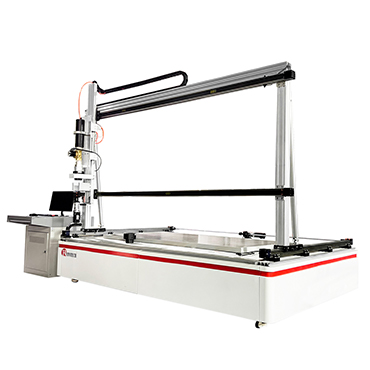
The test machine needs to accurately position the launcher or the PV module so that the ice ball hits the required test location.
A motorized X-Y positioning system is commonly used for automated hail impact testing.
This allows the operator to program different impact points and improve testing repeatability.
6. PV Module Fixture
The photovoltaic module must be securely mounted during testing.
The fixture should accommodate different module dimensions while maintaining the required testing position and orientation.
For laboratories testing different PV module designs, an adjustable fixture can significantly improve the flexibility of the hail impact test system.
How Many Points Are Tested During the Hail Test?
The IEC 61215 MQT 17 hail test uses defined impact locations on the photovoltaic module.
The commonly used test configuration includes 11 impact points distributed across representative areas of the module.
These locations are intended to challenge different parts of the module, rather than concentrating all impacts in one location.
The test may therefore involve impacts near areas such as:
-
Solar cells
-
Module edges
-
Corners
-
Interconnection areas
-
Mounting-related areas
The exact impact locations and sequence should be determined according to the applicable edition of IEC 61215 and the laboratory's test procedure.
What Happens After the Hail Impact Test?
Passing a hail impact test does not simply mean that the module has no obvious cracks.
After the impact test, the PV module may undergo additional inspections and measurements.
Typical evaluations can include:
Visual Inspection
The module surface is inspected for:
-
Glass cracking
-
Cell damage
-
Delamination
-
Other major visible defects
Electrical Performance Testing
The maximum power output of the module can be compared before and after the hail test.
A significant reduction in power output may indicate damage to the solar cells or electrical interconnections.
The U.S. Department of Energy describes the conventional hail certification condition as requiring no visible damage and less than 5% power loss following the specified hail impacts.
Electroluminescence Testing
EL testing is particularly useful for identifying microcracks and hidden cell damage that cannot easily be detected through visual inspection.
A PV module may appear normal from the outside while containing cell cracks that can affect its long-term performance.
Therefore, combining hail impact testing + EL inspection + electrical performance testing provides a more comprehensive evaluation of PV module durability.
What Damage Can Hail Cause to Solar Panels?
Hail impact can affect photovoltaic modules in several ways.
Glass Cracking
The front glass is the first structural layer to receive the impact. Large or high-energy hailstones can create cracks or localized damage.
Solar Cell Microcracks
Even when the glass does not visibly break, the mechanical shock can cause microcracks in crystalline silicon solar cells.
Cell Fracture
More severe impacts can result in larger cell fractures and electrical disconnection.
Power Loss
Cell cracks and electrical interconnection damage can reduce the effective active area of the module and therefore reduce its maximum power output.
Long-Term Reliability Problems
Hail damage may not always cause immediate catastrophic failure. Microcracks and other hidden defects can develop into more serious problems during subsequent thermal cycling, humidity exposure, mechanical loading, and outdoor operation.
This is why hail resistance is an important part of photovoltaic module reliability testing.
Why Is Hail Impact Testing Important for PV Module Manufacturers?
Solar modules are typically expected to operate outdoors for decades.
During their service life, PV modules may be exposed to:
-
Hailstorms
-
Heavy rain
-
Strong wind
-
Snow
-
Temperature changes
-
UV radiation
-
Humidity
-
Mechanical loads
Hail impact testing provides manufacturers with a controlled method to evaluate one of the major mechanical risks faced by modules installed in hail-prone regions.
For PV module manufacturers, the test can be used during:
-
New product development
-
Material selection
-
Glass thickness evaluation
-
Encapsulation material development
-
Module design verification
-
Product qualification
-
Quality control
-
Research and development
What Is a PV Module Hail Impact Test Machine?
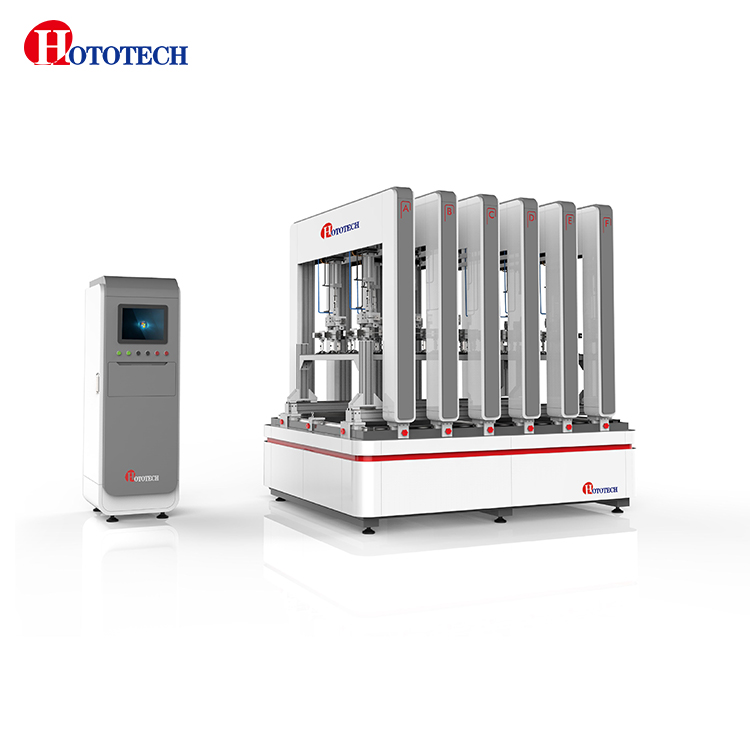
A PV module hail impact test machine, also called a solar panel hail test machine or PV hail impact tester, is specialized laboratory equipment designed to simulate hail impacts on photovoltaic modules.
A complete system generally integrates:
-
Ice ball molds
-
Freezing equipment
-
Ice ball storage
-
Pneumatic hail launcher
-
Velocity measurement system
-
Automatic positioning system
-
PV module fixture
-
Control software
-
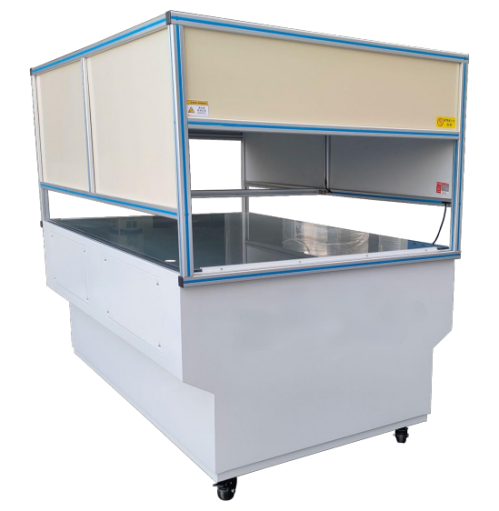
Safety enclosure
The exact configuration depends on the module dimensions, required hail size, test speed, automation level, and applicable testing standard.
What Should You Consider When Buying a Solar Panel Hail Test Machine?
If you are looking for a PV module hail impact test machine, several technical parameters should be confirmed before purchasing.
1. Applicable Standard
First confirm whether the equipment is required for:
IEC 61215-2 MQT 17
or another customer-specific hail test method.
2. PV Module Size
The maximum module dimensions determine the required positioning range and fixture size.
For example, large-format PV modules require a larger X-Y positioning system and a larger test frame.
3. Ice Ball Diameter
Confirm whether the equipment needs to support:
-
25 mm
-
35 mm
-
45 mm
-
55 mm
-
65 mm
-
75 mm
or other customer-defined hail sizes.
4. Impact Velocity
The launcher should be capable of achieving the required impact velocity accurately and repeatedly.
For the standard 25 mm condition, the commonly specified velocity is approximately 23 m/s.
5. Positioning Accuracy
Accurate positioning is important when the test requires impacts at predefined locations.
An automated positioning system can reduce operator error and improve test repeatability.
6. Safety Protection
Because the system launches ice balls at high velocity, appropriate protective guarding and safety interlocks are essential.
The equipment should be designed so that the operator is protected from accidental high-speed impacts.
Frequently Asked Questions About PV Module Hail Testing
What is the standard for solar panel hail testing?
The most widely referenced international standard is IEC 61215-2, MQT 17 Hail Test, which evaluates the ability of a photovoltaic module to withstand hail impact.
What size hail is used for IEC 61215?
The minimum ice ball diameter specified for the hail test is 25 mm. Larger ice balls can be used for more severe hail conditions.
What is the IEC 61215 hail test speed?
For a 25 mm ice ball, the commonly specified impact velocity is 23 m/s. Larger ice balls require higher impact velocities according to the applicable test conditions.
How many times is a solar panel hit during the hail test?
The standard test configuration uses defined impact locations, commonly 11 impact points on the PV module.
Can hail impact testing detect microcracks?
The impact test itself creates the mechanical challenge, while techniques such as EL testing can be used afterward to identify microcracks and other hidden cell damage.
Can the hail test be used for large-format PV modules?
Yes. The test equipment can be designed with an adjustable or automated positioning system to accommodate different photovoltaic module dimensions. The required working area should be confirmed according to the largest module to be tested.
Is a hail impact test machine the same as a mechanical impact tester?
No. A conventional mechanical impact tester typically uses a pendulum, falling weight, or other impact mechanism. A PV module hail impact test machine is specifically designed to reproduce controlled hail impacts using spherical ice balls with defined diameter, mass, temperature, velocity, and impact locations.
Conclusion
Hail resistance is an important part of photovoltaic module reliability evaluation, especially for solar projects located in areas with frequent or severe hailstorms.
The PV module hail impact test provides a controlled way to simulate real-world hail impacts and evaluate potential damage to the module glass, solar cells, electrical connections, and overall module performance.
For standard qualification testing, IEC 61215-2 MQT 17 is one of the key test methods to consider. The standard specifies the use of spherical ice balls, with a minimum diameter of 25 mm and a typical impact velocity of 23 m/s for the standard condition.
When selecting a PV module hail impact test machine, manufacturers and laboratories should pay particular attention to ice ball size, impact velocity, velocity measurement, positioning accuracy, module size, safety protection, and compliance with the applicable testing standard.
A properly designed hail impact testing system can help PV manufacturers improve product reliability, identify weaknesses in module design, and develop photovoltaic modules that are better prepared for severe outdoor weather conditions.
Related Search Terms
PV module hail impact test, solar panel hail test, photovoltaic hail test, PV hail impact tester, solar panel hail impact testing machine, PV module hail impact testing machine, IEC 61215 hail test, IEC 61215 MQT 17, solar module hail resistance test, hail resistance test for solar panels, photovoltaic module reliability testing, solar panel durability testing, hail impact tester for PV modules.
PV Module Mechanical Load Test: How to Test Solar Panel Mechanical Strength