Photovoltaic Module EL Inspection: How Electroluminescence Testing Detects Solar Panel Defects
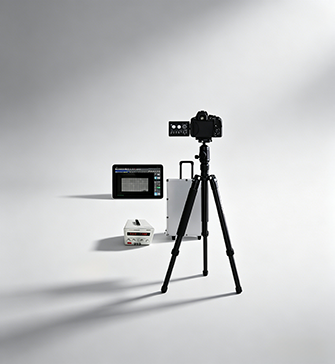
Photovoltaic Module EL Inspection: How Electroluminescence Testing Detects Solar Panel Defects

By applying a forward-bias current to a photovoltaic module and capturing the infrared electroluminescence emitted by the solar cells, an EL tester for solar panels can produce detailed images showing cracks, broken cells, inactive areas and other cell-level defects
What Is PV Module EL Testing?
PV module EL testing, also called solar panel electroluminescence testing, is a non-destructive imaging method for inspecting the internal condition of photovoltaic cells.
During an EL test, the PV module is electrically forward biased. The crystalline silicon cells emit infrared radiation, which is captured by a specialized EL camera. The resulting image allows engineers to examine the condition and uniformity of individual cells.
According to IEC TS 60904-13:2018, EL imaging of photovoltaic modules includes methods for image acquisition, quantitative image processing and qualitative interpretation of features observed in EL images.
Why Is EL Inspection Important for Solar Panels?
Many defects inside photovoltaic modules are difficult or impossible to identify with the naked eye.
A solar panel may have a normal appearance while containing microcracks or electrically inactive areas inside its cells. These defects can interrupt current paths and potentially reduce module power output.
EL inspection provides a detailed view of the electrical activity of individual cells and can therefore reveal defects that may be missed during visual inspection.
Common applications include:
- PV module manufacturing quality control
- Incoming inspection of solar panels
- Solar module production line inspection
- Post-transport damage inspection
- Installation quality inspection
- PV power plant maintenance
- Solar panel microcrack detection
- Warranty and failure analysis
- Research and development of photovoltaic modules
What Defects Can EL Testing Detect?
A solar panel EL tester can reveal various types of defects and abnormal areas in photovoltaic modules.
1. Cell Microcracks
Microcracks are among the most important defects detected by EL imaging. They can be extremely difficult to see during visual inspection.
EL images can show the location and pattern of cracks within individual cells, helping engineers evaluate whether the cracks are electrically significant.
2. Broken Cells
Mechanical stress during manufacturing, transportation, installation or operation can cause cell breakage.
EL inspection can identify electrically inactive or partially inactive regions associated with broken cells.
3. Inactive Cell Areas
Dark or low-intensity areas in an EL image may indicate areas with reduced electrical activity.
Comparing the EL brightness and uniformity between cells can help identify abnormal regions.
4. Soldering and Interconnection Defects
EL imaging can also help identify abnormalities associated with cell interconnections, soldering and electrical continuity.
These defects may not be obvious from the external appearance of a finished module.
5. Cell and Module Non-Uniformity
EL images provide detailed information about the uniformity of cells across an entire PV module. Abnormal brightness distribution or localized dark areas can indicate potential manufacturing or performance problems.
Research and industrial applications have also demonstrated the use of EL imaging for detecting cracks, breaks and other PV cell defects.
How Does a Solar Panel EL Tester Work?
The basic PV module EL inspection process consists of three steps:
Step 1: Apply DC Power
The photovoltaic module is connected to a DC power supply and operated under forward bias.
Step 2: Capture the EL Image
A specialized infrared-sensitive EL camera captures the electroluminescence emitted from the solar cells.
Step 3: Analyze the Image
The captured EL image is analyzed to identify cracks, dark areas, inactive cells, interconnection abnormalities and other defects.
A dark testing environment is commonly preferred for obtaining high-quality EL images because external light can interfere with the infrared signal.
EL Testing vs. Visual Inspection
Visual inspection is useful for identifying obvious external problems such as broken glass, frame damage or visible scratches. However, it cannot reliably reveal many internal cell defects.
EL inspection provides complementary information by showing the electrical activity and internal condition of the cells.
For this reason, combining visual inspection, EL testing and electrical performance testing can provide a more comprehensive evaluation of PV module quality.
Field inspection studies have demonstrated that EL testing can reveal substantially more cell-level defects than visual inspection alone, particularly microcracks and impact-related damage.
EL Testing Standard for Photovoltaic Modules
The main international reference for photovoltaic module electroluminescence imaging is:
IEC TS 60904-13:2018 – Photovoltaic devices – Part 13: Electroluminescence of photovoltaic modules
This technical specification covers EL image acquisition, image processing and guidance for interpreting features in EL images. It applies to PV modules operated with a power supply that places the cells in forward bias.
For crystalline silicon solar cells before module encapsulation, IEC TS 63202-2:2021 specifies methods for EL imaging and defect examination of bare crystalline silicon solar cells.
Where Is PV Module EL Inspection Used?
EL testing equipment for solar panels can be used throughout the PV product lifecycle.
PV Manufacturing
Manufacturers can use EL inspection to identify cell and module defects during production and quality control.
Incoming Quality Inspection
Solar module buyers and distributors can perform EL testing on incoming modules to identify transportation or manufacturing-related defects.
Installation Inspection
EL testing can help determine whether modules have been damaged during transportation, handling or installation.
Solar Power Plant Inspection
EL imaging can also be used for PV module condition assessment and maintenance. Advanced field EL technologies are increasingly being studied and applied for large-scale PV inspection.
Why Choose EL Testing for PV Module Quality Control?
The major advantage of photovoltaic EL inspection is its ability to provide detailed cell-level information.
Compared with a simple visual inspection, EL imaging can:
- Detect hidden microcracks
- Identify electrically inactive areas
- Locate broken cells
- Reveal abnormal cell patterns
- Support PV module quality control
- Assist failure and warranty analysis
- Provide visual evidence for defect evaluation
For PV manufacturers, laboratories, testing organizations and solar power plant operators, EL testing can be an important part of a comprehensive solar panel quality inspection system.
Conclusion
PV module EL inspection is an effective method for detecting hidden defects in photovoltaic modules. By applying forward-bias current and capturing infrared electroluminescence images, an EL tester can provide detailed information about cell cracks, broken cells, inactive areas and other abnormalities.
With the increasing demand for reliable and high-efficiency solar modules, solar panel EL testing is becoming increasingly important in manufacturing quality control, incoming inspection, installation inspection and PV power plant maintenance.
For companies looking for a PV Module EL Tester, Solar Panel EL Testing Machine or Photovoltaic Electroluminescence Inspection System, equipment selection should consider the module dimensions, camera sensitivity, power supply requirements, image resolution, testing environment and intended inspection application.
How Is a Mechanical Load Test Performed on PV Modules?
What Is an EL Tester?
Related Article