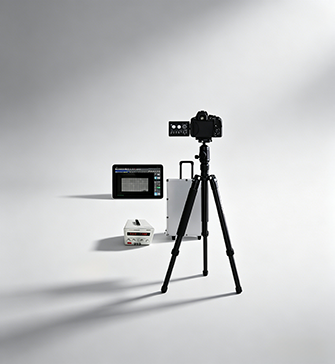
What Is an EL Tester?

What Is an EL Tester?

An EL Tester (Electroluminescence Tester) is a non-destructive inspection system used to detect internal defects in solar cells and photovoltaic (PV) modules. By applying a controlled electrical current to the solar panel in a dark environment, the tester captures infrared images that reveal hidden defects invisible to the naked eye.
EL testing has become one of the most important quality inspection methods throughout the solar panel manufacturing process, ensuring that every module meets performance and reliability requirements before leaving the factory.
How Does an EL Tester Work?
The principle of electroluminescence is relatively simple.
When a photovoltaic cell is forward-biased with an electrical current, it emits a small amount of infrared light. A highly sensitive infrared camera captures this light and converts it into an image.
Areas with defects emit less light than healthy cells, allowing engineers to identify problems such as:
- Micro cracks
- Broken fingers
- Cell fractures
- Hidden cracks
- Poor soldering
- Busbar interruptions
- PID (Potential Induced Degradation)
- Cell mismatch
- Manufacturing defects
Since these defects cannot usually be detected through visual inspection, EL testing provides an essential layer of quality control.
Why Is EL Testing Important?
Many internal defects develop during manufacturing, transportation, or module assembly. Although they may not immediately affect power output, they can grow over time and eventually cause significant efficiency losses or module failure.
EL testing helps manufacturers:
- Detect hidden defects before shipment
- Improve module reliability
- Reduce warranty claims
- Increase production yield
- Ensure consistent product quality
- Meet international quality standards
For manufacturers producing high-efficiency photovoltaic modules, EL inspection has become an indispensable quality assurance process.
Common Applications of EL Testers
EL testing equipment is widely used in:
- Solar cell manufacturing
- PV module production lines
- Incoming material inspection
- Research and development laboratories
- Third-party testing laboratories
- Quality control departments
- Failure analysis and reliability testing
Whether inspecting individual solar cells or completed photovoltaic modules, EL testers provide fast and accurate defect detection.
Advantages of EL Testing
Compared with conventional visual inspection, EL testing offers several important advantages:
Non-Destructive Inspection
The test does not damage the photovoltaic module, making it suitable for 100% production-line inspection.
High Detection Accuracy
Even tiny microcracks that cannot be seen by the human eye can be clearly identified.
Fast Inspection Speed
Modern automated EL inspection systems can inspect large numbers of PV modules within seconds, improving manufacturing efficiency.
Early Defect Detection
Finding defects before lamination or shipment helps reduce production losses and maintenance costs.
Reliable Image Documentation
Captured EL images can be stored for quality traceability, process improvement, and customer documentation.
Key Features of a Professional EL Tester
A high-quality EL testing system typically includes:
- High-resolution infrared imaging camera
- Stable programmable power supply
- Dark chamber for accurate imaging
- Automated image acquisition
- Intelligent defect analysis software
- Adjustable testing parameters
- Fast image processing
- Data storage and report generation
- Barcode or QR code integration
- Production line automation compatibility
These features ensure repeatable, accurate, and efficient inspection results.
Choosing the Right EL Testing Equipment
When selecting an EL tester, manufacturers should consider:
- Module size compatibility
- Camera resolution
- Image sensitivity
- Inspection speed
- Automation level
- Software capabilities
- Power supply stability
- Data management functions
- Production line integration
- After-sales technical support
Choosing the right system can significantly improve production efficiency while maintaining consistent inspection quality.
Conclusion
As photovoltaic technology continues to evolve toward higher efficiency and greater reliability, EL testing has become one of the most important inspection methods in the solar industry. It enables manufacturers to detect hidden defects early, improve product quality, and reduce long-term operational risks.
Whether used for laboratory research, quality control, or fully automated production lines, a professional EL Tester provides accurate, non-destructive, and efficient inspection for solar cells and PV modules, helping manufacturers deliver reliable products to the global market.
Photovoltaic Module EL Inspection: How Electroluminescence Testing Detects Solar Panel Defects
Solar Panel Hail Impact Test Machine – IEC 61215 Compliant
Related Article