Home /News /PV Module Testing Equipment /Low Power Generation Efficiency of PV Modules? EL Testing Helps You Find the "Invisible Culprit" /
Low Power Generation Efficiency of PV Modules? EL Testing Helps You Find the "Invisible Culprit"
author: Heather Hu
2026-03-09
Low Power Generation Efficiency of PV Modules? EL Testing Helps You Find the "Invisible Culprit"
Introduction: The Hidden Threat to PV Module Efficiency
For photovoltaic (PV) system owners, installers, and manufacturers, low power generation efficiency is one of the most frustrating and costly issues. You invest in high-quality PV modules, design a reasonable system, and maintain it regularly, but the actual power output is always lower than expected. What’s the reason? More often than not, the "invisible culprit" is hidden inside the modules—defects that are hard to detect with the naked eye. This is where Electroluminescence (EL) testing comes in: as a professional non-destructive testing method, it can "see through" the internal structure of PV modules, identify hidden defects, and help you pinpoint the root cause of low efficiency.
What is EL Testing and How Does It Work?
1.1 The Basic Principle of EL Testing
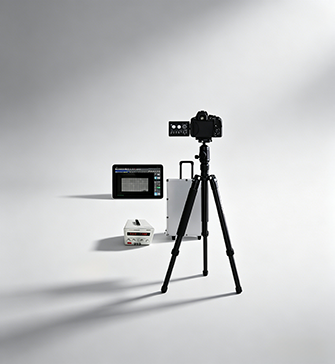
EL testing utilizes the electroluminescence effect of semiconductor materials. When a forward current is applied to a PV module, the electrons and holes in the semiconductor recombine, releasing energy in the form of photons—this is the same principle as LEDs, but the light emitted by PV modules is invisible infrared light. With the help of a specialized EL camera, this invisible light is converted into a visible image, allowing us to clearly observe the internal condition of the module.
1.2 Why EL Testing is Irreplaceable
Unlike traditional visual inspection, which can only detect surface defects (such as scratches, cracks, or contamination), EL testing can penetrate the module’s surface and reveal internal defects that directly affect power generation efficiency. These hidden defects are the main "invisible culprits" behind low efficiency, and only EL testing can detect them accurately without damaging the module.
The "Invisible Culprits" Detected by EL Testing
Low PV module efficiency is often caused by one or more internal defects. EL testing can clearly identify these defects, helping you target solutions. Here are the most common "culprits":
2.1 Cell Cracks
Cell cracks are the most common internal defect, usually caused by improper handling during transportation, installation, or thermal stress during operation. Even small cracks can block the flow of current, reduce the effective area of the cell, and significantly lower the module’s power output. EL images will show dark lines or areas where the light emission is interrupted—these are the cracks.
2.2 Poor Soldering Joints
Poor soldering joints between cells or busbars can lead to increased contact resistance, causing local overheating and energy loss. In EL images, poor soldering joints appear as dark spots or lines at the connection points, indicating that current cannot flow smoothly through these areas.
2.3 Cell Degradation
Over time, PV cells may experience light-induced degradation (LID) or potential-induced degradation (PID), which reduce their photoelectric conversion efficiency. EL testing can detect early signs of degradation—degraded cells will emit less light in EL images, appearing darker than normal cells.
2.4 Other Hidden Defects
EL testing can also detect other defects such as cell mismatching (cells with different performance in the same module), internal short circuits, and damage to the anti-reflective coating—all of which contribute to low power generation efficiency.
The Purpose and Application Scenarios of EL Testing
3.1 For PV Manufacturers
EL testing is an essential quality control tool during production. It helps manufacturers detect defects in modules before they leave the factory, ensuring that only qualified products are delivered to customers. This not only improves product quality and reputation but also reduces after-sales costs caused by defective modules.
3.2 For PV System Installers
Before installation, EL testing can verify the quality of the modules delivered to the site, avoiding installation of defective modules that would affect the overall system efficiency. After installation, it can check for damage caused during transportation or installation, ensuring the system operates at its optimal performance.
3.3 For PV System Owners and Operators
For existing PV systems with low efficiency, EL testing can quickly identify the "invisible culprits" and provide a basis for maintenance and repair. Regular EL testing can also detect early signs of module degradation, allowing for timely replacement and ensuring long-term stable power generation.
3.4 For Third-Party Testing Institutions
EL testing is an important part of PV module certification and quality inspection. Third-party institutions use EL testing to evaluate the quality and reliability of modules, providing authoritative test reports for manufacturers, investors, and system owners.
Conclusion: EL Testing is the Key to Solving Low PV Efficiency
Low power generation efficiency of PV modules is not an unsolvable problem—you just need to find the "invisible culprit" hidden inside. EL testing, as a professional, non-destructive testing method, can accurately detect internal defects that affect efficiency, helping manufacturers ensure product quality, installers avoid installation risks, and system owners maintain optimal performance.
Whether you are a PV manufacturer, installer, or system owner, integrating EL testing into your workflow is a cost-effective way to improve efficiency, reduce risks, and maximize the return on your PV investment. Don’t let hidden defects waste your energy—let EL testing help you find the "invisible culprit" and unlock the full potential of your PV modules.
3D Peeling Testing Machine for Photovoltaic Modules: Principle and Application
Seamless Lab-to-Production Photovoltaic Testing: Optimization with a Dual-Mode IV Tester
Related Article
Learn how a solar panel hail impact test works, why IEC 61215 MQT 17 matters, and how a PV module hail tester helps evaluate module durability.
Solar PV Module Hail Impact Test: IEC 61215 MQT 17 Testing Guide
Photovoltaic (PV) modules are installed outdoors and are continuously exposed to rain, humidity, dew, condensation and other environmental conditions. Moisture can reduce the insulation performance of a solar module and may create electrical safety risks. The PV module wet leakage current test, also known as the wet insulation resistance test or wet leakage test, is designed to evaluate the electrical insulation performance of a photovoltaic module under wet operating conditions.
What Is a PV Module Wet Leakage Current Test?