Why Are My Solar Panels Not Producing Enough Power?
author: Heather Hu
2025-10-08
Why Are My Solar Panels Not Producing Enough Power?

Solar panels are designed to convert sunlight into usable electricity, a clean and cost-effective solution for powering homes, businesses, and even off-grid systems. They reduce reliance on fossil fuels, lower energy bills, and contribute to a more sustainable environment. However, many users often face a frustrating issue: their solar panels aren’t generating as much power as expected. If you’re in this situation, don’t panic—this blog will break down the most common reasons and help you identify potential solutions, with insights into how Hongtu Instrument Co., Ltd.’s IEC 61215-compliant testing equipment (including mechanical load testers and hail impact testers) can pinpoint problems accurately.
1. Insufficient Sunlight Exposure
The primary fuel for solar panels is sunlight, so any reduction in sunlight reaching the panels directly impacts power output. Several factors can limit sunlight exposure:
1.1 Shading from Obstacles
Even small amounts of shade can drastically reduce performance. Common culprits include:
- Overgrown trees, bushes, or vines near the panels.
- Nearby buildings, chimneys, or power lines casting shadows.
- Dust, dirt, or bird droppings accumulating on the panel surface (this acts like a physical barrier to sunlight).
Tip: Conduct a regular visual check of your panels. Trim overgrown vegetation and clean the panels with a soft brush and water (avoid harsh chemicals) to remove debris. For precise assessment of how shading affects output, Hongtu Instrument’s testing equipment can compare on-site power data with standard sunlight conditions (AM1.5, 25℃, 1000 W/m²) as defined by IEC 61215, quantifying shading-induced losses.
1.2 Poor Panel Orientation and Tilt
Solar panels work best when they face the direction that receives the most sunlight. In the Northern Hemisphere, panels should ideally face south; in the Southern Hemisphere, they should face north. Additionally, the angle (tilt) of the panels matters—too steep or too flat, and they’ll capture less sunlight throughout the day.
If your panels were installed incorrectly, power production will suffer. Hongtu’s IEC 61215-aligned devices can simulate different orientation and tilt scenarios, measuring power output variations to verify if installation angles deviate from optimal settings.
2. Aging or Degraded Solar Panels
Like all devices, solar panels degrade over time. Most high-quality panels have a 25-30 year warranty and lose about 0.5-1% of their efficiency each year. However, certain factors can speed up degradation:
2.1 Physical Damage from Environmental Stress
- Mechanical Stress: Heavy snow accumulation (which exerts downward pressure) or strong winds (causing upward suction) can bend panel frames, crack glass, or loosen internal cell connections.
- Hail Impact: Hailstones (even small ones, 25mm or larger) can dent panel surfaces, shatter glass, or damage underlying solar cells—all of which reduce light absorption and power output.
- Extreme Temperatures: Rapid temperature changes (e.g., hot afternoons followed by cold nights) can cause thermal expansion and contraction, weakening panel structures over time.
IEC 61215:2021 strictly regulates panels’ resistance to these stresses, requiring them to withstand mechanical loads of 5400 Pa (downward) and 2400 Pa (upward) (simulating snow and wind) and hail impacts of up to 25mm in diameter. Hongtu Instrument’s specialized equipment directly addresses these tests:
- IEC 61215 Mechanical Load Tester: This device applies controlled pressure to panels (matching IEC 61215 standards) to detect hidden structural weaknesses. For example, if a panel was damaged by heavy snow but shows no visible cracks, the tester can identify frame deformation or cell displacement that reduces efficiency. It also measures post-test power output to quantify performance loss from mechanical stress.
- IEC 61215 Hail Impact Tester: Using ice balls (or simulated hail) of standardized sizes and speeds, this tester replicates real-world hail events. After impact, it checks for glass breakage, cell damage, and electrical performance drops. For users suspecting hail damage (e.g., after a storm), this equipment provides definitive proof of whether panels were compromised—critical for warranty claims or replacement decisions.
2.2 Manufacturing Defects & Degradation Types
Rarely, panels may have hidden defects (e.g., faulty wiring, uneven cell quality) that surface over time. Moreover, issues like Light Induced Degradation (LID) and Light and Elevated Temperature Induced Degradation (LeTID)—common in PERC cells—can accelerate power loss.
Hongtu’s equipment (paired with its mechanical and hail testers) adheres to IEC 61215’s initial stability testing protocols. For example, after simulating mechanical or hail stress, the system monitors power attenuation under controlled light and temperature conditions. This helps distinguish between:
- Normal aging: 0.5-1% annual efficiency loss, unaffected by mechanical/hail tests.
- Defect-related degradation: If a panel fails the mechanical load test and then shows 5%+ power loss in stability tests, it likely has manufacturing flaws (e.g., weak frame bonding).
This clarity helps users avoid unnecessary replacements (for normal aging) or act fast on defective panels (to claim warranties).
3. Malfunctioning Inverters
The inverter converts direct current (DC) from panels to alternating current (AC) for home use. A faulty inverter can cripple power production.
3.1 Common Inverter Issues
- Overheating: Poor ventilation causes temporary shutdowns.
- Wiring Problems: Loose/damaged wires disrupt current flow.
- Age: Inverters last 10-15 years, shorter than panels.
While mechanical and hail testers focus on panel structure, Hongtu’s integrated testing system (including these devices) works with high-sensitivity current detection (similar to GMR sensor technology) to link panel damage to inverter issues. For example:
- If a panel fails the hail impact test and shows 30% power loss, the system can check if the damaged panel is sending inconsistent DC current to the inverter—causing the inverter to overheat or shut down. This eliminates guesswork (e.g., “Is it the inverter or the panel?”) by correlating mechanical damage with electrical performance.
The system also synchronizes with IEC 61215’s electrical standards to verify if inverter output matches the panel’s post-mechanical/hail test capacity—ruling out mismatched components (e.g., an old inverter struggling to handle a damaged panel’s reduced DC output).
4. Incorrect System Sizing
An undersized system can’t meet energy demands, even if fully functional. For example, adding an EV charger may overload existing panels.
Hongtu’s mechanical and hail testers play a role here too: if a system is sized correctly but still underperforms, the testers can rule out physical damage (e.g., “The panels aren’t too small—they’re damaged by wind!”). The equipment then calculates actual power generation efficiency (post-mechanical/hail testing) against IEC 61215’s standard conditions. By comparing this data with your energy consumption (e.g., EV charger usage), it confirms if sizing is inadequate—guiding upgrades (e.g., adding panels) instead of wasting resources on fixing undamaged panels.
5. Grid Connection Issues
Grid-tied systems face issues like faulty net meters or outages, which may mimic underperformance.
5.1 Net Metering Errors
A miscalibrated net meter misrepresents actual production. Hongtu’s devices (including mechanical/hail testers) measure real-time DC output from panels (after verifying no physical damage) and compare it with AC power fed to the grid. For example, if the mechanical load test confirms panels are intact and producing 5kW DC, but the net meter only records 3kW AC, the discrepancy points to a meter error—not panel failure. This data aligns with IEC 61215’s power measurement standards, providing credible evidence for utility company disputes.
5.2 Grid Outages or Maintenance
Grid shutdowns halt power use, but panels still generate DC electricity. Hongtu’s mechanical/hail testers can pre-verify panel integrity (e.g., “Panels passed hail testing—they’re working!”), while the system monitors DC-side activity during outages. This confirms if panels are functional, differentiating grid issues from physical damage.
Diagnose with Hongtu’s IEC 61215 Mechanical & Hail Testing Equipment
Instead of guesswork, professional testing with specialized equipment ensures accurate problem-solving. Hongtu’s mechanical load testers and hail impact testers offer unique value:
- Targeted Physical Damage Detection: Identify hidden issues (e.g., frame deformation, cell cracks) that visual checks miss—critical for post-storm or long-term maintenance.
- IEC 61215 Compliance: All tests match global standards, making data valid for warranties, industry audits, and regulatory compliance.
- Integrated Problem-Solving: Pair with electrical testing to link physical damage to performance loss (e.g., “Hail damage caused 20% power loss, not the inverter”).
- Cost Savings: Avoid replacing undamaged panels (by ruling out physical stress) or missing defective ones (by catching hidden cracks early).
Solar panels are a long-term investment, and persistent underproduction often stems from unseen physical damage. With Hongtu Instrument’s IEC 61215-compliant mechanical load testers and hail impact testers, you can turn “mystery power loss” into actionable solutions—maximizing efficiency, protecting your investment, and keeping your solar system running at peak performance.
Solar Panel Efficiency Loss: Top Reasons and How to Perform a Health Check
How Do You Ensure Your Solar Panels Are Truly Efficient?
Related Article
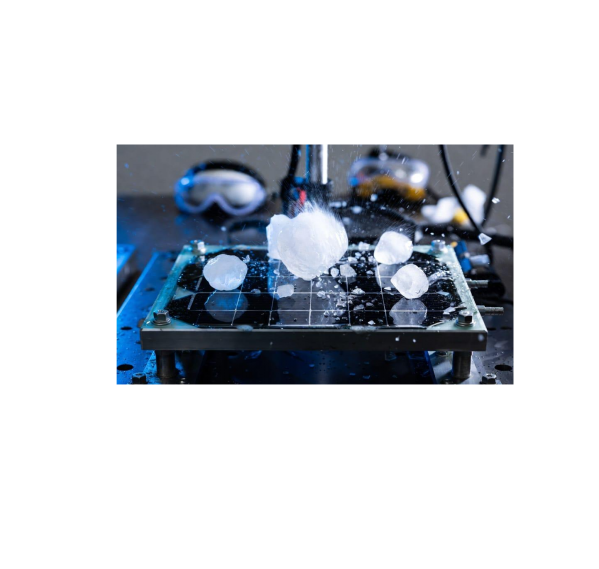
Learn how a solar panel hail impact test works, why IEC 61215 MQT 17 matters, and how a PV module hail tester helps evaluate module durability.
Solar PV Module Hail Impact Test: IEC 61215 MQT 17 Testing Guide

Photovoltaic (PV) modules are installed outdoors and are continuously exposed to rain, humidity, dew, condensation and other environmental conditions. Moisture can reduce the insulation performance of a solar module and may create electrical safety risks. The PV module wet leakage current test, also known as the wet insulation resistance test or wet leakage test, is designed to evaluate the electrical insulation performance of a photovoltaic module under wet operating conditions.
What Is a PV Module Wet Leakage Current Test?