Microcracks to Catastrophic Failure: Predicting Panel Lifespan with Breakage Testing
author: Heather
2025-05-30

Microcracks to Catastrophic Failure: Predicting Panel Lifespan with Breakage Testing

In the ever - expanding realm of solar energy, solar panels are the cornerstone of converting sunlight into electricity. Their reliability and longevity are crucial for ensuring a stable supply of clean energy. However, from seemingly innocuous microcracks to devastating catastrophic failures, the journey of a solar panel's degradation can be a complex one. Breakage testing emerges as a vital tool in predicting the lifespan of solar panels, helping to safeguard the efficiency and safety of solar energy systems.
The Significance of Solar Panels
Powering a Sustainable Future
Solar panels are designed to capture photons from sunlight and convert them into electrical energy through the photovoltaic effect. They serve as the primary energy - generating units in both residential and commercial solar installations. For homeowners, solar panels offer the promise of reduced electricity bills and energy independence. In the commercial and industrial sectors, large - scale solar panel arrays contribute to meeting growing energy demands while significantly reducing carbon emissions. By harnessing the power of the sun, solar panels play an indispensable role in the global transition towards a sustainable, renewable - energy - based future.
Long - term Energy Investment
Investing in solar panels is not only an environmental choice but also a long - term economic one. A well - functioning solar panel system can operate for 25 years or more, providing a consistent source of power. However, any compromise in the panel's integrity can shorten this lifespan and undermine the return on investment. This is where understanding the risks of microcracks and the importance of breakage testing comes into play.
The Menace of Microcracks
From Inception to Progression
Microcracks in solar panels often originate during the manufacturing process, transportation, or installation. Minor stresses, such as mishandling during shipping or improper mounting, can initiate these tiny fractures. Initially, microcracks may have minimal impact on the panel's performance. However, over time, exposure to environmental factors like temperature fluctuations, mechanical vibrations, and moisture can cause these cracks to propagate. As they grow, microcracks can disrupt the electrical pathways within the panel, leading to reduced power output and, eventually, complete failure.
Hidden Dangers
One of the most concerning aspects of microcracks is their ability to remain undetected by the naked eye. Without proper testing, these latent defects can silently compromise the panel's structural and electrical integrity. As the cracks spread, they increase the likelihood of catastrophic failure, which can result in system outages, costly repairs, and even pose safety risks, such as electrical shorts or fire hazards.
The Role of Breakage Testing
Identifying Vulnerabilities
Breakage testing is a comprehensive process aimed at simulating real - world stresses and conditions that solar panels may encounter throughout their lifespan. By subjecting panels to various mechanical, thermal, and environmental tests, engineers can identify existing microcracks and assess the panel's overall durability. These tests can include mechanical load testing, thermal cycling to mimic temperature changes, and humidity testing to evaluate resistance to moisture. Through this analysis, potential weaknesses are revealed, allowing for proactive measures to be taken.
Predicting Lifespan
The data obtained from breakage testing provides valuable insights into how a solar panel will perform over time. By understanding how the panel responds to different stressors, manufacturers and installers can estimate its lifespan more accurately. For example, if a panel shows signs of accelerated microcrack growth under certain conditions during testing, it indicates a shorter expected lifespan in similar real - world environments. This information enables better planning for maintenance, replacement, and system upgrades, optimizing the overall performance and cost - effectiveness of solar energy systems.
Breakage Testing Methods
Mechanical Load Testing
Mechanical load testing is one of the fundamental methods in breakage testing. Solar panels are subjected to controlled mechanical forces, such as pressure from wind or snow loads, to assess their structural strength. This testing helps determine whether the panel can withstand the mechanical stresses it will face during its operational life. By applying different magnitudes of force and observing the panel's response, engineers can identify the point at which microcracks start to form or existing cracks begin to propagate.
Thermal Cycling Tests
Thermal cycling tests mimic the repeated expansion and contraction of solar panels due to daily and seasonal temperature variations. Panels are cycled through a range of high and low temperatures, simulating the extreme conditions they may encounter in different climates. These rapid temperature changes can cause materials within the panel to expand and contract at different rates, potentially leading to microcrack formation. By monitoring the panel's performance and physical condition during thermal cycling, testers can evaluate its ability to withstand thermal stress and predict its long - term reliability.
Humidity and Moisture Testing
Since moisture can accelerate the degradation of solar panels, humidity and moisture testing are essential. Panels are exposed to high - humidity environments and sometimes even subjected to water spray or immersion tests. This helps assess the panel's resistance to moisture ingress, which can lead to corrosion of electrical components, delamination of materials, and the growth of microcracks. Understanding how a panel responds to moisture is crucial for ensuring its durability, especially in regions with high humidity or frequent rainfall.
Challenges and Future Outlook
Complexity of Real - World Conditions
One of the major challenges in breakage testing is accurately replicating the complexity of real - world conditions. Solar panels are exposed to a multitude of factors simultaneously, such as combined mechanical, thermal, and environmental stresses. Creating a testing environment that precisely mimics these intricate interactions is difficult. Additionally, new and emerging materials in solar panel manufacturing may have unique properties that require the development of new testing methods.
Advancements in Testing Technologies
Looking ahead, advancements in testing technologies offer hope for more accurate breakage testing. The use of non - destructive testing techniques, such as infrared thermography and ultrasonic testing, can help detect microcracks without causing damage to the panel. Furthermore, the integration of artificial intelligence and machine learning algorithms can analyze large amounts of testing data to predict panel failure more accurately. These technological improvements will not only enhance the precision of breakage testing but also contribute to the development of more durable and efficient solar panels.
In conclusion, the journey from microcracks to catastrophic failure in solar panels is a process that can be better understood and managed through breakage testing. By identifying vulnerabilities, predicting lifespan, and using advanced testing methods, the solar energy industry can ensure the reliability and longevity of solar panels, driving the continued growth and success of renewable energy.
Desert Solar Farms Fail Faster? UV Testing Reveals the Truth
Current Application Situation of Mechanical Load Testing in the Solar Field
Related Article
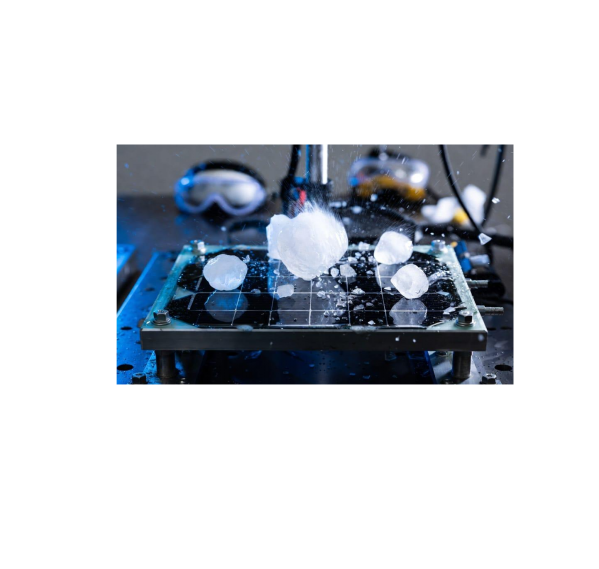
Learn how a solar panel hail impact test works, why IEC 61215 MQT 17 matters, and how a PV module hail tester helps evaluate module durability.
Solar PV Module Hail Impact Test: IEC 61215 MQT 17 Testing Guide

Photovoltaic (PV) modules are installed outdoors and are continuously exposed to rain, humidity, dew, condensation and other environmental conditions. Moisture can reduce the insulation performance of a solar module and may create electrical safety risks. The PV module wet leakage current test, also known as the wet insulation resistance test or wet leakage test, is designed to evaluate the electrical insulation performance of a photovoltaic module under wet operating conditions.
What Is a PV Module Wet Leakage Current Test?